Private Label Moisturizing Cream
The everyday face cream that carries a brand — engineered by texture tier, not by price alone.
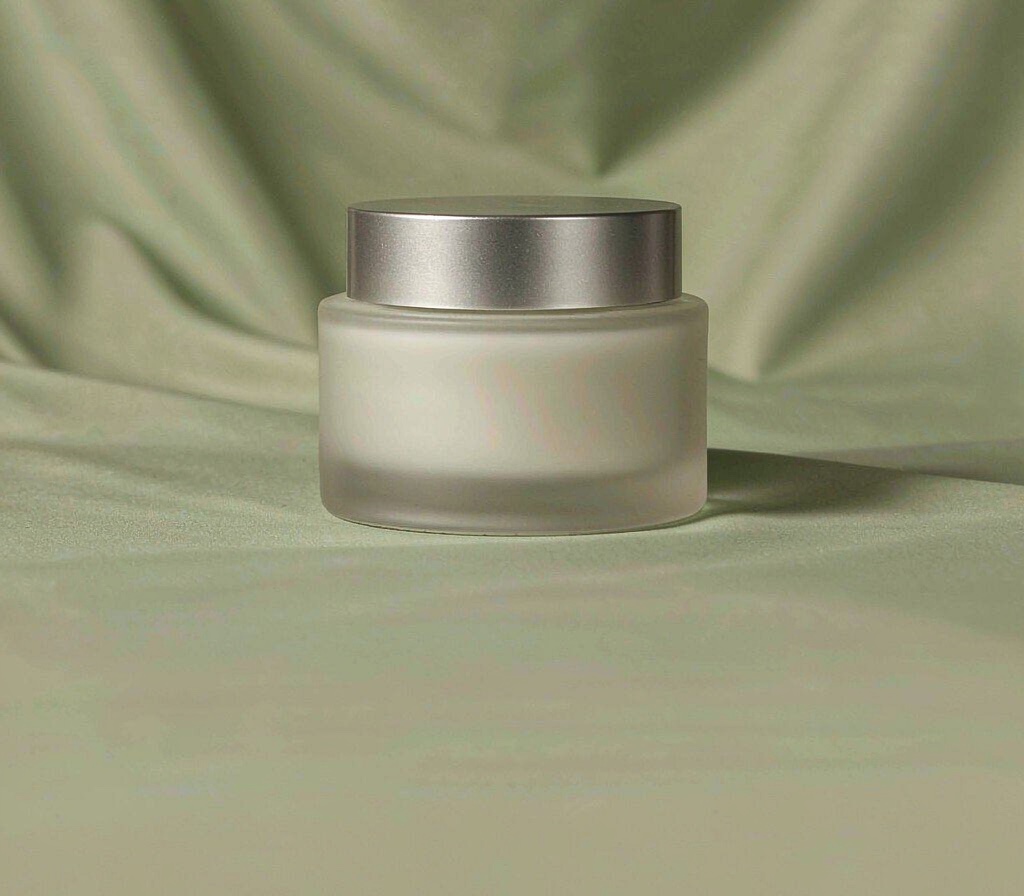
Documentation that ships with the order
Every production order leaves with a certificate of analysis, a stability summary, a microbiology report and MoCRA / CPNP-ready documentation, produced on GMPC and ISO 22716 certified lines under licence 粤妆20250206.
The pack and closure are part of that file rather than separate from it, and the retained Golden Sample is kept as the physical record of the approved texture.
An emulsifier has a temperature range, not just a number
Emulsifiers are selected on a scale that describes how they behave at one temperature. What decides stability in practice is how that behaviour moves as the batch is heated, cooled, and then stored through a summer — the same system can be flawless at the bench and unstable in a warehouse.
So the system is screened across the temperature range of the destination rather than at a single set point. A market that ships through a hot port and stores in an air-conditioned shop asks a different question from one that does neither.
The textures we fill this base in
Each route below is a different balance of oil phase, emulsifier and thickener, not a different marketing story.
| Route | Texture character | Typical brief |
|---|---|---|
| Cold-process | Fresh, light texture | Actives that cannot take a heated oil phase |
| Rich cream | Occlusive and slower to absorb | Night regimes and dry-skin positioning |
| Structured balm | High melt point, protective film | Barrier repair and winter edits |
| Polymeric-stabilised | Light body at a low emulsifier load | Sprays and fluid lotions |
How an emulsion goes from brief to released batch
- 1
Hold for microbiological release
The batch is released on a microbiological result rather than on a production schedule.
- 2
Build the rheology
Thickener and fatty alcohol levels are tuned to reach the viscosity and yield point the pack format needs.
- 3
Emulsify under controlled shear
Shear energy is specified rather than left to the operator, because it sets the droplet size and with it the texture the customer feels.
- 4
Formulate the water phase
Humectants, electrolytes and pH adjusters are set as a group, because each one shifts how the emulsion forms and how it holds.
Pack formats, MOQ and lead time
Mixed-variant orders can split the stated MOQ across formats under one brand.
| Format / Specification | MOQ | Lead Time |
|---|---|---|
| Gel-cream 48 h hydration, 50 ml jar | 1,000 pcs | 10–15 days |
| Cushion cream + ceramides, 50 ml jar | 1,000 pcs | 10–15 days |
| Rich cream + shea for dry skin, 50 ml jar | 1,000 pcs | 10–15 days |
| Airless pump 50 ml fragrance-free | 1,000 pcs | 10–15 days |
MOQ and lead time above are the standard liquid, cream and gel route. The real minimum is set by the manufacturing system rather than the category: surfactant systems (shampoo, body wash) start at 2,000 pcs, stick formats at 3,000, and powders and sheet masks at 5,000 — with longer production runs to match.
A moisturizing cream is the volume anchor of any skincare line, and it is judged by one recurring review line: 'does it sit well under makeup'. We engineer three texture tiers — light gel-cream for combination skin, cushion cream for normal skin and rich ceramide cream for dry climates — each with a distinct sensory profile.
Core systems pair humectants (glycerin, HA) with barrier lipids (ceramides, cholesterol, fatty acids in skin-mimetic ratios) and occlusive emollients. Fragrance-free variants are standard because the daily-use category punishes scent fatigue.
Other emulsion builds
Private Label Oil-Free Gel Cream
The lightweight everyday cream for oily and combination skin — matte finishes that layer clean.
Private Label Barrier Repair Cream
Barrier repair built on the documented 3:1:1 lipid ratio — the sensitive-shelf authority SKU.
Private Label Night Cream
The recovery-story cream — richer textures, active pairings and a night-ritual story.
Buyer guides for this build
Before you brief a supplier on this category, these are the guides that answer the questions buyers ask next — timelines, order quantities, cost structure and compliance.
Actives and support system in this base
INCI names and typical levels reflect publicly documented formulation practice. All values are adjustable in your build.
| Ingredient (INCI) | Typical Level | Function & Benefit |
|---|---|---|
| Ceramide NP/AP/EOP | 0.2–0.5% | Barrier lipid replenishment |
| Glycerin | 3–5% | Foundational humectant |
| Sodium Hyaluronate | 0.1–0.3% | Water-binding cushion |
| Butyrospermum Parkii (Shea) Butter | 2–8% | Rich occlusive emollience |
Where an emulsion succeeds or fails
Occlusivity is measurable
How far a cream reduces water loss can be quantified, and it tracks the oil phase and the film it leaves rather than the word used on the front of the pack.
A wash surfactant is not a leave-on emulsifier
Chemistry that is unremarkable in a rinse-off can irritate when left on skin all day. The two categories are selected against different criteria even when the molecules look similar.
The oil phase sets the feel
Emollient choice decides absorbency, slip and after-feel. It is the single biggest lever on whether the product reads as premium or value tier.
Viscosity drifts in the first weeks
Most emulsions thicken or thin over the first month as the structure settles. Specification limits are written for the settled product, not the freshly made one.
What can be adjusted on this emulsion
- Three texture tiers under one brand design
- Fragrance-free and scented variants
- Jar, pump or airless packaging
- Climate tuning: humid vs dry market bases
- Vegan, nut-free and essential-oil-free routes
The questions that come up every time
Which cream should a first launch carry?
The cushion (medium) tier — it suits the widest audience and layers under makeup. Add the gel-cream tier when you expand to oily-skin audiences.
Can the same cream serve face and body?
We advise separate builds: body skins tolerate richer systems and larger pack sizes change the economics. We quote both.
How is under-makeup performance tested?
Pilling and tack are part of our sensory verification protocol — the Golden Sample must pass a makeup-layering check before approval.
Bring us the shelf life, not just the formula
The stability window decides the emulsifier system. Tell us how long the product has to hold, and we build backwards from that number.