Private Label Barrier Repair Cream
Barrier repair built on the documented 3:1:1 lipid ratio — the sensitive-shelf authority SKU.
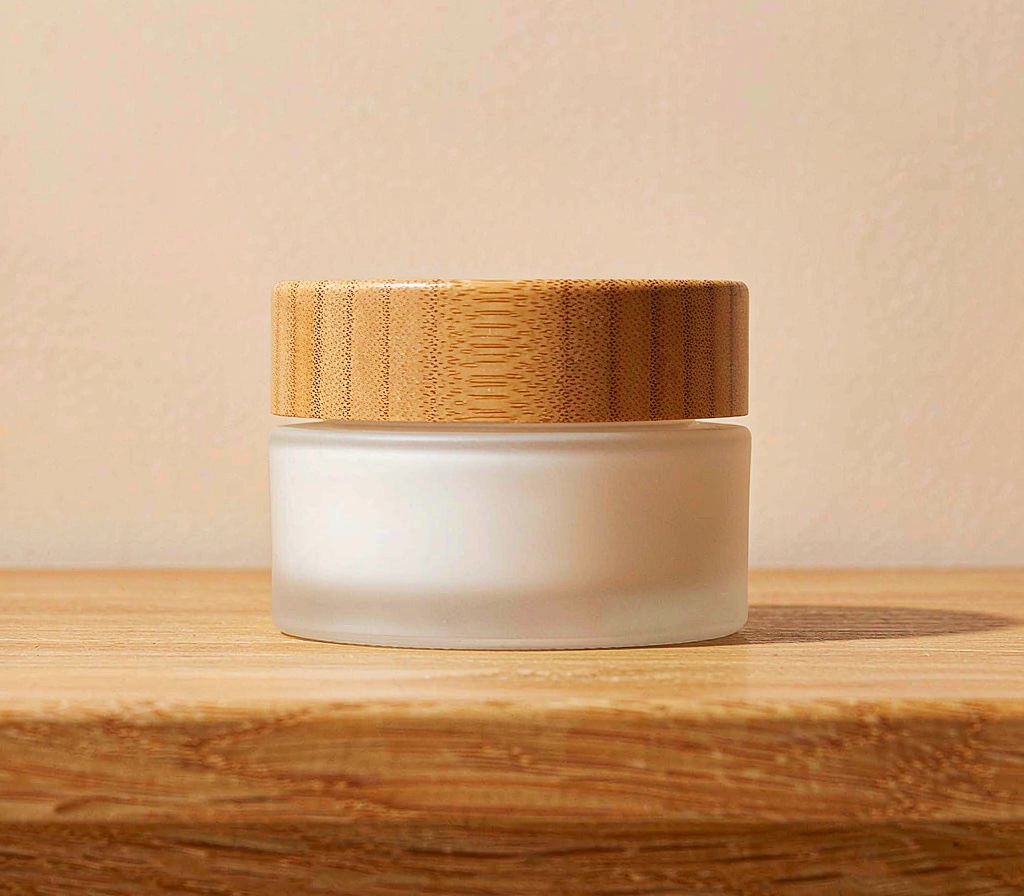
Barrier repair creams win on chemistry credibility: the stratum corneum's own lipid matrix at a 3:1:1 ceramide-to-cholesterol-to-fatty-acid ratio is the published benchmark, and '3:1:1' has become a search term of its own. We build at that ratio with skin-identical synthetic ceramides for batch consistency.
Support actives — panthenol, centella, colloidal oatmeal — extend the calming claim set, while fragrance-free, essential-oil-free systems keep the sensitive positioning honest. This SKU anchors derm-adjacent lines and recovering-skin routines.
What you can change on this build
- Tube, jar or balm formats
- Colloidal oatmeal or centella calming add-ons
- Sensitive-claim documentation package
- Routine pairing: gentle cleanser + this cream
Why texture is signed off against a sample
Two emulsions can share a viscosity reading and still feel entirely different in the hand. That is why the retained Golden Sample is kept on file and a batch is compared with it at release rather than with a written tolerance alone.
Production runs on GMPC and ISO 22716 certified lines under manufacturing licence 粤妆20250206, with traceability from raw material to carton on every batch.
The questions that come up every time
What does 3:1:1 mean?
The molar ratio of ceramides, cholesterol and fatty acids in healthy stratum corneum; replicating it is the documented approach to barrier rebuilding — and a searchable claim.
Is it suitable for compromised skin after actives?
It is designed for exactly that use case; the fragrance-free lipid system supports skin in recovery without sting.
Can we claim eczema relief?
No — that crosses into drug territory in most markets. We supply compliant cosmetic claim wording for dryness and barrier support.
The stages this emulsion passes through
- 1
Choose the emulsifier system
The emulsifier decides texture, melt point and stability at once, so it is picked with the destination market's climate in mind.
- 2
Read pH at the end of the window
pH is measured at fill and again at the end of the stability study, so drift is caught while the batch is still a decision rather than a complaint.
- 3
Run the freeze-thaw cycle
Where the shipping route can freeze, the batch is cycled through it before release, because that test finds what a static study misses.
- 4
Deaerate before fill
Entrained air is removed so fill weight and appearance in the pack both stay consistent from the first unit to the last.
The choices that fix texture and shelf life
The oil phase sets the feel
Emollient choice decides absorbency, slip and after-feel. It is the single biggest lever on whether the product reads as premium or value tier.
Heat and cold cycling
Transport reality belongs in the specification. The batch is cycled through the temperature range of the destination market before release.
A wash surfactant is not a leave-on emulsifier
Chemistry that is unremarkable in a rinse-off can irritate when left on skin all day. The two categories are selected against different criteria even when the molecules look similar.
Preservation across two phases
An emulsion splits a preservative between oil and water. Efficacy is tested against the finished matrix, because partitioning can leave the water phase under-protected.
The first ten seconds are decided by the volatiles
What a customer feels at application is largely the volatile fraction leaving — the light esters and silicones that evaporate or absorb first. That is what makes a cream read as fast-absorbing, and it is independent of how emollient the product really is.
Tuning that first impression means choosing the volatile fraction deliberately and keeping it separate from the long-acting emollients that decide how skin feels an hour later. The two are doing different jobs.
The textures we fill this base in
All of these can carry the same claim. What changes is how the product feels, how it ships and what it costs.
| Route | Texture character | Typical brief |
|---|---|---|
| Concentrated base | Thick in the jar, spreads thin | Face creams sold on a little going a long way |
| Polymeric-stabilised | Light body at a low emulsifier load | Sprays and fluid lotions |
| Gel-cream | Light, breaks quickly on skin | Hot-climate and oily-skin briefs |
| Light lotion | Fast-absorbing with little residue | Volume body and face lines sold on daily use |
Actives and support system in this base
INCI names and typical levels reflect publicly documented formulation practice. All values are adjustable in your build.
| Ingredient (INCI) | Typical Level | Function & Benefit |
|---|---|---|
| Ceramide NP, AP, EOP | 0.3–0.6% | Skin-identical barrier lipids |
| Cholesterol | 0.1–0.2% | 3:1:1 matrix component |
| Stearic + Palmitic Acid | 0.1–0.2% | Fatty-acid matrix component |
| Panthenol | 1–2% | Comfort and repair support |
What this base can be filled into
Mixed-variant orders can split the stated MOQ across formats under one brand.
| Format / Specification | MOQ | Lead Time |
|---|---|---|
| 3:1:1 ceramide cream, 50 ml tube | 1,000 pcs | 10–15 days |
| 3:1:1 + colloidal oatmeal balm, 80 ml | 1,000 pcs | 10–15 days |
| Travel duo 15 ml × 2 set | 1,000 sets | 10–15 days |
MOQ and lead time above are the standard liquid, cream and gel route. The real minimum is set by the manufacturing system rather than the category: surfactant systems (shampoo, body wash) start at 2,000 pcs, stick formats at 3,000, and powders and sheet masks at 5,000 — with longer production runs to match.
Other emulsion builds
Private Label Moisturizing Cream
The everyday face cream that carries a brand — engineered by texture tier, not by price alone.
Private Label Beta-Glucan Serum
The soother dermatology shelves reach for — yeast beta-glucan for sensitive-skin and post-procedure care.
Private Label Centella (Cica) Serum
Cica serums from calming water to standardized madecassoside — the K-beauty heritage active.
Buyer guides for this build
Before you brief a supplier on this category, these are the guides that answer the questions buyers ask next — timelines, order quantities, cost structure and compliance.
Send the claim that has to hold
Tell us what has to still be true at the end of the shelf life, not only at fill, and we build the emulsion and the overage around it.