Private Label Night Cream
The recovery-story cream — richer textures, active pairings and a night-ritual story.
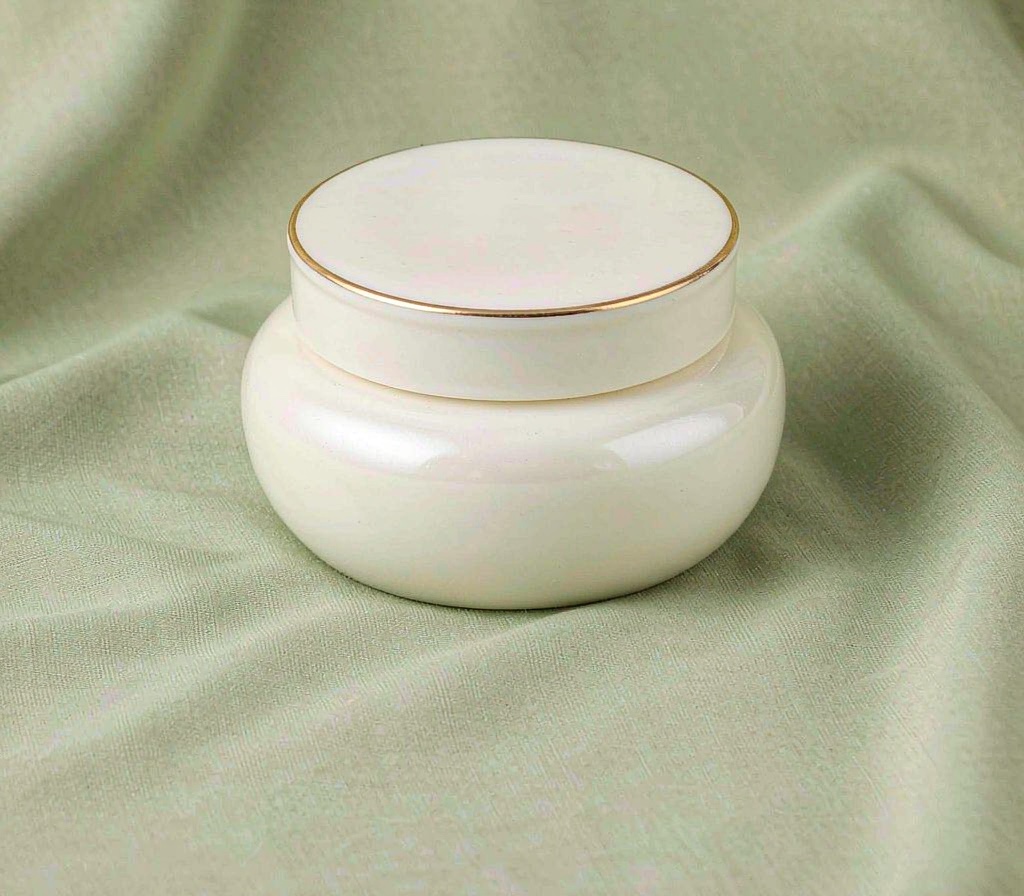
Night creams sell a ritual: richer textures, slower absorption and repair positioning. The formulation difference from day creams is deliberate — more occlusive lipids, no UV-related claims and room for retinol, peptides or recovery botanicals that prefer dark hours.
We build three routes: peptide-recovery for the premium anti-aging shelf, ceramide-barrier for sensitive positioning and retinol-paired night creams for results-driven customers. All share the 'wake up to…' claim architecture that the category expects.
Where an emulsion succeeds or fails
Silicone or silicone-free
Silicones give instant, predictable slip. A silicone-free route has to rebuild that feel with esters and butters — both work, and the choice is usually a market one.
The pack is part of the barrier
A jar, an airless pump and a tube expose the formula to very different amounts of air and finger contact. The pack changes the preservation requirement.
pH drifts during storage
Emulsions shift as the oil phase oxidises and the buffer is consumed. Where an active has a pH window, the end-of-shelf value is the one that has to stay inside it.
The oil phase sets the feel
Emollient choice decides absorbency, slip and after-feel. It is the single biggest lever on whether the product reads as premium or value tier.
Texture, pack and claim options
- Three positioning routes with matching actives
- Balm, cream or soufflé textures
- Jar with inner liner or airless for retinol builds
- Companion day cream for AM/PM shelf sets
What this emulsion is built around
INCI names and typical levels reflect publicly documented formulation practice. All values are adjustable in your build.
| Ingredient (INCI) | Typical Level | Function & Benefit |
|---|---|---|
| Palmitoyl Tripeptide-1 | 1–2% | Firmness signaling for recovery claims |
| Ceramide NP + Cholesterol | 0.5–1% | Night barrier rebuilding |
| Retinol (encapsulated) | 0.1–0.2% | Overnight renewal pairing |
| Shea Butter + Squalane | 5–10% | Occlusive night comfort |
Texture, pack and shelf-life questions
How is a night cream different from a day cream?
Richer lipid systems, no SPF-adjacent claims and dark-hour actives like retinol. The sensory difference is intentional and part of the ritual story.
Can we launch day and night as a set?
Yes — shared packaging with different cap colors is the standard execution, and sets lift average order value.
Which night cream sells fastest online?
The peptide-recovery positioning, because it photographs as premium and avoids retinol's usage-education burden.
Why texture is signed off against a sample
Two emulsions can share a viscosity reading and still feel entirely different in the hand. That is why the retained Golden Sample is kept on file and a batch is compared with it at release rather than with a written tolerance alone.
Production runs on GMPC and ISO 22716 certified lines under manufacturing licence 粤妆20250206, with traceability from raw material to carton on every batch.
How an emulsion goes from brief to released batch
- 1
Run the preservation study
The preservative system is challenged inside the finished emulsion rather than in water alone, because it partitions between two phases.
- 2
Set the cool-down ramp
The cooling profile decides how the fatty alcohols and butters crystallise, so it is specified as a rate rather than left to ambient cooling.
- 3
Formulate the water phase
Humectants, electrolytes and pH adjusters are set as a group, because each one shifts how the emulsion forms and how it holds.
- 4
Confirm the fill on the line
Fill weight and appearance are verified on the production line, because a base that behaves well on the bench can still trap air in a filler.
An emulsion is a promise about shelf life
Oil and water do not stay mixed on their own. What holds a cream together is the interfacial film and the rheology of the continuous phase — which makes stability a design decision taken at the bench rather than a property the formula either has or does not.
The three failure modes we build against are separation, syneresis and crystallisation. Each one tends to appear months after fill, so the stability study is scheduled against the shelf life you intend to claim rather than against a two-week bench sample.
Which route fits which shelf
Each route below is a different balance of oil phase, emulsifier and thickener, not a different marketing story.
| Route | Texture character | Typical brief |
|---|---|---|
| Structured balm | High melt point, protective film | Barrier repair and winter edits |
| Lamellar (liquid crystal) | Rich, layered, slow-release feel | Barrier creams and premium night products |
| Concentrated base | Thick in the jar, spreads thin | Face creams sold on a little going a long way |
| Gel-cream | Light, breaks quickly on skin | Hot-climate and oily-skin briefs |
Formulas that sit beside this one
Private Label Retinol Serum
Encapsulated retinol and gentle-strength builds with the stability engineering most suppliers skip.
Private Label Peptide Serum
Multi-peptide firming serums for the premium shelf — priced and dosed where real peptides live.
Private Label Moisturizing Cream
The everyday face cream that carries a brand — engineered by texture tier, not by price alone.
Buyer guides for this build
Before you brief a supplier on this category, these are the guides that answer the questions buyers ask next — timelines, order quantities, cost structure and compliance.
What this base can be filled into
Mixed-variant orders can split the stated MOQ across formats under one brand.
| Format / Specification | MOQ | Lead Time |
|---|---|---|
| Peptide recovery night cream, 50 ml jar | 1,000 pcs | 10–15 days |
| Ceramide barrier night balm, 50 ml | 1,000 pcs | 10–15 days |
| 0.2% retinol night cream, 50 ml airless | 1,000 pcs | 10–15 days |
MOQ and lead time above are the standard liquid, cream and gel route. The real minimum is set by the manufacturing system rather than the category: surfactant systems (shampoo, body wash) start at 2,000 pcs, stick formats at 3,000, and powders and sheet masks at 5,000 — with longer production runs to match.
Send the claim that has to hold
Tell us what has to still be true at the end of the shelf life, not only at fill, and we build the emulsion and the overage around it.