Private Label Retinol Serum
Encapsulated retinol and gentle-strength builds with the stability engineering most suppliers skip.
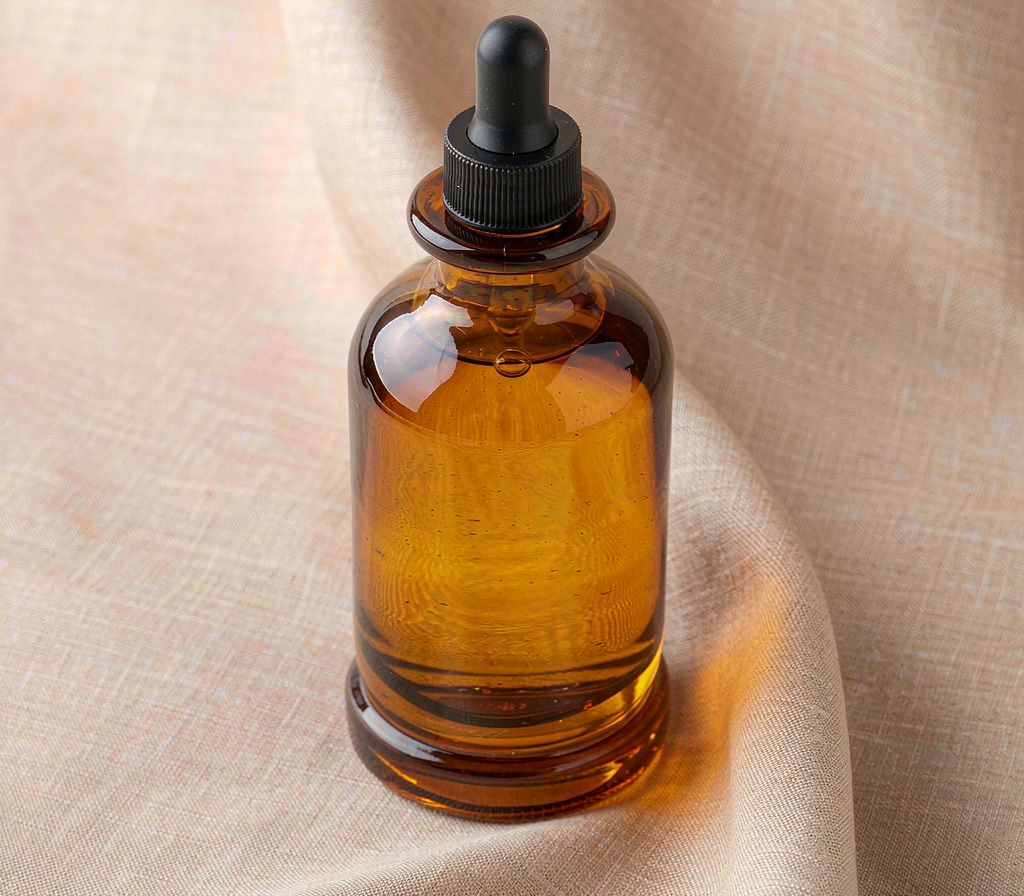
Retinol has two failure modes, and they pull in opposite directions
One is felt by the customer in week two. The other is invisible until a reviewer opens the bottle six months later.
Too much, too fast
Free retinol hits the skin all at once — redness, flaking and the reviews that end a launch. The fix is release rate, not a lower percentage.
Lost potency before it is used
Retinol oxidises on exposure to oxygen, heat and light. A formula that tests well at fill can be measurably weaker by the time it reaches the customer.
Why the cheap base fails both
A free-retinol system in clear packaging with an air headspace loses on both counts at once, which is why the category has the highest complaint rate in skincare.
Retinol is the highest-complaint category in skincare — redness, peeling and oxidized orange product are what happen when brands buy the cheapest base. We engineer around the two failure points: encapsulation slows release to soften irritation, and nitrogen-flushed, light-blocking filling slows oxidation.
The line spans 0.1% entry strengths through 1% max-strength builds, plus retinaldehyde and bakuchiol routes for markets or brands that want the claim without the retinoid regulatory nuance.
The strength ladder, and what we buffer at each step
Most launches take three of these tiers with shared packaging design so customers ladder up inside your brand.
| Retail tier | Who it is written for | Buffering we build in |
|---|---|---|
| 0.05% + bakuchiol | First-time vitamin A users, sensitive and reactive skin | Plant-alternative carrier so the product can be positioned without a retinoid claim |
| 0.1% encapsulated | The volume entry tier for a new line | Time-released encapsulation plus ceramide and squalane for barrier support |
| 0.3% + squalane | Customers already using vitamin A weekly | Emulsion base that slows availability and reduces the sting of application |
| 1% encapsulated | Experienced users and professional-strength positioning | Encapsulation, oxygen-barrier pack and nitrogen-flushed filling working together |
Actives in the retinol line
Typical levels are the working ranges for this category. All adjustable in your build.
| Ingredient (INCI) | Typical Level | Function & Benefit |
|---|---|---|
| Retinol (encapsulated) | 0.05–1% | Time-released vitamin A, softer onset |
| Retinaldehyde | 0.05–0.1% | One-step conversion, faster results |
| Bakuchiol | 0.5–1% | Plant-based retinol-alternative claims |
| Ceramide NP + Squalane | 0.5–2% | Barrier support to buffer dryness |
Formats and order quantities across the ladder
Mixed-variant orders can split the stated MOQ across formats under one brand.
| Format / Specification | MOQ | Lead Time |
|---|---|---|
| 0.1% encapsulated retinol, 30 ml airless | 1,000 pcs | 10–15 days |
| 0.3% + squalane emulsion, 30 ml airless | 1,000 pcs | 10–15 days |
| 1% encapsulated night serum, 30 ml UV glass | 1,000 pcs | 10–15 days |
| 0.05% retinol + bakuchiol starter, 30 ml pump | 1,000 pcs | 10–15 days |
MOQ and lead time above are the standard liquid, cream and gel route. The real minimum is set by the manufacturing system rather than the category: surfactant systems (shampoo, body wash) start at 2,000 pcs, stick formats at 3,000, and powders and sheet masks at 5,000 — with longer production runs to match.
What encapsulation actually does — and what it does not
Encapsulation puts the molecule inside a carrier that has to break down before the active is available. On skin that means a lower peak concentration and a longer tail — which is precisely why irritation drops without dropping the label percentage.
It does not make retinol indestructible. The capsule protects the payload from the surrounding formula, but the capsule itself still sits in a bottle with oxygen, light and heat. Encapsulation buys time; the pack and the fill decide how much of that time is real.
That is why we treat encapsulation, nitrogen-flushed filling and oxygen-barrier packaging as one decision rather than three options.
Retinol, retinaldehyde or bakuchiol
We build all three. Which one fits is usually a market question before it is a formulation question.
| Route | Where it sits | Typical brief |
|---|---|---|
| Encapsulated retinol | The mainstream vitamin A route | Retail lines that want the recognised active and can carry a strength ladder |
| Retinaldehyde | One conversion step closer to retinoic acid | Brands that want faster visible results from a lower percentage |
| Bakuchiol | Plant-derived alternative position | Markets or audiences where a retinoid claim invites more scrutiny than it returns |
Customisation on the retinol build
- Strength ladder: 0.05 / 0.1 / 0.3 / 0.5 / 1% retail-ready tiers
- Encapsulation systems: lipid sphere or cyclodextrin
- Oxygen-barrier packaging: airless pump, UV glass, aluminum tube
- Pairing guide inserts: how-to-buffer retail card
- Stability and assay documentation per batch
What ships with a retinol order
Production runs on GMPC and ISO 22716 certified lines in-house under licence 粤妆20250206, with traceability from raw material to carton on every batch.
Retinol is an active that has to be proven at fill rather than assumed, so the batch record carries the retinol assay and a stability summary covering the oxygen-barrier pack you chose. The certificate of analysis, microbiology report and MoCRA / CPNP-ready documentation ship with the order, and every batch is checked against the retained Golden Sample before release.
Retinol questions, answered without the hedging
Why encapsulated retinol?
Encapsulation releases the molecule gradually, cutting sting and peeling while extending shelf stability — the two review-killing failures of cheap retinol.
How long does retinol stay stable in the bottle?
With nitrogen flushing and oxygen-barrier packaging we document 18-month shelf stability; without them, open-bottle potency can fall within weeks.
Can you build a beginner-to-advanced retinol line?
Yes. The common launch is 0.1 / 0.3 / 1% tiers with shared packaging design, so customers ladder up within your brand.
Build this as a routine, not a single SKU
Private Label Bakuchiol Serum
The plant-based retinol alternative for clean-beauty shelves and pregnancy-safe positioning.
Private Label Night Cream
The recovery-story cream — richer textures, active pairings and a night-ritual story.
Private Label Eye Cream
The highest-margin small SKU — de-puffing, firming and brightening routes from 15 ml.
Buyer guides for this build
Before you brief a supplier on this category, these are the guides that answer the questions buyers ask next — timelines, order quantities, cost structure and compliance.
Tell us the strength ladder you want to sell
Send your target tier mix, market and packaging direction. We come back with the encapsulation route, the buffering system and a full quotation within 24 hours.