Private Label Eye Cream
The highest-margin small SKU — de-puffing, firming and brightening routes from 15 ml.
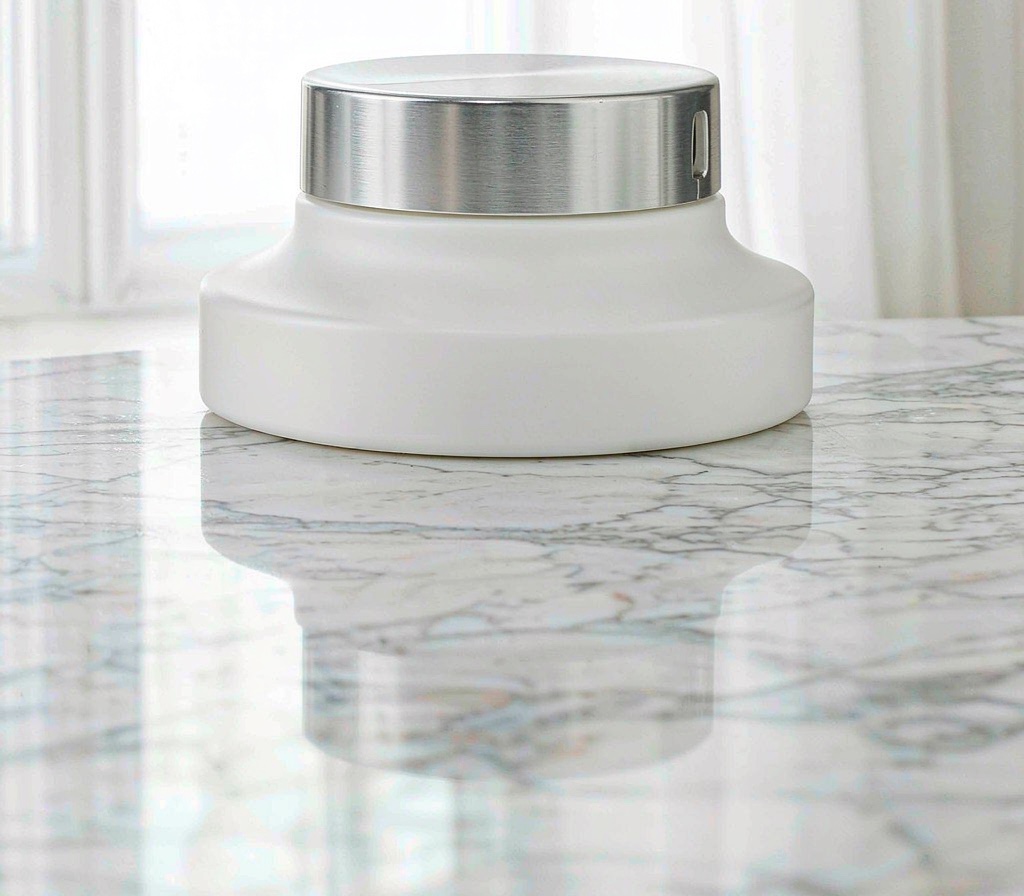
Eye cream is the highest price-per-ml SKU on the shelf and the most searched 'does it work' category. The winners separate by claim: caffeine for morning de-puffing, peptides for firmness, retinol for fine lines and vitamin K-class or brighteners for dark circles. We build all four routes.
Eye-area formulation runs stricter than face: ophthalmology-adjacent ingredient screening, low-fragrance or none, and metal-ceramic applicator tips that deliver the cooling effect customers associate with the category.
What can be adjusted on this emulsion
- Four claim routes or a 2-SKU day/night pair
- Roller-ball, ceramic-tip or jar formats
- Fragrance-free as standard
- Small-format filling with premium unboxing
Formats we fill this emulsion into
Mixed-variant orders can split the stated MOQ across formats under one brand.
| Format / Specification | MOQ | Lead Time |
|---|---|---|
| Caffeine 5% de-puffing gel, 15 ml roller | 1,000 pcs | 10–15 days |
| Peptide firming cream, 15 ml jar | 1,000 pcs | 10–15 days |
| 0.1% retinol eye serum, 15 ml airless | 1,000 pcs | 10–15 days |
| Brightening vitamin-K-class cream, 15 ml | 1,000 pcs | 10–15 days |
MOQ and lead time above are the standard liquid, cream and gel route. The real minimum is set by the manufacturing system rather than the category: surfactant systems (shampoo, body wash) start at 2,000 pcs, stick formats at 3,000, and powders and sheet masks at 5,000 — with longer production runs to match.
Viscosity is a curve, not a number
An emulsion thickens and thins as it cools, and the curve looks different for every emulsifier system. The figure on a specification sheet is one point on that curve, measured at one temperature.
That matters at fill as much as at the shelf. The product has to flow through the line while still setting to the texture the customer expects in the jar, so fill temperature and cooling rate are treated as part of the formulation.
The textures we fill this base in
The route fixes the texture, the melt behaviour and the fill temperature at the same time, so it is usually settled early.
| Route | Texture character | Typical brief |
|---|---|---|
| Concentrated base | Thick in the jar, spreads thin | Face creams sold on a little going a long way |
| Structured balm | High melt point, protective film | Barrier repair and winter edits |
| Rich cream | Occlusive and slower to absorb | Night regimes and dry-skin positioning |
| Light lotion | Fast-absorbing with little residue | Volume body and face lines sold on daily use |
The choices that fix texture and shelf life
Emulsifier level is a narrow window
Too little and the system separates; too much and it drags on application and feels soapy. The window is found by trial rather than calculated.
Cooling rate sets the crystal
Fatty alcohols and butters crystallise as the batch cools. Ramp the temperature too quickly and the texture turns grainy in a way that only shows up weeks later.
pH drift and the active inside
Emulsions buffer slowly. Where an active has a pH window, that window is verified at fill and again at the end of the stability study.
Droplet size sets the texture
A finer dispersed phase reads smoother and absorbs faster; a coarser one reads richer. It is decided by the shear applied during emulsification rather than by the oil percentage alone.
How a cream is released, batch by batch
Emulsification and filling run in-house on GMPC and ISO 22716 certified lines under licence 粤妆20250206, with each batch traceable from raw material to carton.
Release reads viscosity, pH and appearance at fill and compares the batch with the retained Golden Sample, because texture is the property a number describes least well.
What brands ask us about this category
What claim sells eye cream best?
De-puffing caffeine for morning audiences and peptide firming for age-focused shelves; dark-circle claims need the most careful wording and testing support.
Is eye cream formulation really different?
Yes — tighter ingredient screening, lower fragrance ceilings and applicator-tip formats. We run the eye-area compliance check as standard.
Can we launch a travel-size line?
The 15 ml eye format is already travel-friendly; 5 ml minis for sets are quoted at 10,000-pc tiers.
The stages this emulsion passes through
- 1
Emulsify under controlled shear
Shear energy is specified rather than left to the operator, because it sets the droplet size and with it the texture the customer feels.
- 2
Run the freeze-thaw cycle
Where the shipping route can freeze, the batch is cycled through it before release, because that test finds what a static study misses.
- 3
Fix the pack before the studies
Jar, tube or airless pump is settled early, because the pack decides what the preservation and stability studies have to demonstrate.
- 4
Choose the emulsifier system
The emulsifier decides texture, melt point and stability at once, so it is picked with the destination market's climate in mind.
Build the range around it
Private Label Peptide Serum
Multi-peptide firming serums for the premium shelf — priced and dosed where real peptides live.
Private Label Caffeine Eye Serum
The morning-routine hero — cold-roller caffeine for eyes that look awake.
Private Label Brightening Cream
Glow-positioned tone-evening cream — the brightening claim without hydroquinone risk.
Buyer guides for this build
Before you brief a supplier on this category, these are the guides that answer the questions buyers ask next — timelines, order quantities, cost structure and compliance.
The functional system behind the texture
INCI names and typical levels reflect publicly documented formulation practice. All values are adjustable in your build.
| Ingredient (INCI) | Typical Level | Function & Benefit |
|---|---|---|
| Caffeine | 3–5% | Morning de-puffing microcirculation support |
| Acetyl Tetrapeptide-5 | 1–2% | Puffiness-relief peptide |
| Palmitoyl Tripeptide-1 | 1–2% | Fine-line firming |
| Retinol (encapsulated) | 0.05–0.1% | Gentle eye-area renewal |
Bring us the shelf life, not just the formula
The stability window decides the emulsifier system. Tell us how long the product has to hold, and we build backwards from that number.