Private Label Amino Acid Cleanser
The gentle-cleansing standard — pH-balanced surfactant systems that never leave skin tight.
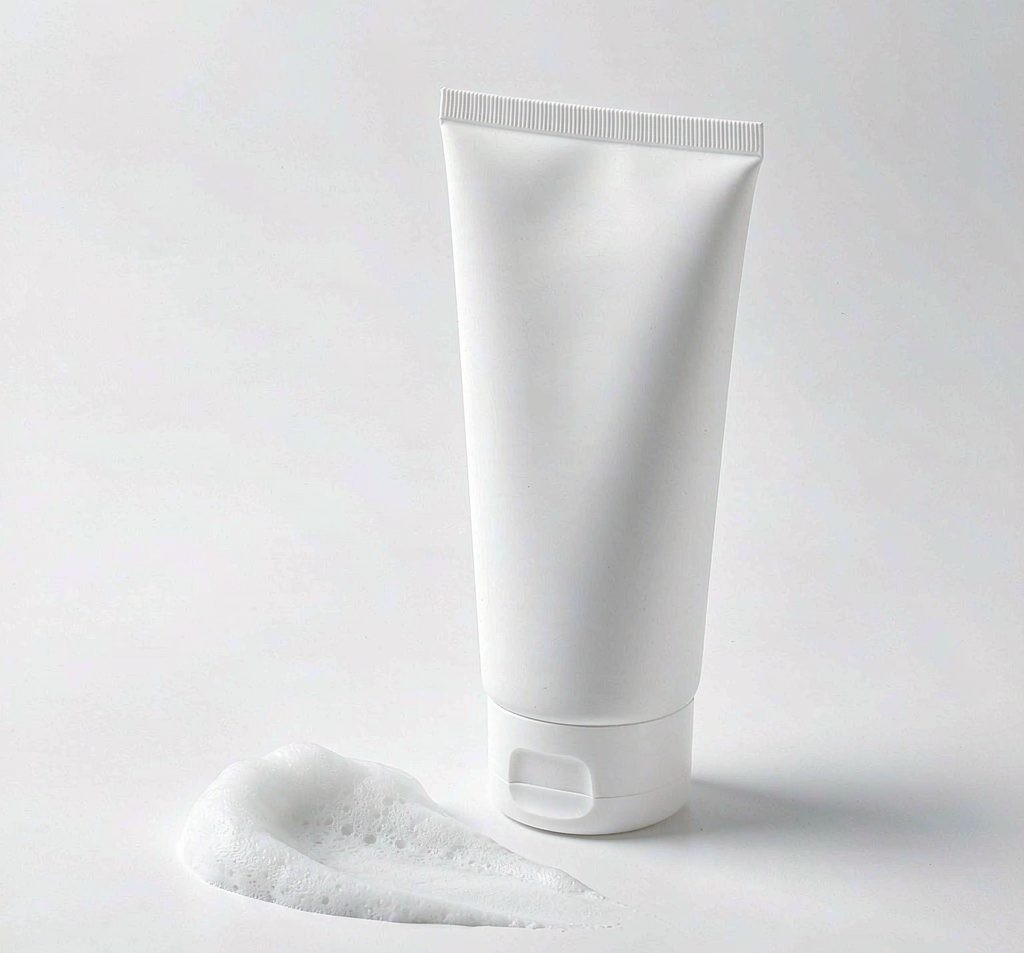
What you can change on this build
- Pump foam, tube or cleansing bar formats
- Sulfate-free documentation for claims
- Fragrance level: none to 0.3%
- Companion toner and cream for a routine
How the system is fixed before scale-up
- 1
Hold for microbiological release
The batch waits for its microbiological result rather than shipping against a pending one.
- 2
Lock the pH window
pH is specified with a tolerance and verified at fill, because it moves the foam, the viscosity and the comfort of the finished wash together.
- 3
Dose the electrolyte in steps
Salt is added in increments with the viscosity read after each one, because the thickening peak sits at a different point in every blend.
- 4
Flush the headspace
Where the formula carries an oxygen-sensitive component, the headspace is displaced before the cap goes on.
Amino acid cleansers displaced sulfate washes as the premium cleansing standard: sarcosinate and glutamate surfactants clean thoroughly at skin-friendly pH while leaving the barrier intact. The 'no tight feeling' review line is exactly what this chemistry delivers.
Formats span foaming nets, pump foams and cream-to-foam textures for drier audiences. We verify post-wash barrier behavior in the sensory protocol, because cleansing comfort is the whole category promise.
What this wash can be filled into
Mixed-variant orders can split the stated MOQ across formats under one brand.
| Format / Specification | MOQ | Lead Time |
|---|---|---|
| Foaming pump 150 ml, pH 5.5 | 1,000 pcs | 10–15 days |
| Cream-to-foam tube 120 ml | 1,000 pcs | 10–15 days |
| Solid cleansing bar 100 g | 1,000 pcs | 10–15 days |
MOQ and lead time above are the standard liquid, cream and gel route. The real minimum is set by the manufacturing system rather than the category: surfactant systems (shampoo, body wash) start at 2,000 pcs, stick formats at 3,000, and powders and sheet masks at 5,000 — with longer production runs to match.
What buyers ask before a first production run
Why do customers prefer amino acid cleansers?
They clean effectively at pH ~5.5 without stripping, which shows up as 'no tight feeling' — the category's defining review line.
Do they foam as well as sulfate washes?
Slightly less dramatic foam but with proper co-surfactants the experience is close; foam boosters are standard in our builds.
Is a solid bar version practical?
Yes — syndet bars with amino acid systems travel well and support zero-plastic positioning; we quote bars at 5,000-pc MOQ.
Actives and the levels they work at
INCI names and typical levels reflect publicly documented formulation practice. All values are adjustable in your build.
| Ingredient (INCI) | Typical Level | Function & Benefit |
|---|---|---|
| Sodium Cocoyl Glutamate | 5–10% | Mild amino-acid surfactant |
| Cocamidopropyl Betaine | 2–5% | Foam booster, mildness support |
| Panthenol | 0.5–1% | Post-wash comfort |
Pair this with
Private Label Foam Cleanser
The satisfying middle ground — cream texture that whips into dense, cushioned foam.
Private Label Cleansing Oil
The first-step cleanser that melts SPF and makeup — rinse-clean without the greasy film.
Private Label Moisturizing Cream
The everyday face cream that carries a brand — engineered by texture tier, not by price alone.
Buyer guides for this build
Before you brief a supplier on this category, these are the guides that answer the questions buyers ask next — timelines, order quantities, cost structure and compliance.
Why the retained sample is the specification here
A wash is judged in the hand before it is judged in a laboratory, and no number captures lather cushion or rinse feel on its own. That is why the retained Golden Sample is kept as the primary reference.
Production runs on GMPC and ISO 22716 certified lines under manufacturing licence 粤妆20250206, with batch traceability from raw material through to carton.
Rinse-off is a different physics problem
A cleanser does its work in the seconds before the water arrives, and keeps only what survives dilution and rinsing. The percentage on the label describes the bottle, not the skin — which is why two washes at the same stated level can leave customers with very different experiences of the same claim.
What decides the outcome is the surfactant architecture: how the anionic, amphoteric and non-ionic fractions sit together, how quickly the micelles form, and how much of the active is still bound to the surface once the rinse is done.
Surfactant systems and what each one changes
None of these is a downgrade of another. They are different answers to different briefs.
| System | Lather character | Where it fits |
|---|---|---|
| Glucoside and glycinate | Creamy and dense at the same time | Premium facial cleansers and body washes |
| Isethionate blend | Dense and cushioned, close to conventional | Brands that cannot accept a lather downgrade |
| Taurate systems | Soft lather that holds up in hard water | Premium bars and sulfate-free liquids |
| Amino-acid systems | Soft, low-residue lather | Premium sulfate-free tier with a mildness position |
The parts of the brief that matter most
Mildness is a blend property
No single surfactant decides how a wash treats skin. Mildness comes from how the anionic fraction is cushioned by the amphoteric and non-ionic around it, which is why the same primary surfactant appears in both gentle and aggressive systems.
Fragrance in a rinse-off window
In a wash the scent has seconds to register. Fragrance load and encapsulation are set for impact at the moment of use, not for longevity on skin.
Clear or pearlescent
An opaque wash is an opacifier decision rather than a formulation tier, but it does interact with preservation and with appearance in the pack. Where clarity is the brief, every component has to stay soluble on the coldest shelf.
Thickening is a balance, not an addition
Salt thickens a surfactant system only inside a narrow range; past the peak it thins again. The peak sits at a different point for every blend, so it is found per formula rather than assumed.
Send the water it will be used in
Hardness and temperature change how a wash performs. Tell us the market and we build the chelation and the foam target around it.