Private Label Urea Face Cream
The pharmacy secret for flaky patches — urea's dual humectant-softening.
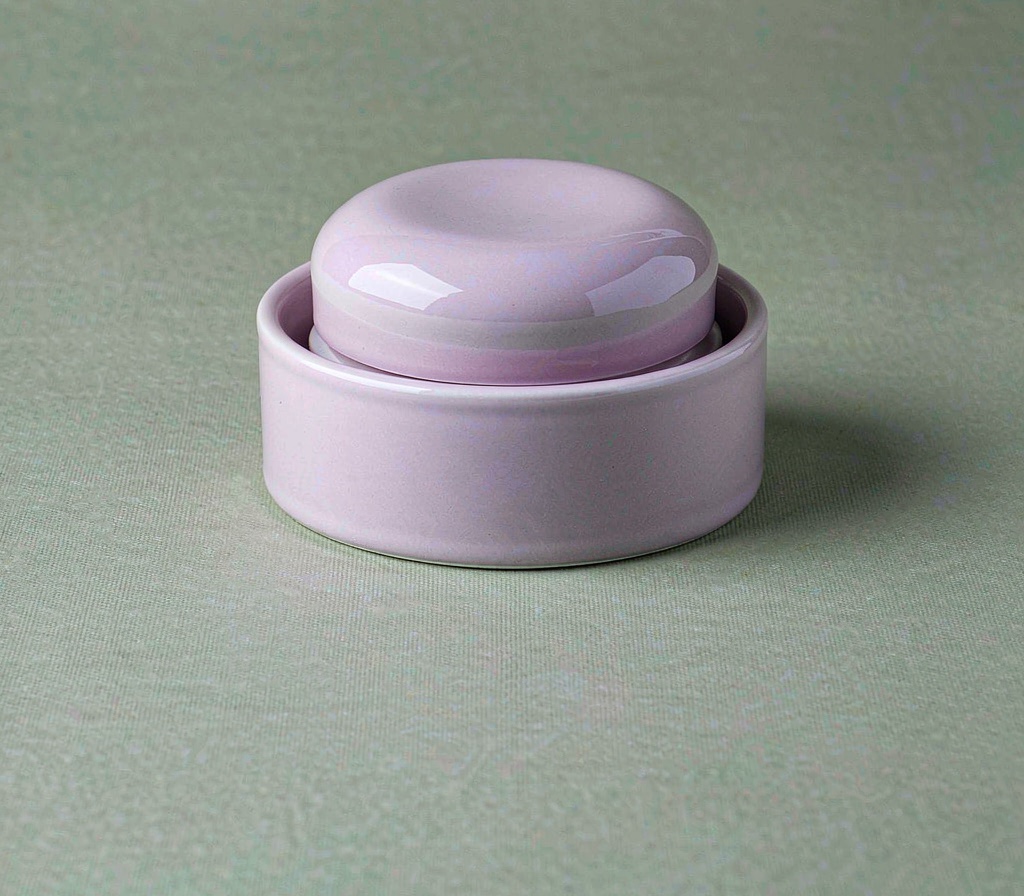
Texture, pack and claim options
- 5% daily vs. 10% intensive tiers
- pH-stability documentation
- Pharmacy-channel packaging
- Face + body line extension
The actives carried in the oil phase
INCI names and typical levels reflect publicly documented formulation practice. All values are adjustable in your build.
| Ingredient (INCI) | Typical Level | Function & Benefit |
|---|---|---|
| Urea | 5–10% | Humectant + texture-softening |
| Glycerin | 5–8% | Humectant layering |
| Ceramide NP | 0.3% | Barrier support |
| Lactic Acid | 1–2% | Gentle AHA assist (10% build) |
Documentation that ships with the order
Every production order leaves with a certificate of analysis, a stability summary, a microbiology report and MoCRA / CPNP-ready documentation, produced on GMPC and ISO 22716 certified lines under licence 粤妆20250206.
The pack and closure are part of that file rather than separate from it, and the retained Golden Sample is kept as the physical record of the approved texture.
Urea cream imports pharmacy credibility into skincare: at 5–10%, urea both binds water and gently softens rough texture, which is why flaky noses, keratosis-prone arms and post-procedure dryness all end up in its column. The audience reads ingredient labels at the pharmacy counter.
We buffer urea's alkaline drift carefully in emulsion, keep the formula fragrance-free, and document the pH trajectory through shelf life — urea creams fail quietly when pH management is sloppy.
Where an emulsion succeeds or fails
Emulsifier level is a narrow window
Too little and the system separates; too much and it drags on application and feels soapy. The window is found by trial rather than calculated.
Preservation across two phases
An emulsion splits a preservative between oil and water. Efficacy is tested against the finished matrix, because partitioning can leave the water phase under-protected.
A wash surfactant is not a leave-on emulsifier
Chemistry that is unremarkable in a rinse-off can irritate when left on skin all day. The two categories are selected against different criteria even when the molecules look similar.
Freeze-thaw is the harshest check
A shipment that freezes and thaws in transit can break an emulsion that passed every other test. The cycling study reproduces that route for the markets where it happens.
Every format this base can be filled in
Mixed-variant orders can split the stated MOQ across formats under one brand.
| Format / Specification | MOQ | Lead Time |
|---|---|---|
| Urea 5% face cream, 50 ml | 1,000 pcs | 10–15 days |
| Urea 10% intensive build, 50 ml | 1,000 pcs | 10–15 days |
| Urea set (face cream + body lotion) | 1,000 sets | 10–15 days |
MOQ and lead time above are the standard liquid, cream and gel route. The real minimum is set by the manufacturing system rather than the category: surfactant systems (shampoo, body wash) start at 2,000 pcs, stick formats at 3,000, and powders and sheet masks at 5,000 — with longer production runs to match.
From brief to released cream, step by step
- 1
Choose the emulsifier system
The emulsifier decides texture, melt point and stability at once, so it is picked with the destination market's climate in mind.
- 2
Cycle against the destination
Heat, cold and freeze-thaw cycling replicate the shipping route before the batch is released.
- 3
Build the rheology
Thickener and fatty alcohol levels are tuned to reach the viscosity and yield point the pack format needs.
- 4
Choose the volatile fraction
Light esters and silicones are selected for the first few seconds of wear and kept distinct from the emollients that carry the after-feel.
Questions we answer on every cream brief
Is urea a pee-derived ingredient?
No — cosmetic urea is synthetic. The education insert kills the number-one objection in the category.
5% or 10% for the face?
5% for daily facial use; 10% targets stubborn rough zones like the nose creases and is the body-lotion level too.
Why fragrance-free?
The customer is compromised-skin by definition — added fragrance would undercut the pharmacy positioning.
Other emulsion builds
Urea 10% + Lactic Acid Body Lotion
The problem-solver body lotion Western drugstores can't keep stocked — keratosis, bumps and rough patches.
Private Label Rich Repair Cream
For skin past the point of lotion — the intensive lipid rescue jar.
Private Label Heel Repair Balm
The cracked-heel specialist — 25% urea balms in stick format that work between toes-adjacent minutes.
Buyer guides for this build
Before you brief a supplier on this category, these are the guides that answer the questions buyers ask next — timelines, order quantities, cost structure and compliance.
A stability study is a schedule, not a test
Stability work is planned backwards from the shelf life you intend to claim. A formula that passes a two-week bench check has proven very little about month twelve, and the difference is not something a single reading can cover.
Accelerated and real-time studies run together: the accelerated arm gives early warning, the real-time arm gives the evidence. The pack and the closure are tested as part of the system rather than separately from it.
Emulsion routes and what each one is built for
The route fixes the texture, the melt behaviour and the fill temperature at the same time, so it is usually settled early.
| Route | Texture character | Typical brief |
|---|---|---|
| Non-ionic-emulsified | Neutral, skin-compatible feel | Sensitive-skin and premium lines |
| Anionic-emulsified | Classic body, broad compatibility | Mainstream creams where cost leads |
| Light lotion | Fast-absorbing with little residue | Volume body and face lines sold on daily use |
| Polymeric-stabilised | Light body at a low emulsifier load | Sprays and fluid lotions |
Send the texture you want to match
If there is a product whose feel you want to reproduce, send it. Reverse development rebuilds a comparable base, and the approved sample becomes your production reference.