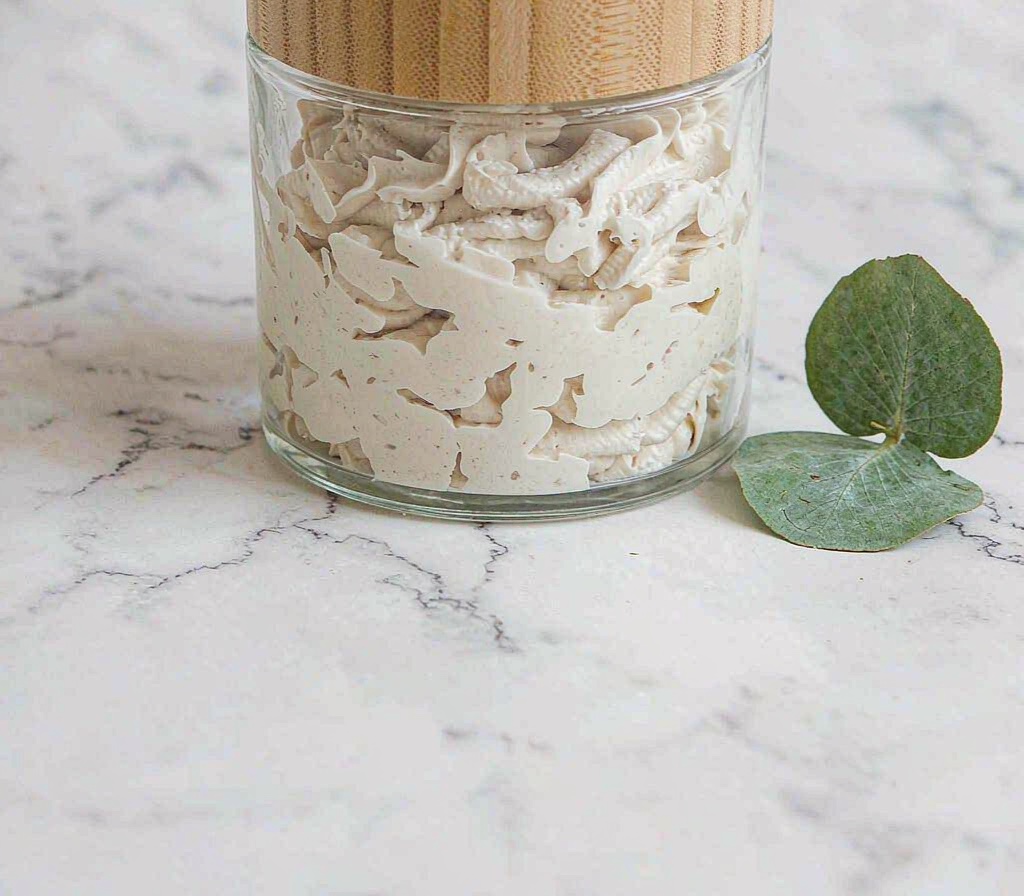
Private Label Rich Repair Cream
For skin past the point of lotion — the intensive lipid rescue jar.
The questions that come up every time
Who needs this over a regular moisturizer?
Compromised-barrier states: post-procedure, isotretinoin users, winter cracking, over-exfoliated routines — anywhere skin needs lipids, not just water.
Will it feel greasy?
Rich is the brief, but our emulsion ratio keeps absorption under five minutes; the grease test is part of panel.
Can dermatology clinics white-label it?
Yes — the professional size and documentation pack are built for clinic channels.
Build the range around it
Private Label Barrier Repair Cream
Barrier repair built on the documented 3:1:1 lipid ratio — the sensitive-shelf authority SKU.
Private Label Shea Butter Face Cream
Winter's heaviest hitter — unrefined shea for skin that drinks.
Private Label Barrier Repair Serum
The post-exfoliation era's essential — lipid-identical repair in a serum texture.
Buyer guides for this build
Before you brief a supplier on this category, these are the guides that answer the questions buyers ask next — timelines, order quantities, cost structure and compliance.
Documentation that ships with the order
Every production order leaves with a certificate of analysis, a stability summary, a microbiology report and MoCRA / CPNP-ready documentation, produced on GMPC and ISO 22716 certified lines under licence 粤妆20250206.
The pack and closure are part of that file rather than separate from it, and the retained Golden Sample is kept as the physical record of the approved texture.
The functional system behind the texture
INCI names and typical levels reflect publicly documented formulation practice. All values are adjustable in your build.
| Ingredient (INCI) | Typical Level | Function & Benefit |
|---|---|---|
| Ceramide Complex (NP/AP/EOP) | 1–2% | Barrier lipid replenishment |
| Cholesterol + Fatty Acids | 0.5–1% | Skin-identical ratio completion |
| Shea Butter | 8–15% | Occlusive cushion |
| Panthenol | 2–5% | Comfort humectant |
Rich repair cream is the jar for customers whose skin has gone past lotion territory: isotretinoin dryness, winter cracking, post-procedure tightness. The build is lipid-forward — ceramides, cholesterol, fatty acids plus occlusive butters — because the barrier needs materials, not messaging.
We formulate fragrance-free with dermatologist-tested documentation as the default, verify 24-hour TEWL improvement in panel, and offer clinic-channel sizing (100 ml professional) alongside retail.
From brief to released cream, step by step
- 1
Set the cool-down ramp
The cooling profile decides how the fatty alcohols and butters crystallise, so it is specified as a rate rather than left to ambient cooling.
- 2
Run the freeze-thaw cycle
Where the shipping route can freeze, the batch is cycled through it before release, because that test finds what a static study misses.
- 3
Hold for microbiological release
The batch is released on a microbiological result rather than on a production schedule.
- 4
Adjust viscosity at target temperature
Any adjustment happens at the temperature the product will reach in the pack, not at processing temperature.
The water phase is an ingredient, not a carrier
Humectants, salts and pH adjusters all sit in the water phase, and all of them change how the emulsion forms and how it holds together. A polyol added for skin feel shifts the interfacial behaviour at the same time.
Electrolytes are the sharpest example: a small amount can thicken a system built on one emulsifier and destabilise a system built on another. The water phase is formulated, not simply filled.
The textures we fill this base in
All of these can carry the same claim. What changes is how the product feels, how it ships and what it costs.
| Route | Texture character | Typical brief |
|---|---|---|
| Gel-cream | Light, breaks quickly on skin | Hot-climate and oily-skin briefs |
| Lamellar (liquid crystal) | Rich, layered, slow-release feel | Barrier creams and premium night products |
| Rich cream | Occlusive and slower to absorb | Night regimes and dry-skin positioning |
| Non-ionic-emulsified | Neutral, skin-compatible feel | Sensitive-skin and premium lines |
Every format this base can be filled in
Mixed-variant orders can split the stated MOQ across formats under one brand.
| Format / Specification | MOQ | Lead Time |
|---|---|---|
| Rich repair cream 50 ml | 1,000 pcs | 10–15 days |
| Professional 100 ml clinic size | 1,000 pcs | 10–15 days |
| Repair kit (cream + barrier serum) | 1,000 sets | 10–15 days |
MOQ and lead time above are the standard liquid, cream and gel route. The real minimum is set by the manufacturing system rather than the category: surfactant systems (shampoo, body wash) start at 2,000 pcs, stick formats at 3,000, and powders and sheet masks at 5,000 — with longer production runs to match.
What can be adjusted on this emulsion
- TEWL-improvement panel data
- Clinic 100 ml professional sizing
- Dermatologist-tested documentation
- Fragrance-free standard
Where an emulsion succeeds or fails
Challenge the preservative in the matrix
A challenge test run in water says little about the same preservative inside a cream, because it partitions between the two phases. The study runs against the product as filled.
Emulsifier level is a narrow window
Too little and the system separates; too much and it drags on application and feels soapy. The window is found by trial rather than calculated.
Fill temperature and the line
The product has to be fluid enough to fill and structured enough to hold its shape in the pack. Both are read off the same viscosity curve.
Heat and cold cycling
Transport reality belongs in the specification. The batch is cycled through the temperature range of the destination market before release.
Bring the sample you want to beat
Send the product you are positioning against and we quote a base built to answer it, texture for texture.