Private Label Heel Repair Balm
The cracked-heel specialist — 25% urea balms in stick format that work between toes-adjacent minutes.
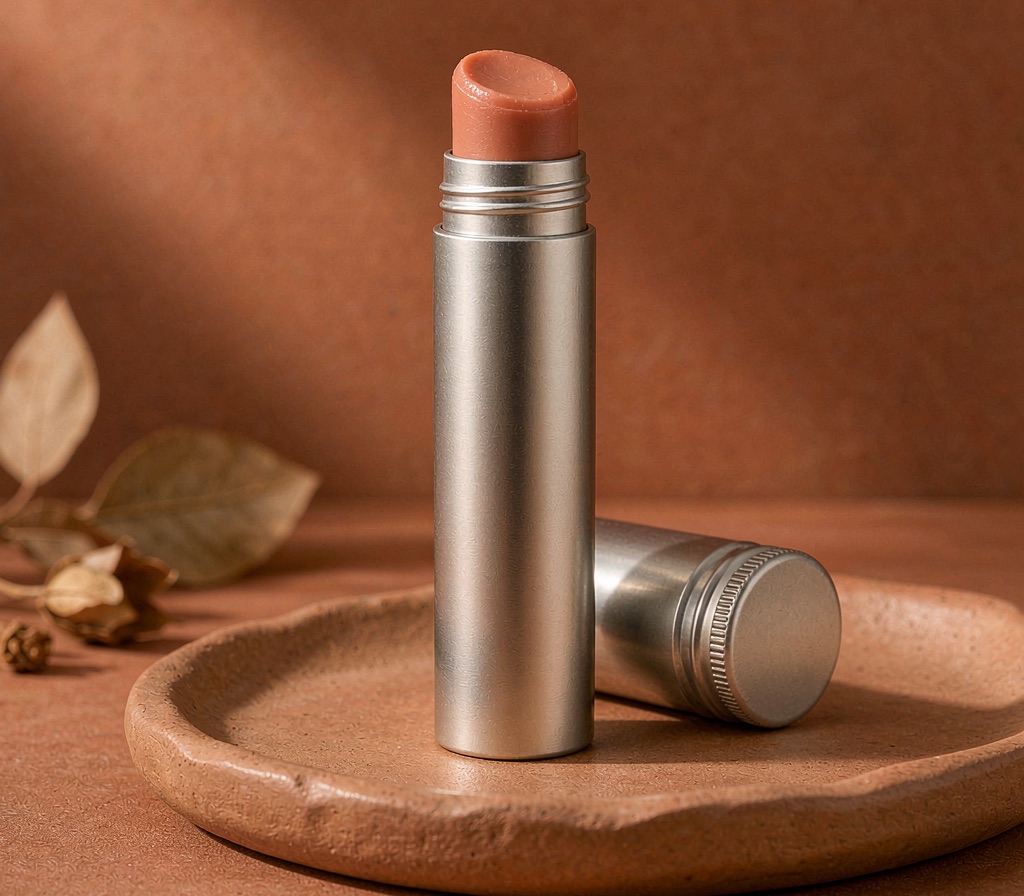
The functional system behind the texture
INCI names and typical levels reflect publicly documented formulation practice. All values are adjustable in your build.
| Ingredient (INCI) | Typical Level | Function & Benefit |
|---|---|---|
| Urea | 25% | Cracked-heel keratolytic core |
| Panthenol | 1–2% | Repair-support comfort |
| Shea Butter base | 10–20% | Occlusive seal |
Order sizes for each pack format
Mixed-variant orders can split the stated MOQ across formats under one brand.
| Format / Specification | MOQ | Lead Time |
|---|---|---|
| Heel repair stick 60 g | 1,000 pcs | 10–15 days |
| Tin balm 50 g | 1,000 pcs | 10–15 days |
| Stick + cotton sock overnight set | 1,000 sets | 10–15 days |
MOQ and lead time above are the standard liquid, cream and gel route. The real minimum is set by the manufacturing system rather than the category: surfactant systems (shampoo, body wash) start at 2,000 pcs, stick formats at 3,000, and powders and sheet masks at 5,000 — with longer production runs to match.
Where an emulsion succeeds or fails
Thickeners change everything
Carbomer, xanthan and fatty alcohols each give a different texture and a different thermal behaviour. Changing one changes the whole sensory profile.
pH drifts during storage
Emulsions shift as the oil phase oxidises and the buffer is consumed. Where an active has a pH window, the end-of-shelf value is the one that has to stay inside it.
The pack is part of the barrier
A jar, an airless pump and a tube expose the formula to very different amounts of air and finger contact. The pack changes the preservation requirement.
Freeze-thaw is the harshest check
A shipment that freezes and thaws in transit can break an emulsion that passed every other test. The cycling study reproduces that route for the markets where it happens.
Heel repair balm is the problem-solver SKU: 25% urea in an occlusive stick or tin targeting the exact cracked zone. The stick format is the category's quiet innovation — no hands, no mess, apply directly to the heel in seconds, which fits the daily rhythm that healing actually requires.
Results are visible within weeks, which drives the honest before/after reviews this category runs on. Fragrance-free is standard; the stick packaging doubles as a portability story for sandals-and-flats season when cracks show.
Questions we answer on every cream brief
Why a stick instead of a jar?
Direct no-touch application to a messy zone, in seconds, anywhere — compliance with daily application is what heals cracks, and the stick maximizes it.
How fast do results show?
Typically 1–2 weeks for visibly reduced cracking at 25% urea with daily use — the review window the insert sets.
Is this seasonal?
Open-shoe season creates the visibility spike, but winter dryness sustains it — a rare two-peak category.
How an emulsion goes from brief to released batch
- 1
Run the freeze-thaw cycle
Where the shipping route can freeze, the batch is cycled through it before release, because that test finds what a static study misses.
- 2
Choose the emulsifier system
The emulsifier decides texture, melt point and stability at once, so it is picked with the destination market's climate in mind.
- 3
Set the cool-down ramp
The cooling profile decides how the fatty alcohols and butters crystallise, so it is specified as a rate rather than left to ambient cooling.
- 4
Emulsify under controlled shear
Shear energy is specified rather than left to the operator, because it sets the droplet size and with it the texture the customer feels.
Viscosity is a curve, not a number
An emulsion thickens and thins as it cools, and the curve looks different for every emulsifier system. The figure on a specification sheet is one point on that curve, measured at one temperature.
That matters at fill as much as at the shelf. The product has to flow through the line while still setting to the texture the customer expects in the jar, so fill temperature and cooling rate are treated as part of the formulation.
Emulsion systems and the textures they give
Two routes can share a name on the pack and still be built from entirely different emulsifier families.
| Route | Texture character | Typical brief |
|---|---|---|
| Gel-cream | Light, breaks quickly on skin | Hot-climate and oily-skin briefs |
| Rich cream | Occlusive and slower to absorb | Night regimes and dry-skin positioning |
| Cold-process | Fresh, light texture | Actives that cannot take a heated oil phase |
| Light lotion | Fast-absorbing with little residue | Volume body and face lines sold on daily use |
Documentation that ships with the order
Every production order leaves with a certificate of analysis, a stability summary, a microbiology report and MoCRA / CPNP-ready documentation, produced on GMPC and ISO 22716 certified lines under licence 粤妆20250206.
The pack and closure are part of that file rather than separate from it, and the retained Golden Sample is kept as the physical record of the approved texture.
What can be adjusted on this emulsion
- Stick or tin formats
- Fragrance-free standard
- Overnight sock sets
- Before/after review inserts
Formulas that sit beside this one
Private Label Foot Cream
The honest foot fixer — urea-intensive systems for callus, roughness and tired soles.
Private Label Foot Mask
The bootie ritual — single-use treatments that make tired feet a giftable occasion.
Private Label Hand Cream
The pocket repeat-purchase machine — fast-absorbing hand creams in gifting packaging.
Buyer guides for this build
Before you brief a supplier on this category, these are the guides that answer the questions buyers ask next — timelines, order quantities, cost structure and compliance.
Start from the pack you have in mind
Jar, tube or airless pump changes the preservation and the fill decision. Send the pack and we build the emulsion to fit it.