Private Label Foot Cream
The honest foot fixer — urea-intensive systems for callus, roughness and tired soles.
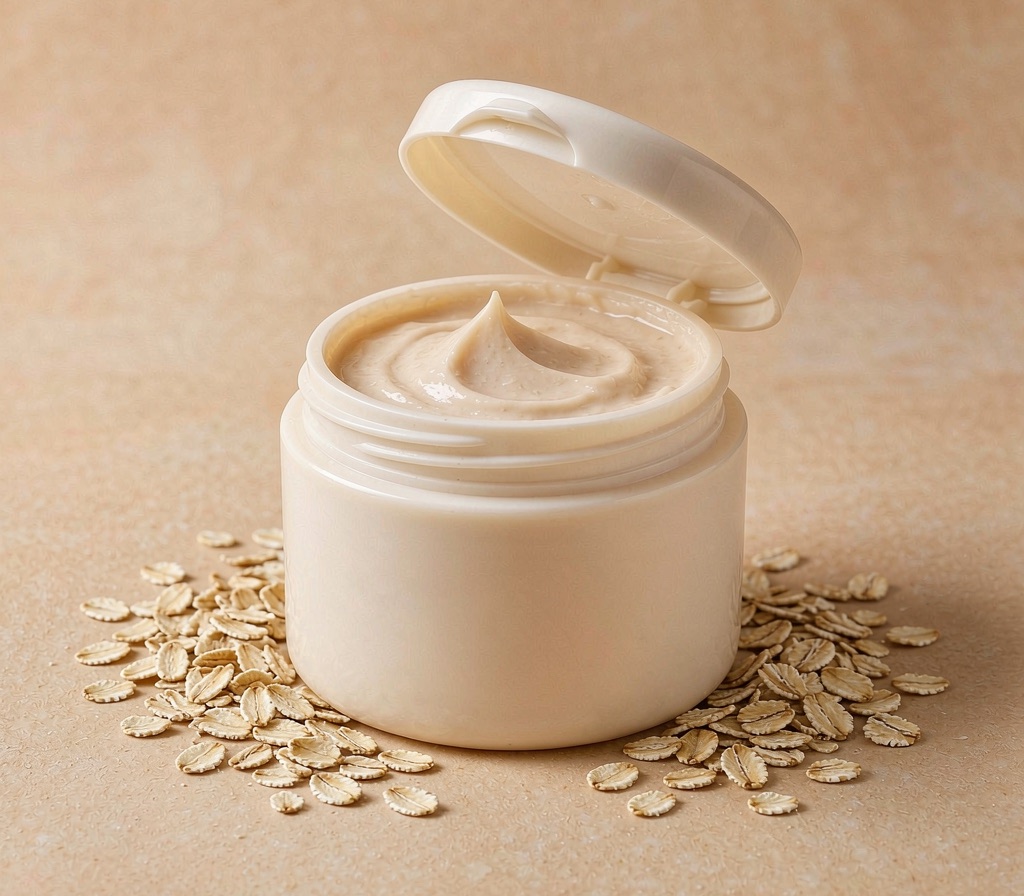
Actives and support system in this base
INCI names and typical levels reflect publicly documented formulation practice. All values are adjustable in your build.
| Ingredient (INCI) | Typical Level | Function & Benefit |
|---|---|---|
| Urea | 10–25% | Callus-softening keratolytic |
| Lactic Acid | 2–5% | Texture-smoothing assist |
| Allantoin | 0.5% | Comfort balance |
From brief to released cream, step by step
- 1
Hold for microbiological release
The batch is released on a microbiological result rather than on a production schedule.
- 2
Formulate the water phase
Humectants, electrolytes and pH adjusters are set as a group, because each one shifts how the emulsion forms and how it holds.
- 3
Cycle against the destination
Heat, cold and freeze-thaw cycling replicate the shipping route before the batch is released.
- 4
Emulsify under controlled shear
Shear energy is specified rather than left to the operator, because it sets the droplet size and with it the texture the customer feels.
Why texture is signed off against a sample
Two emulsions can share a viscosity reading and still feel entirely different in the hand. That is why the retained Golden Sample is kept on file and a batch is compared with it at release rather than with a written tolerance alone.
Production runs on GMPC and ISO 22716 certified lines under manufacturing licence 粤妆20250206, with traceability from raw material to carton on every batch.
A stability study is a schedule, not a test
Stability work is planned backwards from the shelf life you intend to claim. A formula that passes a two-week bench check has proven very little about month twelve, and the difference is not something a single reading can cover.
Accelerated and real-time studies run together: the accelerated arm gives early warning, the real-time arm gives the evidence. The pack and the closure are tested as part of the system rather than separately from it.
Which route fits which shelf
Two routes can share a name on the pack and still be built from entirely different emulsifier families.
| Route | Texture character | Typical brief |
|---|---|---|
| Oil-rich paste | High oil phase, low water | Balm-adjacent textures delivered from a tube |
| Concentrated base | Thick in the jar, spreads thin | Face creams sold on a little going a long way |
| Non-ionic-emulsified | Neutral, skin-compatible feel | Sensitive-skin and premium lines |
| Structured balm | High melt point, protective film | Barrier repair and winter edits |
Foot cream works when it uses the ingredient the problem needs: urea at 10–25% softens callus and rough texture the way no regular lotion can. The category is practical and unglamorous — which is exactly why it repurchases on results rather than mood.
Builds split day comfort (10% urea, fast-absorb) and overnight sock treatments (20–25% urea in occlusive base, applied before bed). Mint and cooling editions serve the tired-feet gift angle; fragrance-free serves the medical-adjacent buyer.
Customisation on this emulsion
- 10% day and 25% night systems
- Cooling mint editions
- Socks-included ritual sets
- Fragrance-free variant
Where an emulsion succeeds or fails
Occlusivity is measurable
How far a cream reduces water loss can be quantified, and it tracks the oil phase and the film it leaves rather than the word used on the front of the pack.
A wash surfactant is not a leave-on emulsifier
Chemistry that is unremarkable in a rinse-off can irritate when left on skin all day. The two categories are selected against different criteria even when the molecules look similar.
Thickeners change everything
Carbomer, xanthan and fatty alcohols each give a different texture and a different thermal behaviour. Changing one changes the whole sensory profile.
Cooling rate sets the crystal
Fatty alcohols and butters crystallise as the batch cools. Ramp the temperature too quickly and the texture turns grainy in a way that only shows up weeks later.
Complete the routine
Private Label Heel Repair Balm
The cracked-heel specialist — 25% urea balms in stick format that work between toes-adjacent minutes.
Private Label Foot Mask
The bootie ritual — single-use treatments that make tired feet a giftable occasion.
Private Label Salt Body Scrub
The deep polish for rough zones — mineral salt scrubs for feet, elbows and pre-tan prep.
Buyer guides for this build
Before you brief a supplier on this category, these are the guides that answer the questions buyers ask next — timelines, order quantities, cost structure and compliance.
Texture and stability questions
Why urea and not just rich butters?
Urea softens keratin — the protein callus is made of. Butters alone seal; urea actually thins the roughness. Category results reviews revolve around this.
Is 25% urea safe?
At foot-application and cosmetic product levels, 25% is the established treatment tier; documentation covers dosing and target zones.
Why include socks in the set?
Occlusion doubles the overnight effect and the ritual is giftable — the set converts a utility SKU into a present.
Formats we fill this emulsion into
Mixed-variant orders can split the stated MOQ across formats under one brand.
| Format / Specification | MOQ | Lead Time |
|---|---|---|
| Urea 10% daily foot cream 100 ml | 1,000 pcs | 10–15 days |
| Urea 25% overnight treatment 100 ml | 1,000 pcs | 10–15 days |
| Foot cream + cotton socks ritual set | 1,000 sets | 10–15 days |
MOQ and lead time above are the standard liquid, cream and gel route. The real minimum is set by the manufacturing system rather than the category: surfactant systems (shampoo, body wash) start at 2,000 pcs, stick formats at 3,000, and powders and sheet masks at 5,000 — with longer production runs to match.
Bring the sample you want to beat
Send the product you are positioning against and we quote a base built to answer it, texture for texture.