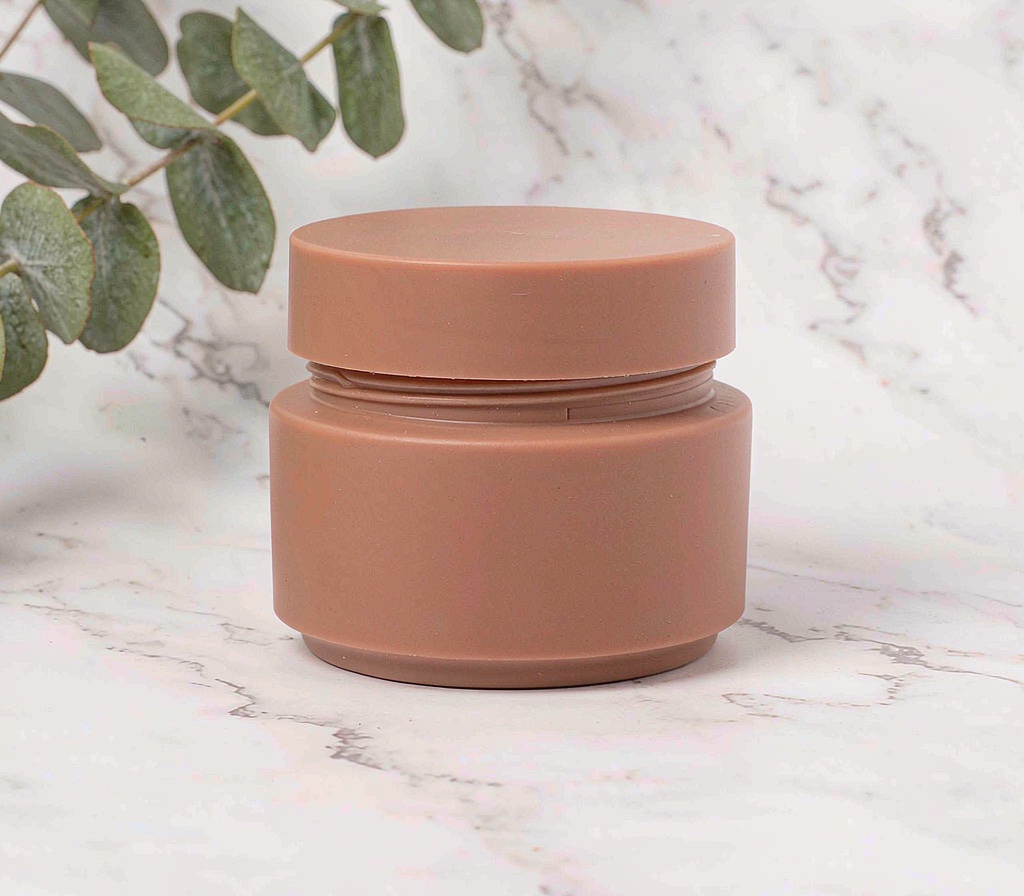
Private Label Niacinamide Cream
The multitasker in jar form — tone, pores and shine on one label.
The stages this emulsion passes through
- 1
Deaerate before fill
Entrained air is removed so fill weight and appearance in the pack both stay consistent from the first unit to the last.
- 2
Read pH at the end of the window
pH is measured at fill and again at the end of the stability study, so drift is caught while the batch is still a decision rather than a complaint.
- 3
Cool on a controlled ramp
The cooling rate decides how the fatty alcohols and butters crystallise, and therefore how smooth the finished cream turns out.
- 4
Build the rheology
Thickener and fatty alcohol levels are tuned to reach the viscosity and yield point the pack format needs.
Niacinamide cream is the value-engineering champion: one ingredient with credible data for tone look, pore look and oil balance, tolerated by nearly everyone and cheap enough to build margin. It is the 'first cream' of ingredient-literate routines.
We hold the 4–5% efficacious window, manage the (rare) flushing sensitivity with slow-release options, and keep the formula simple so the ingredient panel reads clean — the single-ingredient familiarity is the selling point.
Texture, pack and shelf-life questions
Why 5%?
Published data clusters at 4–5% for visible tone and pore results; higher adds irritation risk without added benefit.
Does niacinamide cause flushing?
A minority report transient warmth; our slow-release build and education insert manage the experience.
Can it pair with vitamin C?
Modern consensus says yes at cosmetic levels — the old 'don't mix' myth is dead; we supply the consumer education copy.
Pack formats, MOQ and lead time
Mixed-variant orders can split the stated MOQ across formats under one brand.
| Format / Specification | MOQ | Lead Time |
|---|---|---|
| Niacinamide 5% cream, 50 ml | 1,000 pcs | 10–15 days |
| Niacinamide + zinc gel-cream, 50 ml | 1,000 pcs | 10–15 days |
| Niacinamide set (serum + cream) | 1,000 sets | 10–15 days |
MOQ and lead time above are the standard liquid, cream and gel route. The real minimum is set by the manufacturing system rather than the category: surfactant systems (shampoo, body wash) start at 2,000 pcs, stick formats at 3,000, and powders and sheet masks at 5,000 — with longer production runs to match.
What gets decided before the oil phase
Separation is a slow failure
A cream can look perfect at fill and separate in storage. Batches are held through the full stability window before a formula is released to production.
The pack is part of the barrier
A jar, an airless pump and a tube expose the formula to very different amounts of air and finger contact. The pack changes the preservation requirement.
A wash surfactant is not a leave-on emulsifier
Chemistry that is unremarkable in a rinse-off can irritate when left on skin all day. The two categories are selected against different criteria even when the molecules look similar.
The oil phase sets the feel
Emollient choice decides absorbency, slip and after-feel. It is the single biggest lever on whether the product reads as premium or value tier.
An emulsifier has a temperature range, not just a number
Emulsifiers are selected on a scale that describes how they behave at one temperature. What decides stability in practice is how that behaviour moves as the batch is heated, cooled, and then stored through a summer — the same system can be flawless at the bench and unstable in a warehouse.
So the system is screened across the temperature range of the destination rather than at a single set point. A market that ships through a hot port and stores in an air-conditioned shop asks a different question from one that does neither.
The textures we fill this base in
Texture is the first thing a customer judges and the last thing a formula gives up cheaply — the route matters more than the wording.
| Route | Texture character | Typical brief |
|---|---|---|
| Non-ionic-emulsified | Neutral, skin-compatible feel | Sensitive-skin and premium lines |
| Structured balm | High melt point, protective film | Barrier repair and winter edits |
| Concentrated base | Thick in the jar, spreads thin | Face creams sold on a little going a long way |
| Lamellar (liquid crystal) | Rich, layered, slow-release feel | Barrier creams and premium night products |
The actives carried in the oil phase
INCI names and typical levels reflect publicly documented formulation practice. All values are adjustable in your build.
| Ingredient (INCI) | Typical Level | Function & Benefit |
|---|---|---|
| Niacinamide | 4–5% | Tone, pore and oil-look balance |
| Zinc PCA | 0.5–1% | Oil-modulation pairing |
| Sodium Hyaluronate | 0.2% | Hydration comfort |
| Tocopherol | 0.5% | Antioxidant support |
What can be adjusted on this emulsion
- 2.5% sensitive vs. 5% standard builds
- Gel-cream vs. rich cream textures
- Single-hero minimal packaging
- Value-size 100 ml option
What an emulsion batch record carries
Emulsification and filling run on GMPC and ISO 22716 certified lines in-house under licence 粤妆20250206, with raw-material-to-carton traceability on each batch.
For a cream or lotion the record carries viscosity, pH and appearance at fill, together with the stability summary for the oil phase and emulsifier system you selected. Each batch is checked against the retained Golden Sample before release.
Formulas that sit beside this one
Private Label Niacinamide Serum
The workhorse active of modern retail — built with flushing-risk control and honest concentration claims.
Niacinamide 10% + Zinc Serum
The best-selling single-active serum type in US and EU e-commerce — now manufacturable under your own brand.
Private Label Brightening Cream
Glow-positioned tone-evening cream — the brightening claim without hydroquinone risk.
Buyer guides for this build
Before you brief a supplier on this category, these are the guides that answer the questions buyers ask next — timelines, order quantities, cost structure and compliance.
Tell us where it will be stored
A hot, humid market and a temperate one need different melt points from the same brief. Send the destination and we quote against it.