Private Label Eye Masks
The 15-minute photo op — hydrogel patches that chill, de-puff and film beautifully.
What a mask batch record carries
Filling runs on GMPC and ISO 22716 certified lines in-house under licence 粤妆20250206, with traceability from raw material to carton on each batch.
For a mask the record carries fill weight, the appearance check and the in-use preservation results for the format you selected, plus the dwell-time behaviour recorded on your retained Golden Sample.
Masks that pair with it
Private Label Sheet Masks
The gifting and travel hero — substrate choice decides everything, and we stock all three tiers.
Private Label Eye Cream
The highest-margin small SKU — de-puffing, firming and brightening routes from 15 ml.
Caffeine 5% + EGCG Eye Serum
The impulse-buy eye treatment — caffeine-driven depuffing at an entry-friendly price.
Buyer guides for this build
Before you brief a supplier on this category, these are the guides that answer the questions buyers ask next — timelines, order quantities, cost structure and compliance.
Every format this base can be filled in
Mixed-variant orders can split the stated MOQ across formats under one brand.
| Format / Specification | MOQ | Lead Time |
|---|---|---|
| Hydrogel de-puff patches, 60 pcs jar | 1,000 jars | 10–15 days |
| Collagen-film brightening pairs, singles | 1,000 pcs | 10–15 days |
| Gold-fleck premium patches, 60 pcs jar | 1,000 jars | 10–15 days |
MOQ and lead time above are the standard liquid, cream and gel route. The real minimum is set by the manufacturing system rather than the category: surfactant systems (shampoo, body wash) start at 2,000 pcs, stick formats at 3,000, and powders and sheet masks at 5,000 — with longer production runs to match.
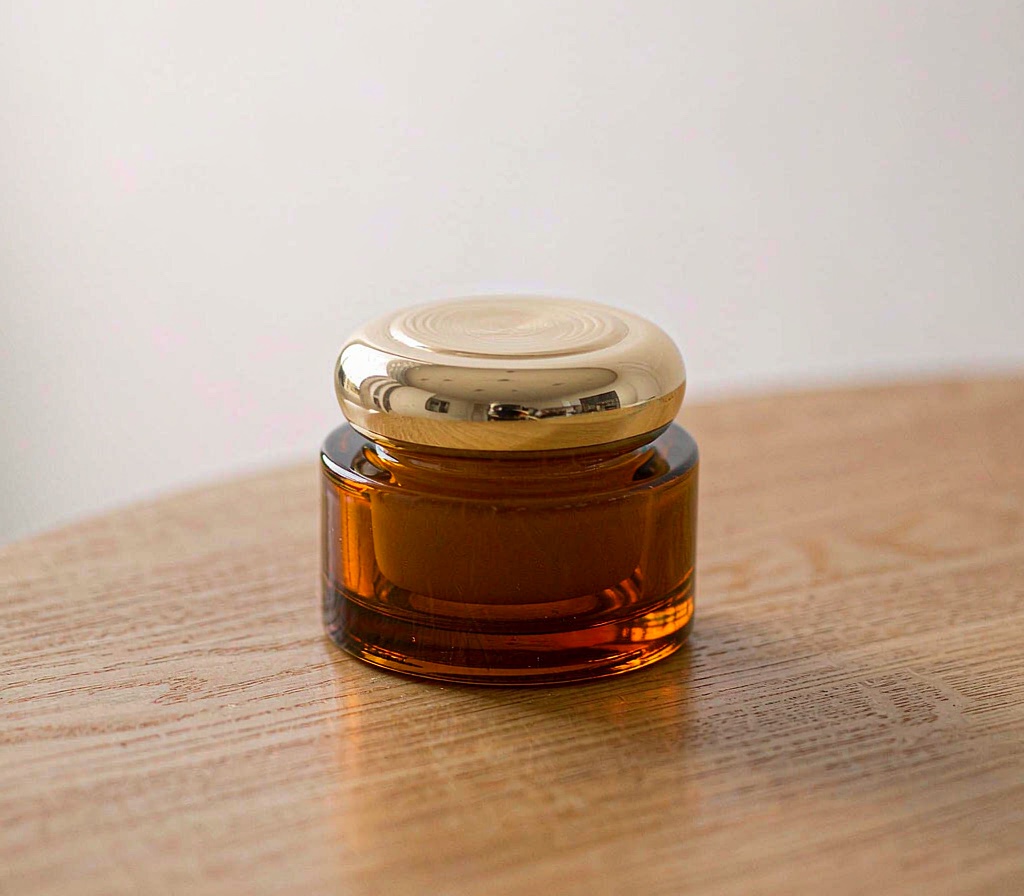
Under-eye patches are self-care theater with real function: chilled hydrogel delivers caffeine and peptides to the puffiest skin on the face while the customer films the moment. The jar of floating gold-flecked patches has become a bathroom-shelf icon.
We fill hydrogel and dissolving-collagen-film systems with de-puffing (caffeine, acetyl tetrapeptide-5) or brightening (niacinamide, TXA) doses. Jar formats with spatula serve the ritual customer; single pairs serve events and travel retail.
Wet formats and dry formats fail differently
A sheet mask fails through the pack — a seal that leaks, a substrate that dries out, a saturation level that will not hold. A clay mask fails on skin — it sets too hard, it cracks, or it will not rinse clean.
Neither is a formula problem in the ordinary sense, and both are found by testing the finished unit the way the customer uses it rather than the bulk in a jar.
The dwell-time formats we produce
Dwell time, removal and the pack all change together — these routes are not interchangeable.
| Format | Release behaviour | Typical brief |
|---|---|---|
| Hydrogel sheet | Cooling, slow release across the dwell | After-sun and travel formats |
| Sheet and patch | Occlusive, even delivery across the dwell | Single-use and travel-friendly formats |
| Clay and mud | Absorptive, drying, visibly tightening | Purifying and oil-control positioning |
| Bubble and foaming | Oxygenating action visible on skin | Formats that demo well in short video |
How a mask goes from brief to released batch
- 1
Choose the carrier
Clay, cream, gel or substrate, selected for the release behaviour the brief needs rather than for novelty.
- 2
Control the fill weight
In a single-use format fill weight is the dose, so it is checked per unit rather than on an average of the batch.
- 3
Tune the drying and comfort profile
The mask is assessed on skin for the full dwell time, not only at the moment of application.
- 4
Seal each unit
Sealing is validated for the pack, because a failed seal becomes a dried-out product on the shelf.
The actives in this mask
INCI names and typical levels reflect publicly documented formulation practice. All values are adjustable in your build.
| Ingredient (INCI) | Typical Level | Function & Benefit |
|---|---|---|
| Caffeine | 1–3% | De-puffing microcirculation support |
| Acetyl Tetrapeptide-5 | 1% | Puffiness-relief peptide |
| Niacinamide | 2% | Circle-brightening support |
Format, dwell and pack options
- Hydrogel or collagen-film substrate
- 60-pc jar or single-pair formats
- Gold-fleck premium edition
- Chill-before-use insert cards
Four levers on a mask
The ten-minute expectation
Customers time a mask against what the pack told them. A product that is still tacky at the stated dwell is read as a failure even if the actives performed.
Preservative load in a wet sheet
A saturated substrate is a high-water environment with a large surface area. The preservation study is run on the finished unit, not the bulk alone.
Drying behaviour can be designed
Whether a clay mask tightens or stays comfortable is decided by the clay blend and the humectant level, not by the clay alone.
Removal without damage
Peel-off and wash-off formats both have to come away without pulling at the skin, which is a film-former and plasticiser question.
Questions we answer on every mask brief
Do eye patches need refrigeration?
No, but chilling amplifies the de-puffing feel — the insert card we supply turns that into part of the ritual.
Hydrogel or collagen film?
Hydrogel is reusable-feeling and jar-friendly; collagen film dissolves into the skin for event positioning. They serve different claims rather than competing.
Can patches be branded for events?
Single-pair sachets with custom sleeve printing are a standard route for weddings, hotels and travel retail.
Send the single-use question
Sachet or jar changes the preservation file and the unit economics. Tell us which way you are leaning and we quote both.