Private Label Cleansing Powder
Water activates the wash — enzyme powder that stays fresh till the last shake.
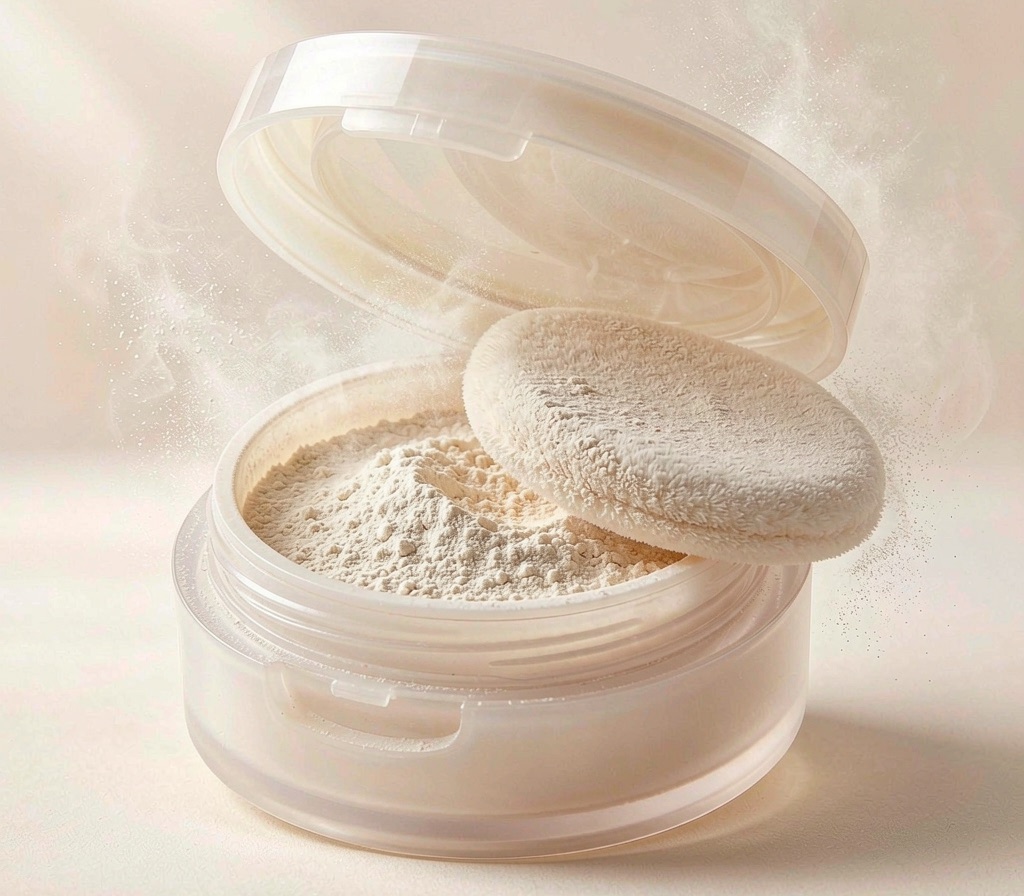
What a powder batch record carries
Milling, blending and filling run on GMPC and ISO 22716 certified lines in-house under licence 粤妆20250206, traceable from raw material to carton on each batch.
For a powder or granule the record carries moisture content and the particle size check against your approved retained Golden Sample, along with fill weight verification and the barrier specification of the pack.
Particle size is the product
In a granule or a powder the customer judges the product by how it flows, how quickly it dissolves and whether it feels coarse or fine. All three come from the particle size distribution, which is a controlled process parameter rather than a by-product of milling.
It also decides the fill. Fine powders fluidise and behave differently from coarse granules under a filler, so the format is settled before the pack is chosen.
The dry formats we produce
Two dry formats can look identical in the pack and behave completely differently in water.
| Format | Process demand | Where it fits |
|---|---|---|
| Granule | Size grading and dissolution tuning | Soaks, bath products and scooped formats |
| Coated granule | Delayed dissolution, controlled release | Soaks built around a slow melt |
| Bath salt blend | Coarse grade, colour and fragrance retention | Retail bath gifts and spa lines |
| Low-dust agglomerate | Fewer fines, cleaner handling | Retail formats where dust draws complaints |
Cleansing powder solves the preservative paradox: with no water in the bottle, there is nothing to preserve — the 'fresh till the last use' story writes itself. Add the satisfying shake-and-foam demo and travel TSA-friendliness, and the format earns its shelf.
We blend mild surfactant powders with rice enzyme or papain at skin-safe levels, verify foam quality across hard and soft water (the demo dies in hard-water homes otherwise), and pack in single-dose sachets or shake-jars.
What keeps a dry blend from drifting
Fragrance retention is harder here
Volatile notes escape a dry matrix more easily than an emulsion. Load and carrier are chosen against that loss.
Bulk density versus fill weight
Settled and loose bulk densities differ, so a pack filled by volume can vary by weight. Fill is verified the way the customer experiences it.
Flow and scoop ability
A product scooped by hand needs a different flow behaviour from one dispensed through a shaker.
Dust and fill accuracy
Fine powders move like a fluid and can escape a standard filler. Filling equipment is matched to the particle behaviour.
The components that do the work here
INCI names and typical levels reflect publicly documented formulation practice. All values are adjustable in your build.
| Ingredient (INCI) | Typical Level | Function & Benefit |
|---|---|---|
| Sodium Cocoyl Isethionate | 20–40% | Powder foam base |
| Rice Enzyme (Protease) | 1–3% | Gentle polish story |
| Oryza Sativa (Rice) Powder | 10–30% | Soft-focus slip |
| Zea Mays (Corn) Starch | 20–40% | Flow and skin feel |
Moisture, flow and shipping questions
Is the enzyme exfoliating or cleansing?
Both, gently — the surfactant washes while trace protease polishes; enzyme levels stay far below irritation thresholds.
Why did my powder not foam well?
Hard water suppresses lather — our blend is verified at 400 ppm CaCO3, above most municipal water.
Shelf-life advantage?
Anhydrous = preservative-light and no rancidity; the freshness claim is structural, not marketing.
Every format this base can be filled in
Mixed-variant orders can split the stated MOQ across formats under one brand.
| Format / Specification | MOQ | Lead Time |
|---|---|---|
| Enzyme cleansing powder 50 g jar | 1,000 pcs | 10–15 days |
| Single-dose sachets 30-count box | 1,000 boxes | 10–15 days |
| Travel twin-pack (powder + mist) | 1,000 sets | 10–15 days |
MOQ and lead time above are the standard liquid, cream and gel route. The real minimum is set by the manufacturing system rather than the category: surfactant systems (shampoo, body wash) start at 2,000 pcs, stick formats at 3,000, and powders and sheet masks at 5,000 — with longer production runs to match.
Other dry formats we manufacture
Private Label Amino Acid Cleanser
The gentle-cleansing standard — pH-balanced surfactant systems that never leave skin tight.
Private Label Enzyme Mask
Exfoliation without acids — enzymatic renewal for the reactive-skin shelf.
Private Label Face Scrub
Physical exfoliation rebuilt for the microplastic-free era — polish without planet guilt.
Buyer guides for this build
Before you brief a supplier on this category, these are the guides that answer the questions buyers ask next — timelines, order quantities, cost structure and compliance.
From brief to released powder, step by step
- 1
Seal against moisture
The pack is sealed, and where needed the closure is specified for the humidity of the destination market.
- 2
Sieve and de-dust
A sieving step removes oversize material and fines that would otherwise change how the product flows.
- 3
Verify flow and appearance
Flow rate, colour and particle appearance are checked against the approved sample at release.
- 4
Set the particle specification
Size distribution is defined against the dissolution and flow the product needs, then held as a process parameter.
Grade, pack and inclusion options
- Hard-water foam verification
- Single-dose sachet format
- Travel-retail positioning
- Enzyme-activity stability data
Tell us the effect you want in water
Fast dissolve, slow melt or visible action — each one points to a different particle and coating. Send the effect and we quote the route.