Private Label AHA/BHA Exfoliating Mask
The weekly reset peel — high-dose acids in a wash-off format that keeps claims comfortable.
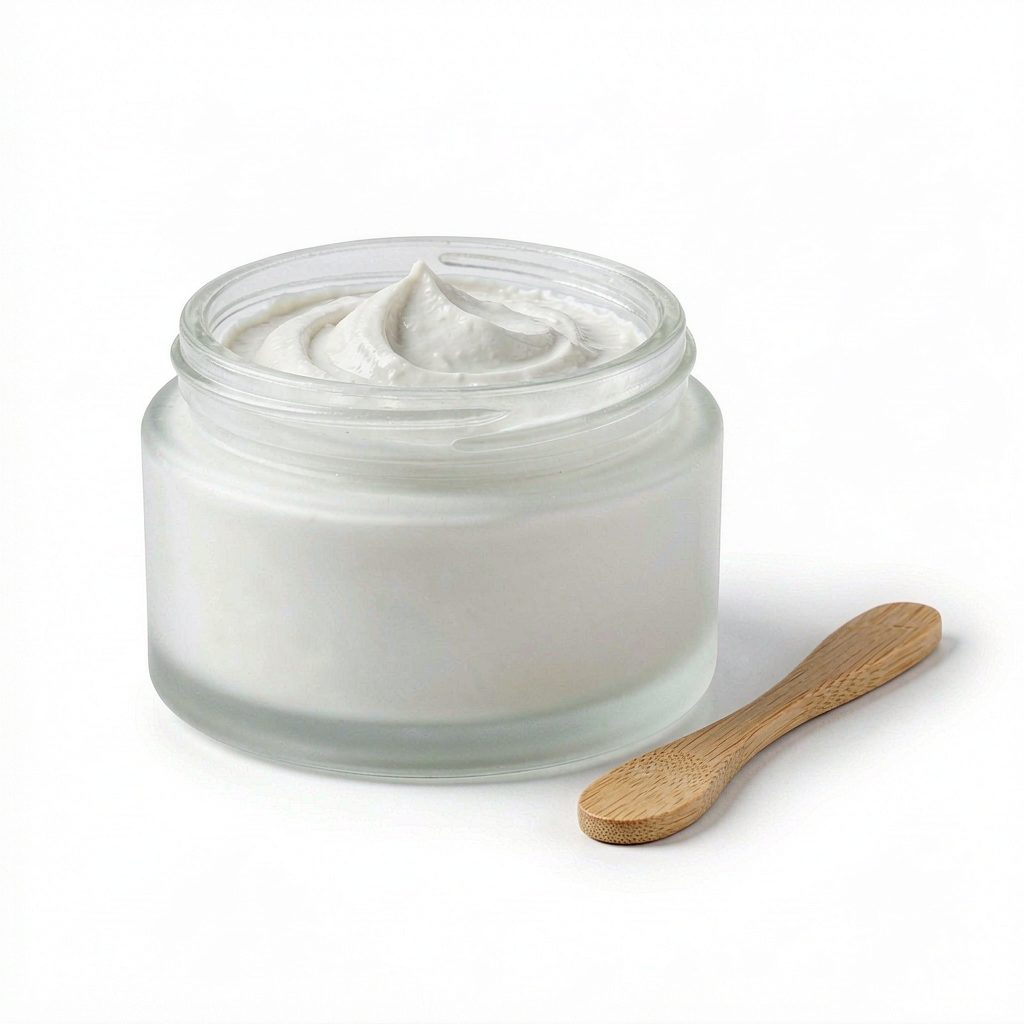
Every format this base can be filled in
Mixed-variant orders can split the stated MOQ across formats under one brand.
| Format / Specification | MOQ | Lead Time |
|---|---|---|
| AHA 30% + BHA 2% gel mask, 50 ml jar | 1,000 pcs | 10–15 days |
| AHA 25% + papaya enzyme cream mask, 50 ml | 1,000 pcs | 10–15 days |
| Single-dose peel sachets, 8 ml × 8 | 1,000 sets | 10–15 days |
MOQ and lead time above are the standard liquid, cream and gel route. The real minimum is set by the manufacturing system rather than the category: surfactant systems (shampoo, body wash) start at 2,000 pcs, stick formats at 3,000, and powders and sheet masks at 5,000 — with longer production runs to match.
How the dwell behaviour is fixed before scale-up
- 1
Set the dwell time and the claim
How long the mask stays on decides how much active it can carry and what it can credibly claim.
- 2
Tune the drying and comfort profile
The mask is assessed on skin for the full dwell time, not only at the moment of application.
- 3
Verify the cut and fit
Cut geometry is checked against the reference so the mask sits the way the approved sample did.
- 4
Check the dwell behaviour
Drying, setting and rinsing are re-checked on the approved sample so the behaviour the buyer signed off is the behaviour that ships.
Where the compliance file comes from
The line is GMPC and ISO 22716 certified, and each batch carries raw-material-to-carton traceability under licence 粤妆20250206.
For a mask the file is built on the in-use preservation study and the fill weight of the unit, with the certificate of analysis, stability summary, microbiology report and MoCRA / CPNP-ready documentation attached to the order. Each batch is released against the retained Golden Sample.
High-percentage AHA peels own the 'weekly reset' slot: 25–30% glycolic-lactic blends with 2% BHA, applied for ten minutes then rinsed. The wash-off format allows dramatic doses while staying inside cosmetic rules, which is why this SKU dominates the at-home-peel niche.
pH sits at 3.5–3.8 for efficacy with managed sting, and the base carries soothing buffers — papaya enzyme options for the natural shelf, or niacinamide post-care pairings. Clay-tinted and gel textures both available.
Build out the mask range
Private Label Salicylic Acid Serum
Oil-soluble BHA pore care — pH-disciplined and dosed within EU limits.
Private Label Clay Mask
The 10-minute ritual with the visual demo — clays that purify without the tight-squeak.
Private Label Enzyme Mask
Exfoliation without acids — enzymatic renewal for the reactive-skin shelf.
Buyer guides for this build
Before you brief a supplier on this category, these are the guides that answer the questions buyers ask next — timelines, order quantities, cost structure and compliance.
Where this formula can be adjusted
- Jar or single-dose sachet formats
- 30/2 classic or 25% + enzyme gentler build
- Usage-guide insert with timing card
- Post-care pairing SKUs (HA serum, barrier cream)
Removal, fit and pack questions
How do 30% acids stay cosmetic-compliant?
Wash-off products have different dose allowances than leave-on; the 10-minute rinse format is the established retail pattern. Documentation is included.
What sting level should customers expect?
Tingling for the applied minutes is normal; buffering agents keep it comfortable. We provide claim wording that sets honest expectations.
How often is the mask used?
Once weekly as positioned; the insert card we supply shows a weekly schedule and pairings.
Four levers on a mask
Sheet saturation level
A sheet can hold only so much liquid without dripping. Saturation is tuned against the pack, the shelf life and how the customer applies it.
Fit across face shapes
One cut does not suit every market. Where a category is competitive, the cut is treated as part of the product rather than a purchasing line item.
Drying behaviour can be designed
Whether a clay mask tightens or stays comfortable is decided by the clay blend and the humectant level, not by the clay alone.
Adhesion and fit
A sheet that lifts at the edges is judged a bad mask regardless of what is in it. Cut and material are part of the specification.
What is delivered during the dwell
INCI names and typical levels reflect publicly documented formulation practice. All values are adjustable in your build.
| Ingredient (INCI) | Typical Level | Function & Benefit |
|---|---|---|
| Glycolic Acid | 15–20% | Small-molecule surface renewal |
| Lactic Acid | 5–10% | Gentler humectant acid |
| Salicylic Acid | 2% | Pore-level clearance |
| Papain (papaya enzyme) | 0.5–1% | Natural-shelf enzymatic route |
Single use is a preservation decision, not only a cost one
A sealed sachet removes the in-use contamination a jar invites, which can simplify the preservation file considerably. The trade is unit cost and pack volume.
For markets where the preservative profile is tightly restricted that trade is often worth making, because the format is doing work the formula would otherwise have to do.
Where each route fits a brief
Each of these sets a different customer expectation, and the formulation is built to meet it.
| Format | Release behaviour | Typical brief |
|---|---|---|
| Clay and mud | Absorptive, drying, visibly tightening | Purifying and oil-control positioning |
| Sheet and patch | Occlusive, even delivery across the dwell | Single-use and travel-friendly formats |
| Biocellulose sheet | Tight adhesion, even delivery | Premium single-use masks |
| Peel-off film | Sets to a film, removed in one piece | Formats sold on a visible result |
Tell us the dwell time
Ten minutes or overnight decides the whole build. Send the usage pattern and the format, and we quote within 24 hours.