Private Label Leave-In Conditioner
Protection that stays on — sprays and creams for curly routines and heat-styled hair.
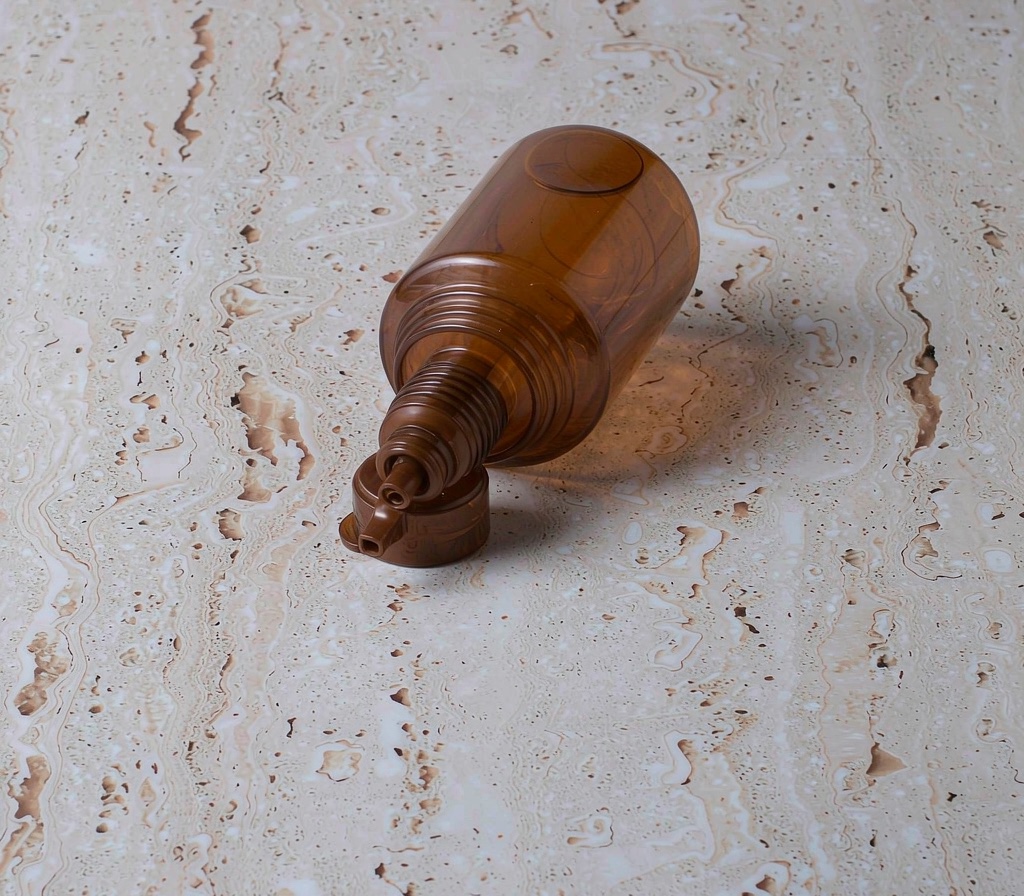
The pack is part of the emulsion
A jar exposes the surface to air and fingers at every use; an airless pump does not. The same formula can carry a different preservation strategy and a different shelf life depending on which one it is filled into.
That is why the pack is chosen early rather than at the end. Selecting it after the formula is fixed usually means revisiting the preservation study, and sometimes the emulsifier system as well.
Emulsion systems and the textures they give
The route fixes the texture, the melt behaviour and the fill temperature at the same time, so it is usually settled early.
| Route | Texture character | Typical brief |
|---|---|---|
| Structured balm | High melt point, protective film | Barrier repair and winter edits |
| Light lotion | Fast-absorbing with little residue | Volume body and face lines sold on daily use |
| Concentrated base | Thick in the jar, spreads thin | Face creams sold on a little going a long way |
| Oil-rich paste | High oil phase, low water | Balm-adjacent textures delivered from a tube |
Formats we fill this emulsion into
Mixed-variant orders can split the stated MOQ across formats under one brand.
| Format / Specification | MOQ | Lead Time |
|---|---|---|
| Detangling leave-in spray 200 ml | 1,000 pcs | 10–15 days |
| Heat-protectant leave-in cream 150 ml | 1,000 pcs | 10–15 days |
| Curl-defining leave-in milk 200 ml | 1,000 pcs | 10–15 days |
MOQ and lead time above are the standard liquid, cream and gel route. The real minimum is set by the manufacturing system rather than the category: surfactant systems (shampoo, body wash) start at 2,000 pcs, stick formats at 3,000, and powders and sheet masks at 5,000 — with longer production runs to match.
Leave-in conditioner is the multi-tasker of the category: detangles, cushions heat styling and defines curls in one step. Spray formats own the convenience shelf; cream formats own the curly-girl routine where 'moisture layering' is the method.
Builds pair cationic conditioning polymers with humectants, and optional heat-protective films (polyquaternium and acrylate systems) add the 180–230 °C protection claim. Application instructions matter — the insert card prevents the over-application that turns hair crunchy.
Where an emulsion succeeds or fails
Cooling rate sets the crystal
Fatty alcohols and butters crystallise as the batch cools. Ramp the temperature too quickly and the texture turns grainy in a way that only shows up weeks later.
A gel-cream is not a thin cream
A gel-cream breaks on contact while a cream spreads and stays put. Customers read that difference immediately, so the two are treated as separate formats rather than one with less oil.
Fill temperature and the line
The product has to be fluid enough to fill and structured enough to hold its shape in the pack. Both are read off the same viscosity curve.
Challenge the preservative in the matrix
A challenge test run in water says little about the same preservative inside a cream, because it partitions between the two phases. The study runs against the product as filled.
The questions that come up every time
Can leave-in replace rinse-out conditioner?
For some routines yes, but most customers use both — rinse-out for the wash day, leave-in daily. Bundle them and the average order rises.
How does heat protection work chemically?
Film-forming polymers spread heat and slow moisture loss at styling temperatures; the claim is documented with the film system in your dossier.
Why is it the curly-hair essential?
Curly methods layer moisture; leave-in is the step that stays. It is also the SKU most often repurchased monthly.
Formulas that sit beside this one
Private Label Hair Conditioner
The repeat-purchase anchor of every hair line — detangling emulsions by texture tier.
Private Label Curl Cream
Definition by curl pattern — creams and gels tuned from loose waves to tight coils.
Private Label Heat Protectant Spray
The insurance step for iron users — thermal films documented to 230 °C.
Buyer guides for this build
Before you brief a supplier on this category, these are the guides that answer the questions buyers ask next — timelines, order quantities, cost structure and compliance.
What can be adjusted on this emulsion
- Spray, cream or milk formats
- Heat-protection claim with film documentation
- Curly-routine positioning support
- Travel-size 60 ml add-on
The paperwork that travels with a cream order
Manufacturing takes place in-house under GMPC and ISO 22716 certification, licence 粤妆20250206, with raw-material-to-carton traceability on each batch.
Every production order ships with a certificate of analysis, a stability summary, a microbiology report and MoCRA / CPNP-ready documentation.
Texture is the hardest property to describe in numbers, so the retained Golden Sample is kept on file as the reference a batch is released against, alongside the viscosity and pH readings on the record.
How an emulsion goes from brief to released batch
- 1
Set the oil phase against the brief
Emollients, butters and oils are chosen for the after-feel the brief describes, then costed against the price tier.
- 2
Set the phase temperatures
Oil and water phases are heated to matched temperatures so the emulsion forms evenly rather than shocking one phase into the other.
- 3
Run the preservation study
The preservative system is challenged inside the finished emulsion rather than in water alone, because it partitions between two phases.
- 4
Run the freeze-thaw cycle
Where the shipping route can freeze, the batch is cycled through it before release, because that test finds what a static study misses.
What the oil phase is carrying
INCI names and typical levels reflect publicly documented formulation practice. All values are adjustable in your build.
| Ingredient (INCI) | Typical Level | Function & Benefit |
|---|---|---|
| Behentrimonium Methosulfate | 0.5–2% | Slip and static control |
| Polyquaternium-69 class | 1–2% | Heat-protective film |
| Aloe Barbadensis Leaf Juice | 2–5% | Lightweight hydration |
Bring us the shelf life, not just the formula
The stability window decides the emulsifier system. Tell us how long the product has to hold, and we build backwards from that number.