Private Label Heat Protectant Spray
The insurance step for iron users — thermal films documented to 230 °C.
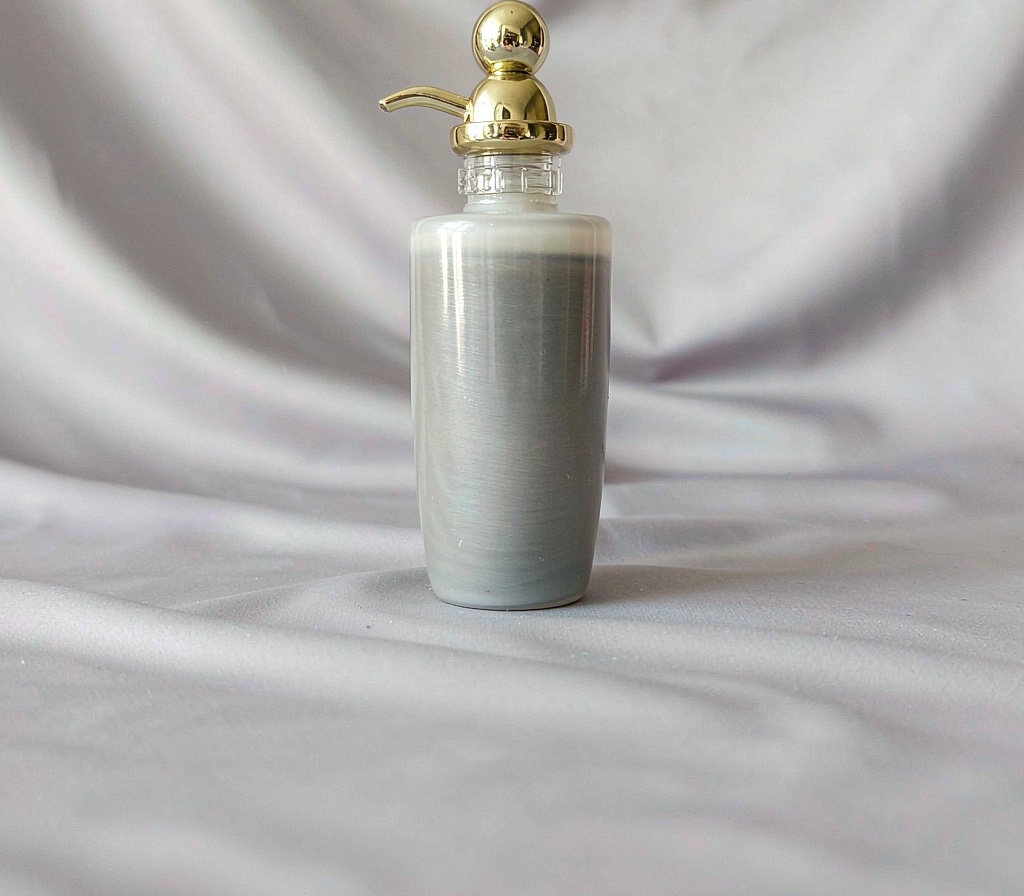
What is adjustable on this fluid
- Mist or cream formats
- 230 °C documentation pack
- Iron-routine insert cards
- Silicone-free route available
Complete the routine with
Private Label Hair Serum
The smoothing authority — film systems that shut down frizz in humid climates.
Private Label Leave-In Conditioner
Protection that stays on — sprays and creams for curly routines and heat-styled hair.
Private Label Hair Spray
The styling anchor in three hold tiers — brushable flexibility to red-carpet lock.
Buyer guides for this build
Before you brief a supplier on this category, these are the guides that answer the questions buyers ask next — timelines, order quantities, cost structure and compliance.
Heat protectant is the step customers skip until they see the damage — then never skip again. Thermal-protection films spread and slow heat transfer at flat-iron temperatures, and the credible claim is documented protection to 230 °C, the maximum of common styling tools.
We verify film performance across the 180–230 °C range and tune for two textures: fine mists for daily iron users and richer creams for coarse hair. The iron-routine insert card (mist → style → serum) turns a single SKU into a routine sale.
pH, stability and shelf-life questions
How does heat protection actually work?
Films distribute heat and slow water loss at the fiber surface — measurable in tensile testing at iron temperatures, which is the documentation we supply.
Mist or cream?
Mist for daily fine hair and speed; cream for coarse or very damaged hair. The duo covers a household.
Can we claim 230 °C protection?
Yes with the film-system documentation; we also provide the test method summary for your claims file.
Order quantities by pack size
Mixed-variant orders can split the stated MOQ across formats under one brand.
| Format / Specification | MOQ | Lead Time |
|---|---|---|
| Thermal-protect mist 200 ml | 1,000 pcs | 10–15 days |
| Rich heat-protect cream 150 ml | 1,000 pcs | 10–15 days |
| Protect + shine iron duo set | 1,000 sets | 10–15 days |
MOQ and lead time above are the standard liquid, cream and gel route. The real minimum is set by the manufacturing system rather than the category: surfactant systems (shampoo, body wash) start at 2,000 pcs, stick formats at 3,000, and powders and sheet masks at 5,000 — with longer production runs to match.
The route an aqueous base takes through production
- 1
Dissolve in order of solubility
Ingredients go in by solubility rather than convenience, since the order affects both dissolution and how the system behaves afterwards.
- 2
Choose the barrier pair
Oxygen and light barriers are selected together with the pack, since either one alone leaves an oxidation route open.
- 3
Verify the water first
Purified water is checked against its own specification before anything is added, because it is the majority of the formula.
- 4
Verify dosage across the pack
Where the pack meters a dose, the delivered volume is checked across the life of the pack rather than only when it is full.
What this fluid is built around
INCI names and typical levels reflect publicly documented formulation practice. All values are adjustable in your build.
| Ingredient (INCI) | Typical Level | Function & Benefit |
|---|---|---|
| Polyquaternium-55 class | 1–2% | Thermal-spread film |
| Hydrolyzed Keratin | 0.5–1% | Fiber reinforcement |
| Dimethicone (optional) | 1–2% | Iron glide and shine |
Why a fluid is checked against a sample, not a number
Assay and pH tell you whether the chemistry is right; they do not tell you whether the product looks the way the buyer approved. Colour and clarity are read against the retained Golden Sample.
Production runs on GMPC and ISO 22716 certified lines under manufacturing licence 粤妆20250206, traceable from raw material to carton on every batch.
Solubilisation has a ceiling
An oil-soluble active can be carried in a water-based fluid with a solubiliser, but only up to a point. Past that point the system turns hazy and then separates, and the point moves with temperature and with everything else in the formula.
The haze is not a cosmetic problem — it is the first visible sign of a system that has run out of capacity. Where clarity is part of the brief, the loading is set below the ceiling with a margin for the coldest shelf it will sit on.
Which fluid route fits which active
In a fluid, protection and texture are set by different parts of the system — the route decides which one leads.
| Route | Barrier it needs | Where it fits |
|---|---|---|
| Structured gel | Chelator with no oil phase to protect | Treatment and gel-adjacent formats |
| Low-water fluid | Airless or aluminium-barrier pack | Actives sensitive to oxygen and light |
| Micellar system | Surfactant-stabilised, clear pack | Cleansing waters and no-rinse formats |
| Emulsion-fluid hybrid | A light oil phase suspended in water | Slip and comfort without the weight of a cream |
What holds this fluid together over its shelf life
Solubiliser levels move the viscosity
The surfactant used to dissolve an oil-soluble active also changes the rheology of the base, sometimes markedly. The two are tuned together rather than one after the other.
Both ends of the pack's life
An airless pack keeps the product away from air, but it also changes how the last few grams are dispensed. The end of the pack's life belongs in the design as much as the first.
Colour shift is the early warning
Long before an assay moves, a sensitive active usually shows a colour change. It is checked against the retained sample at release.
Filtration has a pore size
Filtration fine enough to guarantee clarity can also strip a high-molecular-weight active or shift the viscosity. The pore size is chosen against both requirements at once.
Bring the claim and the climate
Where the product will be stored decides the barrier. Send the destination market and we quote against it within 24 hours.