Private Label Hair Fibers
Thicker in ten seconds — the cosmetic fix men actually re-buy.
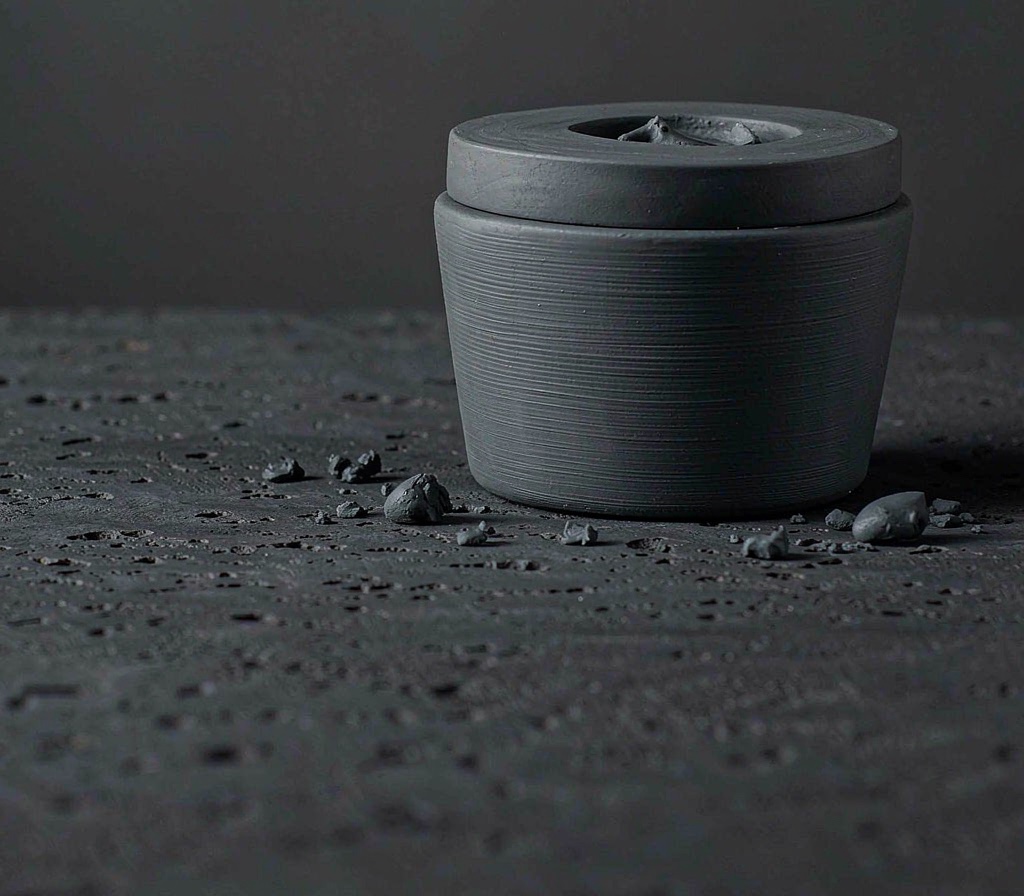
Pair this with
Private Label Hair Density Serum
The density story, worded honestly — fuller-looking hair, cosmetic pathway.
Private Label Caffeine Scalp Ampoule
The leave-on answer to rinse-off doubt — caffeine, applied where it counts.
Private Label Root Touch-Up Stick
Between color appointments, the stick holds the line.
Buyer guides for this build
Before you brief a supplier on this category, these are the guides that answer the questions buyers ask next — timelines, order quantities, cost structure and compliance.
Blending is where a dry formula is won or lost
Two powders mixed together behave differently from either one alone. Density, particle shape and moisture all affect whether the blend stays uniform from the first scoop to the last.
That is why the blend is designed against segregation rather than checked for it afterwards, and why fill verification is done per unit rather than once per batch.
The dry formats we produce
Moisture control is common to all of them. What differs is the particle behaviour.
| Format | Process demand | Where it fits |
|---|---|---|
| Coated granule | Delayed dissolution, controlled release | Soaks built around a slow melt |
| Low-dust agglomerate | Fewer fines, cleaner handling | Retail formats where dust draws complaints |
| Clay powder | Dispersible grade, resistant to clumping | Powder masks mixed by the customer |
| Fine powder | Dust control and precise fill weight | Shaker and sifter formats |
Pack and inclusion options
- Six-shade range standard
- Shake / spray applicators
- Refill sustainability packaging
- Shade-matching insert cards
Hair fibers are the honesty product of the thinning category: not a treatment, not a claim — charged keratin fibers that cling to existing hair and read as fuller coverage in seconds. The re-purchase is monthly, the loyalty is high, and the shade range is the moat.
We produce keratin fibers in six calibrated shades, fill shake applicators and spray-refill formats, and control static charge per batch — the property that decides whether fibers bind for eight hours or fall by noon.
How a dry format goes from brief to released batch
- 1
Set the particle specification
Size distribution is defined against the dissolution and flow the product needs, then held as a process parameter.
- 2
Sieve and de-dust
A sieving step removes oversize material and fines that would otherwise change how the product flows.
- 3
Mill to a defined distribution
Milling runs to a particle size target rather than to a time, and the result is verified between batches.
- 4
Seal against moisture
The pack is sealed, and where needed the closure is specified for the humidity of the destination market.
Questions we answer on every dry-format brief
How is charge controlled?
Batch-level static testing — undercharged fibers fall off, overcharged clump. We test binding hours on swatches before release.
Wind and sweat proof?
With the holding spray companion, yes — most lines bundle fibers + holding spray as the 2-SKU system.
Shade matching for new brands?
Six shades cover the market; we provide swatch cards and guidance so customers self-match with low return rates.
Formats and order quantities
Mixed-variant orders can split the stated MOQ across formats under one brand.
| Format / Specification | MOQ | Lead Time |
|---|---|---|
| Fibers shake jar 25 g | 1,000 pcs | 10–15 days |
| Six-shade starter set | 1,000 sets | 10–15 days |
| Refill pouch 50 g | 1,000 pcs | 10–15 days |
MOQ and lead time above are the standard liquid, cream and gel route. The real minimum is set by the manufacturing system rather than the category: surfactant systems (shampoo, body wash) start at 2,000 pcs, stick formats at 3,000, and powders and sheet masks at 5,000 — with longer production runs to match.
The components that carry the effect
INCI names and typical levels reflect publicly documented formulation practice. All values are adjustable in your build.
| Ingredient (INCI) | Typical Level | Function & Benefit |
|---|---|---|
| Hydrolyzed Keratin fibers | ~95% | Charge-carrying coverage |
| Ammonium Sulfate (charge agent) | trace | Static binding |
| CI pigments (per shade) | — | Shade calibration |
Where the compliance file comes from
The line is GMPC and ISO 22716 certified, and each batch carries raw-material-to-carton traceability under licence 粤妆20250206.
For a dry format the file is built on moisture control through milling, blending and filling, with the certificate of analysis, stability summary, microbiology report and MoCRA / CPNP-ready documentation attached to the order. Batches are released against the retained Golden Sample.
What decides how this flows and keeps
Coating changes the release
A coating can delay dissolution or protect a sensitive component. It is a process decision with a visible effect on how the product behaves in water.
Static in fine grades
Very fine powders carry static, which makes them cling to equipment and to the inside of the pack. Handling is designed around it.
Moisture is the enemy
Powders take on water from the air. Barrier packaging and a moisture specification are what keep the product free-flowing to the end of its life.
Colour and botanical inclusions
Inclusions are chosen for how they look in the pack and what they do in use, and both are checked after the shipping cycle.
Tell us the effect you want in water
Fast dissolve, slow melt or visible action — each one points to a different particle and coating. Send the effect and we quote the route.