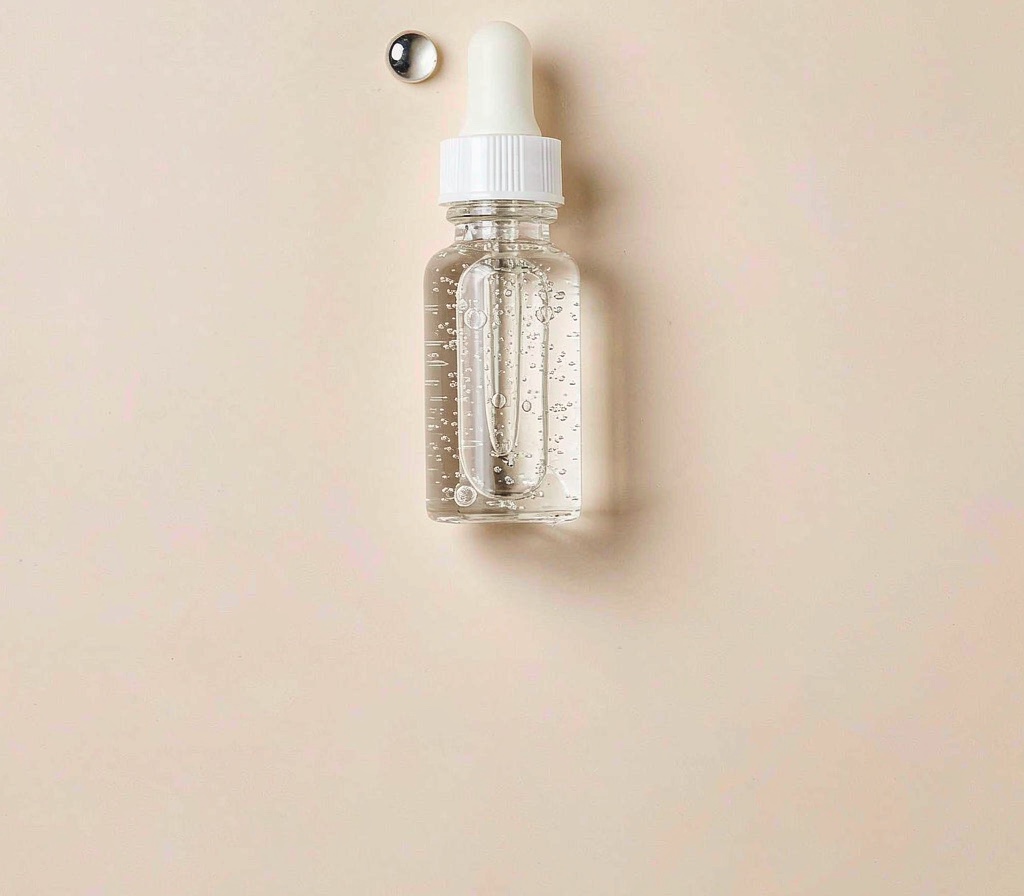
Private Label Caffeine Scalp Ampoule
The leave-on answer to rinse-off doubt — caffeine, applied where it counts.
pH, stability and shelf-life questions
Why ampoules over a tonic bottle?
Dose discipline and course psychology — vials make the 30-day commitment visible, which doubles completion and repurchase.
Greasy hair after application?
No — the leave-on base dries tack-free in minutes; we verify with the morning-after panel.
Men's or unisex?
Both sell; the nozzle-and-course format skews male — the graphics adapt, the formula stays.
Traceability from raw material to carton
Each batch is traceable from the incoming raw material through to the sealed carton, on GMPC and ISO 22716 certified lines operating under licence 粤妆20250206.
For a fluid the traceability record is read with the retained Golden Sample and the stability data, because colour, clarity and assay each move on their own timeline.
The route an aqueous base takes through production
- 1
Dose the chelator against the water
The chelation level follows the incoming water and raw materials rather than a fixed line, because trace metals vary from source to source.
- 2
Verify against the retained sample
Assay, pH and appearance are checked at release against the sample your buyer approved.
- 3
Flush the headspace
Where oxygen-sensitive actives are present, the headspace is displaced before the pack is sealed.
- 4
Validate the assay in the matrix
The analytical method is proven on the finished product before it is used at release, because a method written for the raw material often does not carry over.
Caffeine scalp ampoule fixes the rinse-off problem: a leave-on concentrate applied part-line by part-line, staying on the scalp for hours instead of seconds. The precision nozzle is the ritual; the ampoule course is the business model (30-day packs).
We dose caffeine in leave-on-effective ranges, add niacinamide and peptides for the multi-pathway story, and engineer nozzle applicators that part hair cleanly — the applicator is half the perceived efficacy.
What sits behind this fluid's claim
INCI names and typical levels reflect publicly documented formulation practice. All values are adjustable in your build.
| Ingredient (INCI) | Typical Level | Function & Benefit |
|---|---|---|
| Caffeine | 0.5–2% | Leave-on energizing dose |
| Niacinamide | 1–2% | Scalp tone support |
| Palmitoyl Tripeptide-1 | 0.5–1% | Signaling peptide |
| Panthenol | 1% | Comfort layer |
Pair it with these builds
Private Label Caffeine Shampoo
Espresso for the follicle story — the pharmacy-shelf energy wash.
Private Label Scalp Serum
The skincare-ification of hair — leave-on scalp treatments with nozzle precision.
Private Label Hair Density Serum
The density story, worded honestly — fuller-looking hair, cosmetic pathway.
Buyer guides for this build
Before you brief a supplier on this category, these are the guides that answer the questions buyers ask next — timelines, order quantities, cost structure and compliance.
Pack formats, MOQ and lead time
Mixed-variant orders can split the stated MOQ across formats under one brand.
| Format / Specification | MOQ | Lead Time |
|---|---|---|
| Caffeine ampoule 8 ml × 8 vials | 1,000 boxes | 10–15 days |
| Daily nozzle bottle 50 ml | 1,000 pcs | 10–15 days |
| 30-day course box (ampoules + shampoo mini) | 1,000 sets | 10–15 days |
MOQ and lead time above are the standard liquid, cream and gel route. The real minimum is set by the manufacturing system rather than the category: surfactant systems (shampoo, body wash) start at 2,000 pcs, stick formats at 3,000, and powders and sheet masks at 5,000 — with longer production runs to match.
What decides whether this stays stable
Headspace oxygen
Air left in the bottle keeps reacting after fill. Low-oxygen filling removes most of the oxygen the product will ever encounter.
Water quality is an ingredient
Purified water has its own specification, and it matters more here than in any other format because it is most of the formula.
Viscosity keeps building after fill
Polymer-thickened fluids can continue to develop structure for days after filling. Specification limits are written for the settled product, not for the freshly made one.
The dropper or the pump
Dispensing decides dose consistency and how much air the product meets in use. It is a formulation-adjacent choice, not just a packaging one.
Where this formula can be adjusted
- Ampoule-course box economics
- Part-line precision nozzle engineering
- Leave-on tack-free verification
- Course + shampoo bundle program
Co-solvents buy solubility and charge for it
Adding a glycol or an alcohol widens what a water-based system can dissolve, and it is often the only way to carry a difficult active. The trade is that it also moves preservation, viscosity and how the product feels on skin.
Those side effects are consequences rather than surprises, and they are designed for from the start. Discovering them at the preservation study is where a launch schedule is usually lost.
Fluid routes and what each one has to protect
The more the active needs protecting, the more of the decision moves from the formula to the pack.
| Route | Barrier it needs | Where it fits |
|---|---|---|
| Two-chamber or mix-at-use | Separated phases until activation | Actives that cannot hold a shelf life in solution |
| Structured gel | Chelator with no oil phase to protect | Treatment and gel-adjacent formats |
| Simple aqueous | Chelator plus an opaque or UV-filtered pack | Stable actives in high-volume lines |
| Concentrated serum gel | Airless pump to handle the viscosity | High-load actives sold on a small dose |
Name the active that has to survive
One ingredient usually decides the whole base. Tell us which one matters most and we build the protection and the pack around it.