Private Label Scalp Serum
The skincare-ification of hair — leave-on scalp treatments with nozzle precision.
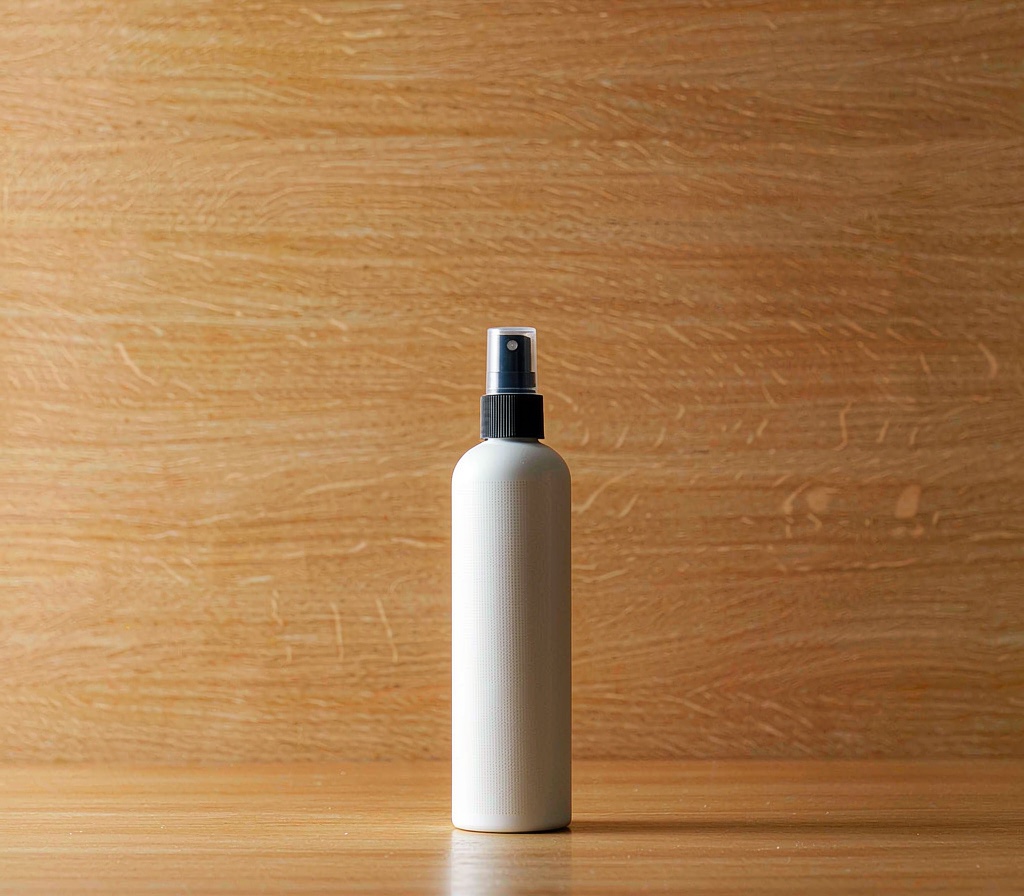
Scalp care is haircare's skincare moment: customers now treat the scalp as skin, and the leave-on serum is the category's treatment hero. Applicator nozzles part the hair and deliver actives to the skin — the ritual customers film — while niacinamide, caffeine and soothing agents carry the claims.
Formulation discipline is cosmetic-grade positioning: 'supports a healthy-looking scalp' language, no drug-territory promises. The nozzle matters as much as the formula; we stock precision-tip and roller options that make dosing feel clinical.
Claim options and pack routes
- Precision nozzle or roller applicators
- Density and soothing claim routes
- Shampoo-pair routine bundles
- Cosmetic claim-wording pack
The functional system in this base
INCI names and typical levels reflect publicly documented formulation practice. All values are adjustable in your build.
| Ingredient (INCI) | Typical Level | Function & Benefit |
|---|---|---|
| Niacinamide | 2–3% | Scalp barrier and oil balance |
| Caffeine | 0.2–0.5% | Circulation-story active |
| Panthenol + Allantoin | 0.5–1% | Comfort for daily leave-on |
What brands ask us about this category
Leave-on vs rinse-off scalp care?
Contact time: serums work the scalp all day or overnight, which is why the treatment claims live here rather than in the shampoo.
Does it make hair greasy?
Builds are water-based gels or light emulsions that absorb at the follicle; greasy residue is a formulation failure we test against.
What claims are compliant?
'Supports a healthy-looking scalp', 'reduces visible flaking' — cosmetic territory; we supply the wording pack per market.
Formats, pack sizes and MOQ
Mixed-variant orders can split the stated MOQ across formats under one brand.
| Format / Specification | MOQ | Lead Time |
|---|---|---|
| Niacinamide scalp serum 50 ml nozzle | 1,000 pcs | 10–15 days |
| Caffeine + botanical scalp drops 50 ml | 1,000 pcs | 10–15 days |
| Soothing scalp serum for sensitive 50 ml | 1,000 pcs | 10–15 days |
MOQ and lead time above are the standard liquid, cream and gel route. The real minimum is set by the manufacturing system rather than the category: surfactant systems (shampoo, body wash) start at 2,000 pcs, stick formats at 3,000, and powders and sheet masks at 5,000 — with longer production runs to match.
From brief to released fluid, step by step
- 1
Screen solubility at the cold end
The batch is cooled to the coldest shelf it will meet and checked for haze, which is where an overloaded solubiliser system shows itself.
- 2
Verify dosage across the pack
Where the pack meters a dose, the delivered volume is checked across the life of the pack rather than only when it is full.
- 3
Verify the water first
Purified water is checked against its own specification before anything is added, because it is the majority of the formula.
- 4
Fix the active system
Routes and levels are set against the claim, then checked for compatibility with each other before the base is built.
Pair it with these builds
Private Label Scalp Tonic
The post-gym scalp reset — cooling botanical tonics in spray format.
Private Label Anti-Hair Loss Shampoo
Density positioning done compliantly — caffeine and biotin systems with claim wording that survives review.
Private Label Scalp Scrub
The facial for the scalp — pre-wash exfoliation riding the skincare-ification wave.
Buyer guides for this build
Before you brief a supplier on this category, these are the guides that answer the questions buyers ask next — timelines, order quantities, cost structure and compliance.
Co-solvents buy solubility and charge for it
Adding a glycol or an alcohol widens what a water-based system can dissolve, and it is often the only way to carry a difficult active. The trade is that it also moves preservation, viscosity and how the product feels on skin.
Those side effects are consequences rather than surprises, and they are designed for from the start. Discovering them at the preservation study is where a launch schedule is usually lost.
Which fluid route fits which active
Two fluids can look identical in the bottle and behave completely differently by the end of the shelf life.
| Route | Barrier it needs | Where it fits |
|---|---|---|
| Buffer-controlled fluid | Standard pack, tight pH control | Actives that only work in a narrow pH window |
| Alcohol-based tonic | Simple pack, evaporating base | Oil-control formats and fast-dry tonics |
| Low-water fluid | Airless or aluminium-barrier pack | Actives sensitive to oxygen and light |
| Structured gel | Chelator with no oil phase to protect | Treatment and gel-adjacent formats |
What holds this fluid together over its shelf life
Chelation is dosed, not added
Too little chelator leaves trace metals free to catalyse oxidation; too much can undercut the preservation system or shift the pH. The level is set against the water and the raw materials.
Filtration has a pore size
Filtration fine enough to guarantee clarity can also strip a high-molecular-weight active or shift the viscosity. The pore size is chosen against both requirements at once.
The pH window is narrower than solubility
The range where an active is stable is often tighter than the range where it dissolves. Both ends are verified at fill rather than assumed.
Colour shift is the early warning
Long before an assay moves, a sensitive active usually shows a colour change. It is checked against the retained sample at release.
Where the compliance file comes from
The line is GMPC and ISO 22716 certified, and each batch carries raw-material-to-carton traceability under licence 粤妆20250206.
For a fluid the file is built on the preservation and stability studies run against the finished matrix, with the certificate of analysis, stability summary, microbiology report and MoCRA / CPNP-ready documentation attached to the order. Colour and clarity are read against the retained Golden Sample at release.
Tell us which active has to survive
Some actives dictate the entire base. Name the one that matters most and we build the protection around it.