Private Label Root Touch-Up Stick
Between color appointments, the stick holds the line.
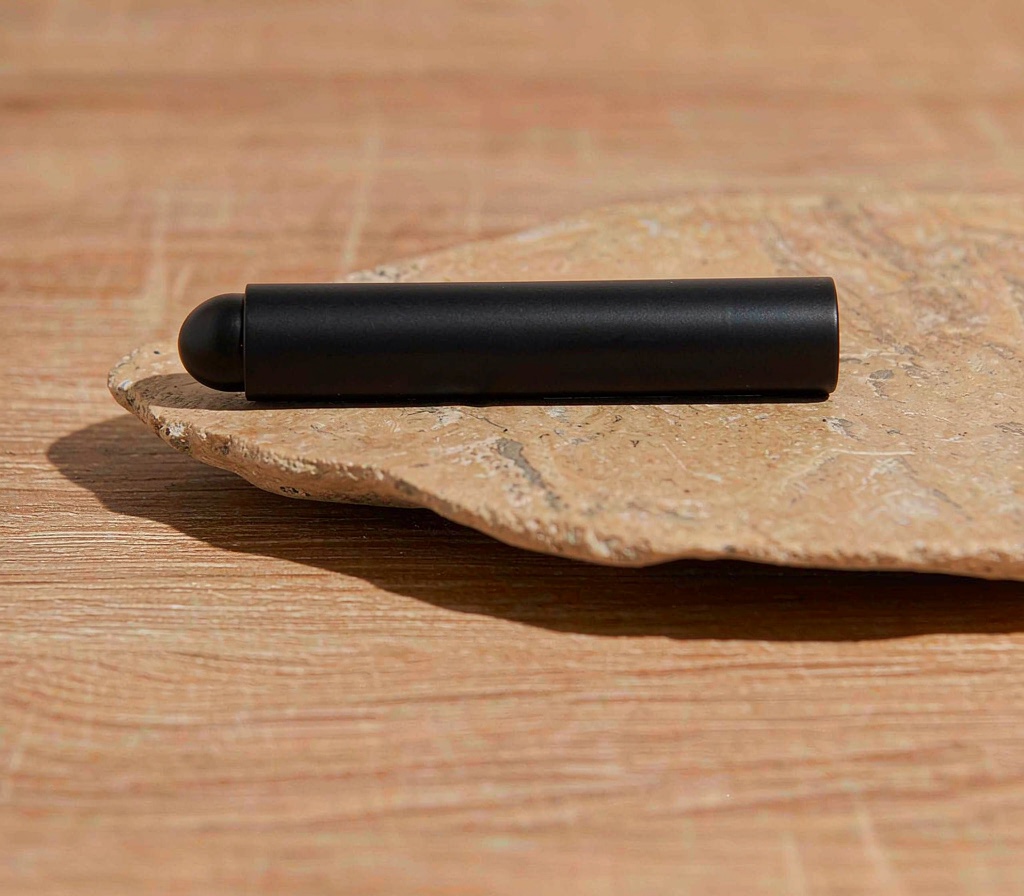
Melt point is a shipping decision
A solid or semi-solid product has to survive a container in summer and a warehouse in winter. That temperature range, not the texture observed in the laboratory, is what sets the wax and butter ratios.
Cycling the finished product through both extremes before release is the only reliable way to know that the melt point you designed is the melt point the customer receives.
Anhydrous routes and what each one is built for
Two blends can sit at the same melt point and feel entirely different in the hand, which is why the oil selection is quoted rather than assumed.
| Route | Feel and behaviour | Typical brief |
|---|---|---|
| Antioxidant-tuned system | Built against rancidity | Oils sold into hot, humid markets |
| Dry-touch ester blend | Absorbs quickly, matte finish | Body oils positioned against a greasy feel |
| Light finishing oil | Fast absorb with low residue | Hair and body oils sold on dry-touch claims |
| Jojoba-ester base | Close to skin lipids, light on the skin | Sensitive-skin and facial oils |
Why oxidative stability leads the file here
An anhydrous product does not fail by contamination; it fails by going rancid, and that process is slow enough to be missed by a bench check taken on the day of fill.
Production runs on GMPC and ISO 22716 certified lines under manufacturing licence 粤妆20250206, with traceability from raw material to carton on every batch and the retained Golden Sample held as the release reference.
What decides how this feels and keeps
Different tests, not fewer
With no water there is no preservation challenge. Oxidative stability and microbial ingress through the pack take its place.
Melt point and the shipping route
A balm that firms in a cold market and slumps in a hot one is a melt-point problem, solved through wax and butter ratios.
Fragrance behaves differently in oil
Scent develops more slowly and lasts longer in oil than in water, and the load is set for that behaviour rather than for a water-based reference.
Fragrance load reads stronger
Scent in an oil base is released more slowly and stays closer to the skin, so the same percentage behaves differently from a water-based product.
The stages this build passes through
- 1
Screen the pack against the blend
Oils and fragrance can migrate into plastics and liners, so the pack is tested against the finished formula.
- 2
Set the oil blend
Carrier oils are chosen for the after-feel the brief describes, then checked for how they behave in combination rather than alone.
- 3
Select the pack for the barrier
Glass, aluminium or treated plastic, chosen for the protection it gives the oil rather than for appearance alone.
- 4
Hold for stability release
The batch is released against oxidative stability results rather than against a calendar date.
Root touch-up sticks sit exactly on the customer's pain point: the two weeks between color appointments when the line of new growth shows. A wax-based temporary color stick covers it in a swipe and washes out with shampoo — no commitment, no damage, no ammonia.
We produce stick formats in the salon shade range (blonde, brown, black, auburn, plus gray-target variants), with a glide that does not drag on dry hair and a color payoff that survives a light brush-through.
What the blend is built from
INCI names and typical levels reflect publicly documented formulation practice. All values are adjustable in your build.
| Ingredient (INCI) | Typical Level | Function & Benefit |
|---|---|---|
| Synthetic Wax grid | 30–45% | Stick structure and glide |
| CI pigments (per shade) | 5–15% | Temporary coverage |
| Simmondsia Chinensis (Jojoba) Seed Oil | 5–10% | Non-drag slip |
What brands ask us about this category
Does it transfer onto pillowcases?
It sets in a few minutes and resists light touch; we run transfer tests and recommend the setting powder companion for white-fabric markets.
Washes out fully?
Yes — wax-and-pigment, not dye; one clarifying shampoo clears it. That is the entire selling point.
Best channel?
Salons first (display box converts at the register), then e-commerce bundles with fibers and gray-hair shampoo.
Every format this base can be filled in
Mixed-variant orders can split the stated MOQ across formats under one brand.
| Format / Specification | MOQ | Lead Time |
|---|---|---|
| Touch-up stick 10 g single shade | 1,000 pcs | 10–15 days |
| Five-shade program | 1,000 sets | 10–15 days |
| Salon display (24 pcs) | 1,000 boxes | 10–15 days |
MOQ and lead time above are the standard liquid, cream and gel route. The real minimum is set by the manufacturing system rather than the category: surfactant systems (shampoo, body wash) start at 2,000 pcs, stick formats at 3,000, and powders and sheet masks at 5,000 — with longer production runs to match.
Customisation on this build
- Salon shade program
- Custom shade development
- Salon display boxes
- Pairing with hair fibers
Other anhydrous builds
Private Label Hair Fibers
Thicker in ten seconds — the cosmetic fix men actually re-buy.
Private Label Gray Hair Shampoo
Silver deserves care, not surrender — anti-yellow wash for gray pride.
Private Label Silver Shampoo
Brightness for silver hair — blue-violet systems that keep grey luminous, not yellow.
Buyer guides for this build
Before you brief a supplier on this category, these are the guides that answer the questions buyers ask next — timelines, order quantities, cost structure and compliance.
Describe the feel, we will build the blend
Dry, silky or rich — send the after-feel you want and the pack format, and we quote the oil system within 24 hours.