Private Label Oil Control Serum
Built for the 3 p.m. shine check — mattifies without the tight, stripped feel.
Where a fluid build succeeds or fails
Chelation is dosed, not added
Too little chelator leaves trace metals free to catalyse oxidation; too much can undercut the preservation system or shift the pH. The level is set against the water and the raw materials.
Light is a reagent
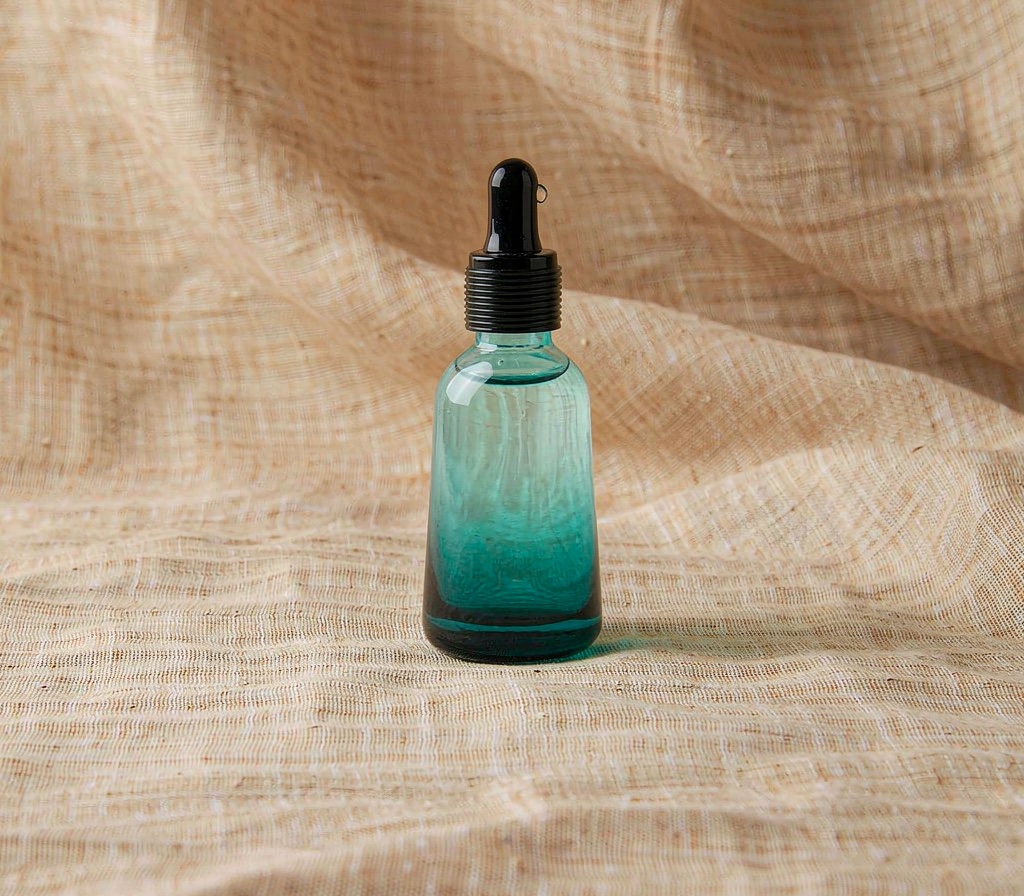
UV accelerates the same reactions that heat does. Clear glass looks premium on a shelf and is usually the worst choice for a sensitive active.
Water quality is an ingredient
Purified water has its own specification, and it matters more here than in any other format because it is most of the formula.
Compatibility between actives
Two actives that work alone can destabilise each other in the same bottle. Combinations are tested rather than assumed.
Oil control serum serves the customer who blots at lunch: the goal is a soft matte that lasts through humid afternoons without dehydrating the surface. Zinc PCA and niacinamide modulate shine over hours while silica microsponges absorb the excess immediately.
We test mattification on artificial sebum film and through a humidity chamber, because a serum that mats in a dry lab can slide right off in Southeast Asia. Texture stays watery-light so it layers under sunscreen.
Formulas that sit beside this one
Private Label Pore Minimizing Serum
Two promises in one bottle — instant blur now, tighter-looking pores over time.
Private Label Salicylic Acid Serum
Oil-soluble BHA pore care — pH-disciplined and dosed within EU limits.
Private Label Matte Moisturizer
Hydration with a filter — the soft-focus step before makeup.
Buyer guides for this build
Before you brief a supplier on this category, these are the guides that answer the questions buyers ask next — timelines, order quantities, cost structure and compliance.
The active system and its working levels
INCI names and typical levels reflect publicly documented formulation practice. All values are adjustable in your build.
| Ingredient (INCI) | Typical Level | Function & Benefit |
|---|---|---|
| Zinc PCA | 0.5–1.5% | Sebum-modulating |
| Niacinamide | 2–5% | Long-term oil balancing |
| Silica Microsponges | 1–2% | Instant sebum absorption |
| Enantia Chlorantha Bark Extract | 1–2% | Pore and shine reduction support |
How a fluid is released, batch by batch
Filling runs in-house on GMPC and ISO 22716 certified lines under licence 粤妆20250206, with each batch traceable from raw material to carton.
Release reads the assay, the pH and the clarity, and compares the batch with the retained Golden Sample — colour and haze usually move before any assay reading does.
Viscosity without weight is the whole craft of a fluid
A serum should feel like water and behave like a gel, and that combination is built with polymer choice and dosage rather than with more thickener. The two properties pull in opposite directions.
Push it one way and the product drips off the dropper; push it the other and it leaves a film on the skin. The sensory outcome of a fluid is decided in the rheology long before it is described on the pack.
Which fluid route fits which active
The more the active needs protecting, the more of the decision moves from the formula to the pack.
| Route | Barrier it needs | Where it fits |
|---|---|---|
| Alcohol-based tonic | Simple pack, evaporating base | Oil-control formats and fast-dry tonics |
| Biphasic | Two phases, shaken before use | Formats that need an activation step |
| Two-chamber or mix-at-use | Separated phases until activation | Actives that cannot hold a shelf life in solution |
| Preservative-light fluid | Airless or single-dose pack | Markets where the preservative profile is restricted |
Formats, pack sizes and MOQ
Mixed-variant orders can split the stated MOQ across formats under one brand.
| Format / Specification | MOQ | Lead Time |
|---|---|---|
| Zinc PCA 1% + niacinamide 4% serum, 30 ml | 1,000 pcs | 10–15 days |
| Oil-control serum + clay mask duo set | 1,000 sets | 10–15 days |
| Travel airless 15 ml format | 1,000 pcs | 10–15 days |
MOQ and lead time above are the standard liquid, cream and gel route. The real minimum is set by the manufacturing system rather than the category: surfactant systems (shampoo, body wash) start at 2,000 pcs, stick formats at 3,000, and powders and sheet masks at 5,000 — with longer production runs to match.
pH, stability and shelf-life questions
Will it over-dry combination skin?
No — the humectant base keeps the surface comfortable while absorption happens only where sebum sits. Dry zones stay untouched.
Can it be used under sunscreen?
Yes, the watery gel-serum sets in under a minute and does not disturb SPF films — we verify with sun protection filter assays.
What claims are compliant?
Reduces the appearance of shine, mattifies for hours and balances oily skin — avoid 'cures acne' territory; we pre-clear your copy.
What you can change on this build
- Humidity-chamber mattification data pack
- Acne-prone-safe ingredient screening
- Airless packaging for clinic channels
- Twin set with clay or charcoal mask
The route an aqueous base takes through production
- 1
Hold for the full release panel
Assay, pH, clarity and microbiology are all read before release, because in a fluid there is nowhere for a deviation to hide.
- 2
Run preservation and stability together
Both studies run against the finished matrix, across the temperature range of the destination market.
- 3
Verify dosage across the pack
Where the pack meters a dose, the delivered volume is checked across the life of the pack rather than only when it is full.
- 4
Dose the chelator against the water
The chelation level follows the incoming water and raw materials rather than a fixed line, because trace metals vary from source to source.
Name the active that has to survive
One ingredient usually decides the whole base. Tell us which one matters most and we build the protection and the pack around it.