Private Label Matte Moisturizer
Hydration with a filter — the soft-focus step before makeup.
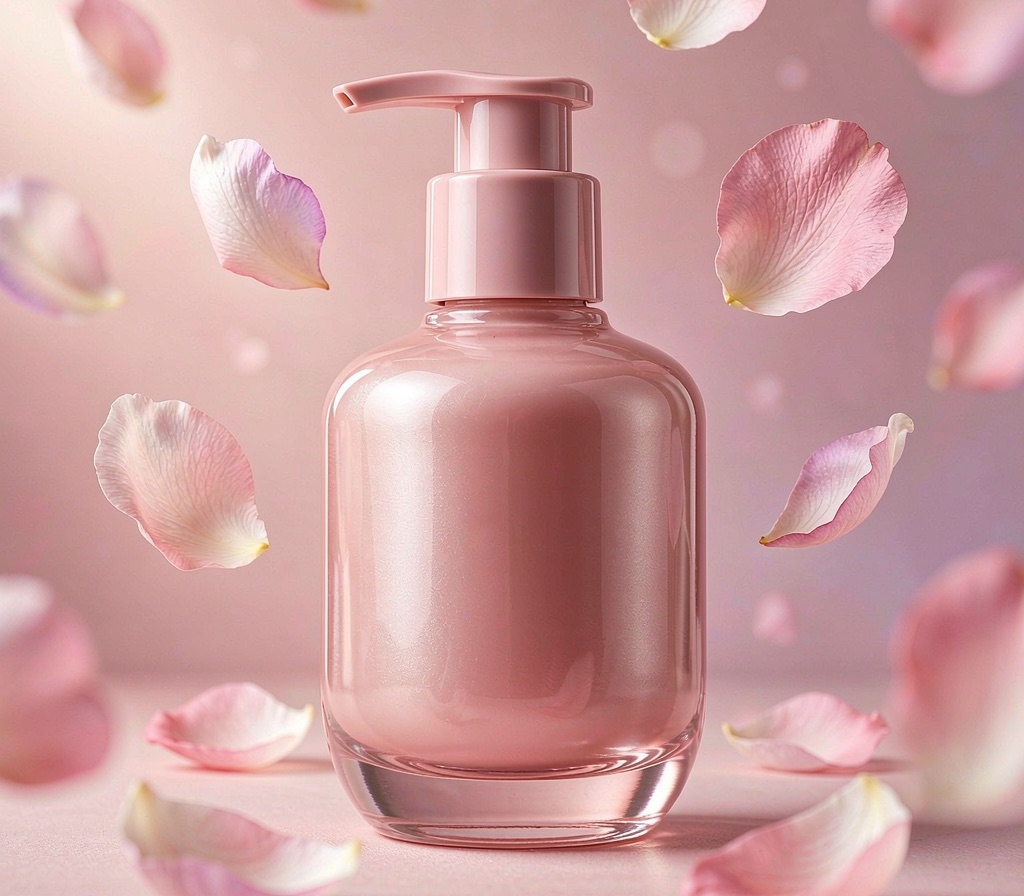
Matte moisturizer is the bridge product between skincare and makeup: hydrating emollients underneath, soft-focus blurring powders on top, so foundation applies to an optically smoothed canvas. It sells to the 'my skin but better' content audience.
We tune blur particle size for camera performance (softened pores without white cast on deeper tones), verify no pilling under silicone and water-based foundations both, and keep the hydration real — blur without comfort reads chalky by 3 p.m.
The pack is part of the emulsion
A jar exposes the surface to air and fingers at every use; an airless pump does not. The same formula can carry a different preservation strategy and a different shelf life depending on which one it is filled into.
That is why the pack is chosen early rather than at the end. Selecting it after the formula is fixed usually means revisiting the preservation study, and sometimes the emulsifier system as well.
Emulsion systems and the textures they give
Texture is the first thing a customer judges and the last thing a formula gives up cheaply — the route matters more than the wording.
| Route | Texture character | Typical brief |
|---|---|---|
| Light lotion | Fast-absorbing with little residue | Volume body and face lines sold on daily use |
| Oil-rich paste | High oil phase, low water | Balm-adjacent textures delivered from a tube |
| Lamellar (liquid crystal) | Rich, layered, slow-release feel | Barrier creams and premium night products |
| Anionic-emulsified | Classic body, broad compatibility | Mainstream creams where cost leads |
Customisation on this emulsion
- Deep-tone white-cast testing
- Foundation-compatibility matrix (silicone + water base)
- Tinted 3-shade extension
- Camera-verify demo content pack
Documentation that ships with the order
Every production order leaves with a certificate of analysis, a stability summary, a microbiology report and MoCRA / CPNP-ready documentation, produced on GMPC and ISO 22716 certified lines under licence 粤妆20250206.
The pack and closure are part of that file rather than separate from it, and the retained Golden Sample is kept as the physical record of the approved texture.
Other emulsion builds
Private Label Oil Control Moisturizer
Hydration that ends the shine cycle — matte comfort for oily skin.
Private Label Pore Minimizing Serum
Two promises in one bottle — instant blur now, tighter-looking pores over time.
Private Label Foundation Manufacturing
Foundation is the hardest color category to outsource well — shade consistency across batches is where most private label programs fail. We build foundation lines with a shade-match lab workflow: you send references or a target demographic brief, our color team develops the undertone map (warm, neutral, cool, olive), and every production batch is checked against the approved Golden Sample under D65 lighting.
Buyer guides for this build
Before you brief a supplier on this category, these are the guides that answer the questions buyers ask next — timelines, order quantities, cost structure and compliance.
Actives and support system in this base
INCI names and typical levels reflect publicly documented formulation practice. All values are adjustable in your build.
| Ingredient (INCI) | Typical Level | Function & Benefit |
|---|---|---|
| Silica + PMMA Blur Powders | 1–3% | Optical pore softening |
| Niacinamide | 2–4% | Tone and oil support |
| Dimethicone | 2–5% | Priming slip |
| Sodium Hyaluronate | 0.2% | Hydration under-layer |
What this base can be filled into
Mixed-variant orders can split the stated MOQ across formats under one brand.
| Format / Specification | MOQ | Lead Time |
|---|---|---|
| Soft-focus matte moisturizer 50 ml | 1,000 pcs | 10–15 days |
| Tinted matte moisturizer variant | 1,000 pcs | 10–15 days |
| Base duo (matte moisturizer + setting spray) | 1,000 sets | 10–15 days |
MOQ and lead time above are the standard liquid, cream and gel route. The real minimum is set by the manufacturing system rather than the category: surfactant systems (shampoo, body wash) start at 2,000 pcs, stick formats at 3,000, and powders and sheet masks at 5,000 — with longer production runs to match.
What gets decided before the oil phase
A wash surfactant is not a leave-on emulsifier
Chemistry that is unremarkable in a rinse-off can irritate when left on skin all day. The two categories are selected against different criteria even when the molecules look similar.
pH drift and the active inside
Emulsions buffer slowly. Where an active has a pH window, that window is verified at fill and again at the end of the stability study.
Freeze-thaw is the harshest check
A shipment that freezes and thaws in transit can break an emulsion that passed every other test. The cycling study reproduces that route for the markets where it happens.
Preservation across two phases
An emulsion splits a preservative between oil and water. Efficacy is tested against the finished matrix, because partitioning can leave the water phase under-protected.
The questions that come up every time
Moisturizer or primer?
Both — hydration underneath, blur on top; the copy sells it as the step that lets customers skip primer.
White cast on darker skin?
We specifically validate blur powders on deep tone panels; particle selection avoids the chalky gray problem.
Tinted version available?
Yes — a 3-shade tinted variant shares the base and opens the no-makeup-makeup segment.
The stages this emulsion passes through
- 1
Formulate the water phase
Humectants, electrolytes and pH adjusters are set as a group, because each one shifts how the emulsion forms and how it holds.
- 2
Run the freeze-thaw cycle
Where the shipping route can freeze, the batch is cycled through it before release, because that test finds what a static study misses.
- 3
Read pH at the end of the window
pH is measured at fill and again at the end of the stability study, so drift is caught while the batch is still a decision rather than a complaint.
- 4
Hold for microbiological release
The batch is released on a microbiological result rather than on a production schedule.
Tell us the volume you need
Unit size and run length decide whether a cold process or a hot one is the better route. Send the numbers and we quote against them.