Private Label Mugwort Cream
The Korean spa leaf — artemisia calm with a herbal story customers feel.
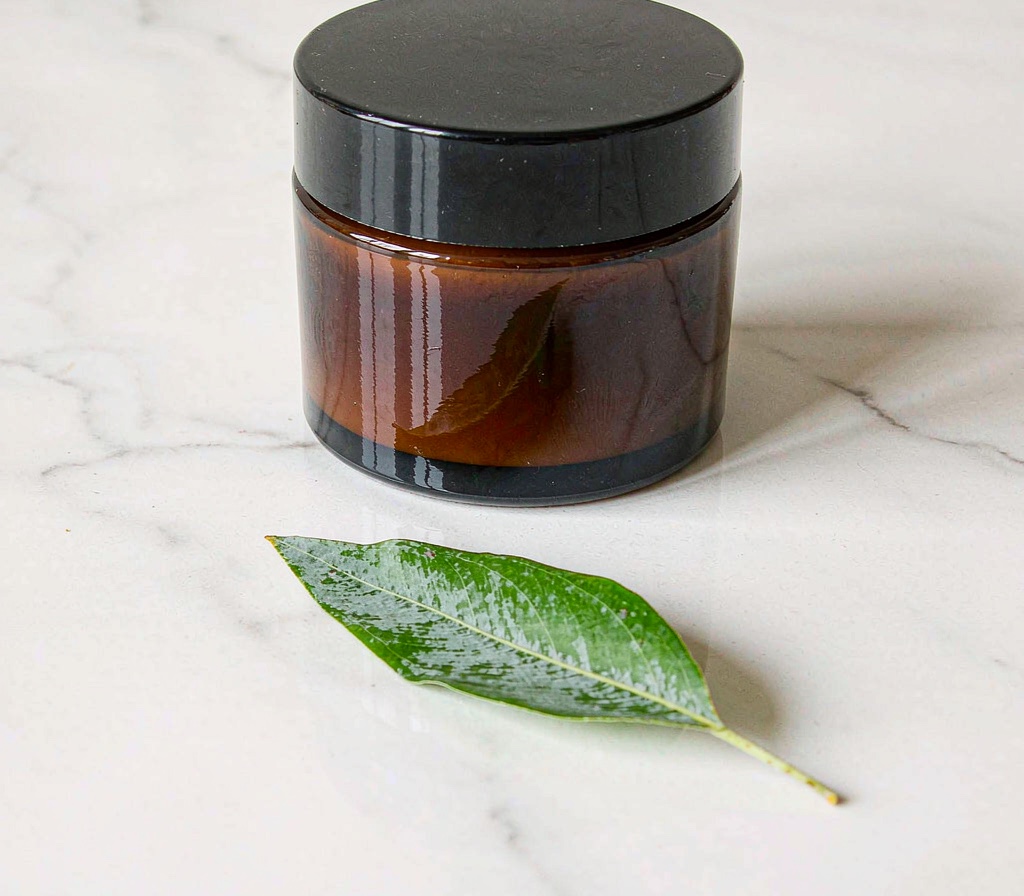
The stages this emulsion passes through
- 1
Set the phase temperatures
Oil and water phases are heated to matched temperatures so the emulsion forms evenly rather than shocking one phase into the other.
- 2
Cool on a controlled ramp
The cooling rate decides how the fatty alcohols and butters crystallise, and therefore how smooth the finished cream turns out.
- 3
Deaerate before fill
Entrained air is removed so fill weight and appearance in the pack both stay consistent from the first unit to the last.
- 4
Set the oil phase against the brief
Emollients, butters and oils are chosen for the after-feel the brief describes, then costed against the price tier.
Why texture is signed off against a sample
Two emulsions can share a viscosity reading and still feel entirely different in the hand. That is why the retained Golden Sample is kept on file and a batch is compared with it at release rather than with a written tolerance alone.
Production runs on GMPC and ISO 22716 certified lines under manufacturing licence 粤妆20250206, with traceability from raw material to carton on every batch.
Mugwort cream imports the Korean spa ritual: steamed artemisia leaf with a deep herbal green tone and a calming story customers associate with heat therapy and recovery. The scent — grassy, grounding — is part of the product; masks and creams built the category.
We source artemisia extract with standardized flavonoid content, keep the natural green-brown color as visual credential, and pair with beta-glucan for the comfort stack. The herbal aroma is checked at panel to stay 'spa' rather than 'medicinal'.
What the oil phase is carrying
INCI names and typical levels reflect publicly documented formulation practice. All values are adjustable in your build.
| Ingredient (INCI) | Typical Level | Function & Benefit |
|---|---|---|
| Artemisia Annua/Princeps Extract | 10–70% | Flavonoid calming base |
| Beta-Glucan | 0.5–1% | Soothing hydration |
| Panthenol | 2% | Comfort support |
| Ceramide NP | 0.3% | Barrier pairing |
Pair this with
Private Label Cica Cream
The tiger-grass jar — madecassoside comfort for stressed skin.
Private Label Charcoal Mask
The black jar that photographs itself — activated charcoal deep-cleanse.
Private Label Heartleaf Serum
The minimalist Korean botanical — one plant, 77% style, calm skin.
Buyer guides for this build
Before you brief a supplier on this category, these are the guides that answer the questions buyers ask next — timelines, order quantities, cost structure and compliance.
Questions we answer on every cream brief
Why is the cream green-brown?
That is the extract's own color — the visual proof of concentration. Bleaching it would undermine the story.
Mugwort allergy concerns?
Asteraceae-family sensitization exists; we supply warning-label wording for EU and US retail.
Morning or night?
Night — the spa-ritual story plays best in evening routines and pairs with our clay mask.
What you can change on this build
- Percentage-claim front-of-pack builds
- Herbal-spay visual identity
- Steam-ritual content pack
- Sensitive-skin patch-test data
An emulsifier has a temperature range, not just a number
Emulsifiers are selected on a scale that describes how they behave at one temperature. What decides stability in practice is how that behaviour moves as the batch is heated, cooled, and then stored through a summer — the same system can be flawless at the bench and unstable in a warehouse.
So the system is screened across the temperature range of the destination rather than at a single set point. A market that ships through a hot port and stores in an air-conditioned shop asks a different question from one that does neither.
Emulsion systems and the textures they give
Two routes can share a name on the pack and still be built from entirely different emulsifier families.
| Route | Texture character | Typical brief |
|---|---|---|
| Gel-cream | Light, breaks quickly on skin | Hot-climate and oily-skin briefs |
| Structured balm | High melt point, protective film | Barrier repair and winter edits |
| Polymeric-stabilised | Light body at a low emulsifier load | Sprays and fluid lotions |
| Light lotion | Fast-absorbing with little residue | Volume body and face lines sold on daily use |
Order sizes for each pack format
Mixed-variant orders can split the stated MOQ across formats under one brand.
| Format / Specification | MOQ | Lead Time |
|---|---|---|
| Artemisia extract 70% cream, 50 ml | 1,000 pcs | 10–15 days |
| Mugwort + beta-glucan calm build, 50 ml | 1,000 pcs | 10–15 days |
| Spa set (cream + clay mask) | 1,000 sets | 10–15 days |
MOQ and lead time above are the standard liquid, cream and gel route. The real minimum is set by the manufacturing system rather than the category: surfactant systems (shampoo, body wash) start at 2,000 pcs, stick formats at 3,000, and powders and sheet masks at 5,000 — with longer production runs to match.
Where an emulsion succeeds or fails
Cooling rate sets the crystal
Fatty alcohols and butters crystallise as the batch cools. Ramp the temperature too quickly and the texture turns grainy in a way that only shows up weeks later.
A wash surfactant is not a leave-on emulsifier
Chemistry that is unremarkable in a rinse-off can irritate when left on skin all day. The two categories are selected against different criteria even when the molecules look similar.
The oil phase sets the feel
Emollient choice decides absorbency, slip and after-feel. It is the single biggest lever on whether the product reads as premium or value tier.
pH drifts during storage
Emulsions shift as the oil phase oxidises and the buffer is consumed. Where an active has a pH window, the end-of-shelf value is the one that has to stay inside it.
Bring us the shelf life, not just the formula
The stability window decides the emulsifier system. Tell us how long the product has to hold, and we build backwards from that number.