Private Label Cica Cream
The tiger-grass jar — madecassoside comfort for stressed skin.
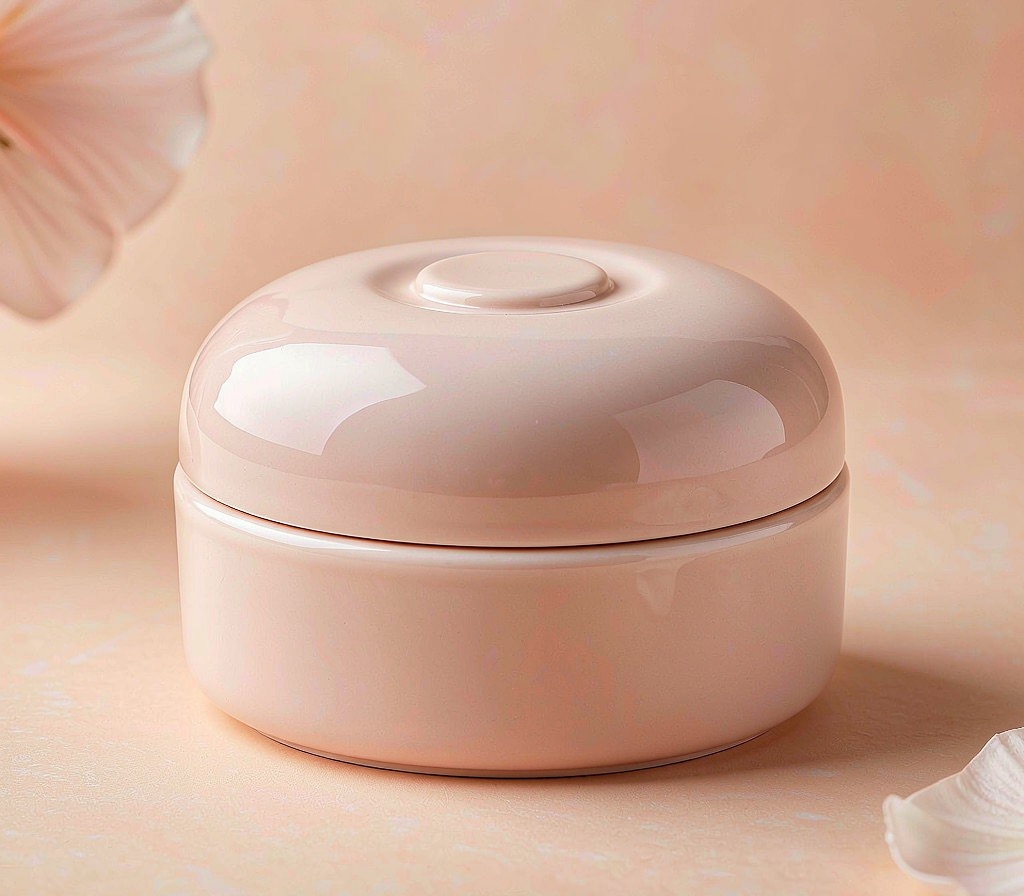
The actives carried in the oil phase
INCI names and typical levels reflect publicly documented formulation practice. All values are adjustable in your build.
| Ingredient (INCI) | Typical Level | Function & Benefit |
|---|---|---|
| Centella Asiatica Extract | 2–10% | Botanical soothing base |
| Madecassoside | 0.2–0.5% | Standardized calming active |
| Ceramide NP | 0.3% | Barrier support |
| Panthenol | 2–5% | Comfort humectant |
What can be adjusted on this emulsion
- Madecassoside-standardized COA
- Full cica visual identity packaging
- Post-procedure positioning docs
- Fragrance-free standard
Cica cream is the calming category's flagship: centella asiatica actives (madecassoside, asiaticoside) with documented soothing behavior, in the soft green visual language customers recognize from across the store. It pairs with every exfoliating routine as the 'peace treaty' step.
We standardize madecassoside content rather than relying on raw extract potency, keep fragrance minimal or absent, and offer the full cica visual system — sage-green jars, minimal typography — proven in the K-beauty wave and beyond.
Pair this with
Private Label Centella (Cica) Serum
Cica serums from calming water to standardized madecassoside — the K-beauty heritage active.
Private Label Heartleaf Serum
The minimalist Korean botanical — one plant, 77% style, calm skin.
Private Label Redness Relief Cream
Turn the temperature down — visible-calm comfort for reactive skin.
Buyer guides for this build
Before you brief a supplier on this category, these are the guides that answer the questions buyers ask next — timelines, order quantities, cost structure and compliance.
Why texture is signed off against a sample
Two emulsions can share a viscosity reading and still feel entirely different in the hand. That is why the retained Golden Sample is kept on file and a batch is compared with it at release rather than with a written tolerance alone.
Production runs on GMPC and ISO 22716 certified lines under manufacturing licence 粤妆20250206, with traceability from raw material to carton on every batch.
How an emulsion goes from brief to released batch
- 1
Run the preservation study
The preservative system is challenged inside the finished emulsion rather than in water alone, because it partitions between two phases.
- 2
Hold for microbiological release
The batch is released on a microbiological result rather than on a production schedule.
- 3
Verify against the retained sample
Viscosity, pH and appearance are checked at release so the texture your buyer approved is the texture that ships.
- 4
Deaerate before fill
Entrained air is removed so fill weight and appearance in the pack both stay consistent from the first unit to the last.
Texture and stability questions
Cica serum or cica cream — first launch?
Cream — the jar is the category's anchor SKU and pairs with any routine; serums extend the line later.
Why standardize madecassoside?
Raw centella extract varies widely; standardization keeps batch calm consistent and your reviews stable.
Can it follow acids?
Yes — it is engineered as the step after exfoliation; we supply routine graphics for that pairing.
The first ten seconds are decided by the volatiles
What a customer feels at application is largely the volatile fraction leaving — the light esters and silicones that evaporate or absorb first. That is what makes a cream read as fast-absorbing, and it is independent of how emollient the product really is.
Tuning that first impression means choosing the volatile fraction deliberately and keeping it separate from the long-acting emollients that decide how skin feels an hour later. The two are doing different jobs.
Which route fits which shelf
The route fixes the texture, the melt behaviour and the fill temperature at the same time, so it is usually settled early.
| Route | Texture character | Typical brief |
|---|---|---|
| Anionic-emulsified | Classic body, broad compatibility | Mainstream creams where cost leads |
| Non-ionic-emulsified | Neutral, skin-compatible feel | Sensitive-skin and premium lines |
| Concentrated base | Thick in the jar, spreads thin | Face creams sold on a little going a long way |
| Lamellar (liquid crystal) | Rich, layered, slow-release feel | Barrier creams and premium night products |
The choices that fix texture and shelf life
Freeze-thaw is the harshest check
A shipment that freezes and thaws in transit can break an emulsion that passed every other test. The cycling study reproduces that route for the markets where it happens.
The oil phase sets the feel
Emollient choice decides absorbency, slip and after-feel. It is the single biggest lever on whether the product reads as premium or value tier.
Fill temperature and the line
The product has to be fluid enough to fill and structured enough to hold its shape in the pack. Both are read off the same viscosity curve.
Viscosity drifts in the first weeks
Most emulsions thicken or thin over the first month as the structure settles. Specification limits are written for the settled product, not the freshly made one.
Every format this base can be filled in
Mixed-variant orders can split the stated MOQ across formats under one brand.
| Format / Specification | MOQ | Lead Time |
|---|---|---|
| Madecassoside 0.5% cica cream, 50 ml | 1,000 pcs | 10–15 days |
| Cica + ceramide barrier build, 50 ml | 1,000 pcs | 10–15 days |
| Cica routine set (toner + serum + cream) | 1,000 sets | 10–15 days |
MOQ and lead time above are the standard liquid, cream and gel route. The real minimum is set by the manufacturing system rather than the category: surfactant systems (shampoo, body wash) start at 2,000 pcs, stick formats at 3,000, and powders and sheet masks at 5,000 — with longer production runs to match.
Send the claim that has to hold
Tell us what has to still be true at the end of the shelf life, not only at fill, and we build the emulsion and the overage around it.