Private Label Hydrating Face Toner
The watery-essence toner that K-beauty taught the world — hydration as a ritual step.
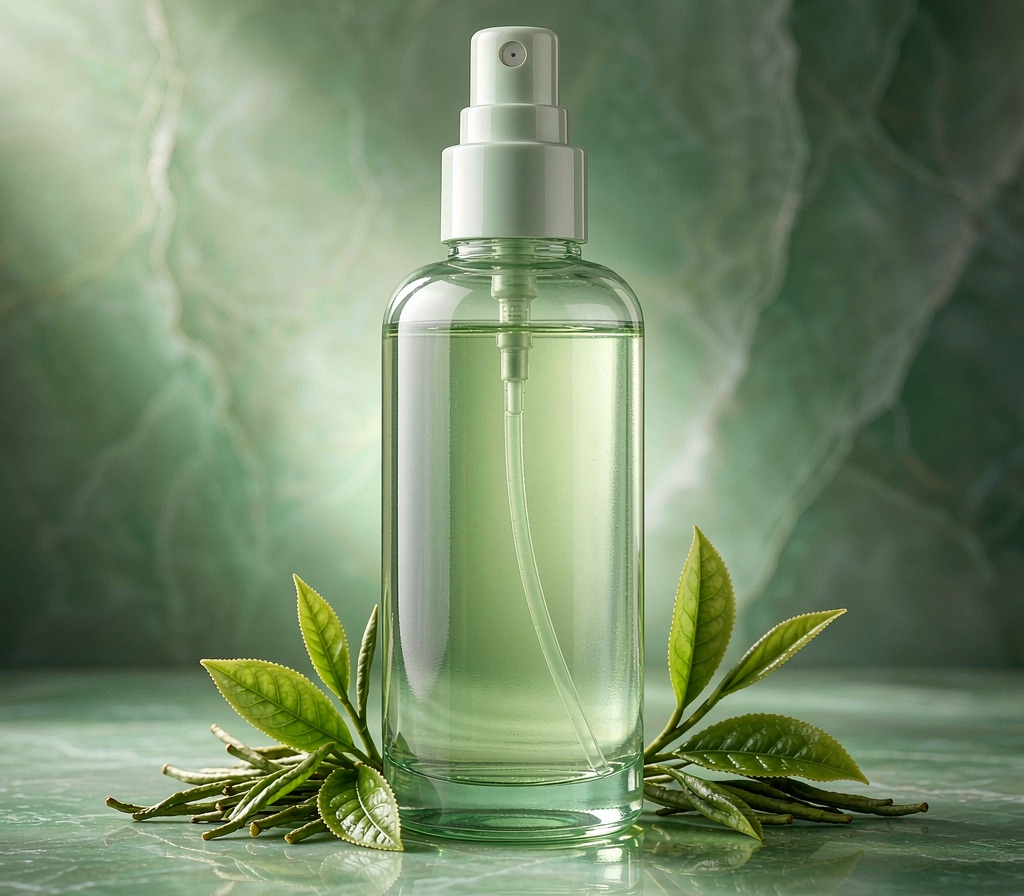
Formulas that sit beside this one
Private Label Facial Mist
The impulse-shelf hydrator — fine mist, handbag size, unlimited gifting angles.
Private Label Essence Lotion
Between toner and serum — the fermented-filtrate step premium routines swear by.
Private Label Exfoliating Toner
The daily-glow AHA toner — low enough for routine use, acidic enough to earn the claim.
Buyer guides for this build
Before you brief a supplier on this category, these are the guides that answer the questions buyers ask next — timelines, order quantities, cost structure and compliance.
Preservation is a design decision, not an additive
A water-based product needs a preservation system chosen against its own pH, its own water activity and the way it will be used. Choosing one before the formula is fixed almost always means redoing the work later.
The study runs against the finished matrix, and for anything dispensed by hand it runs against the in-use pattern as well, because that is where contamination actually enters the product.
Which fluid route fits which active
Two fluids can look identical in the bottle and behave completely differently by the end of the shelf life.
| Route | Barrier it needs | Where it fits |
|---|---|---|
| Emulsion-fluid hybrid | A light oil phase suspended in water | Slip and comfort without the weight of a cream |
| Low-water fluid | Airless or aluminium-barrier pack | Actives sensitive to oxygen and light |
| Biphasic | Two phases, shaken before use | Formats that need an activation step |
| Alcohol-based tonic | Simple pack, evaporating base | Oil-control formats and fast-dry tonics |
The modern toner is no longer astringent — it is a watery essence that preps skin with hydration, often applied in the multi-layer '7-skin' pattern K-beauty popularized. Ingredients lead with HA, cica, rice water or betaine, and the bottle formats run large because usage is generous.
We build three positioning routes: pure hydration for entry, botanical storytelling for natural shelves and exfoliant-free soothing for sensitive audiences. Large 300 ml formats anchor the value perception this category expects.
How a fluid goes from brief to released batch
- 1
Clarify by filtration
Filtration is matched to the viscosity so the product stays clear without stripping out what gives it body.
- 2
Build the protection
Chelation, oxygen barrier and light barrier are decided together, because any one alone leaves the product exposed.
- 3
Set the overage deliberately
The level is set so the product is still inside specification at the end of shelf life, rather than only at the moment it leaves the line.
- 4
Screen solubility at the cold end
The batch is cooled to the coldest shelf it will meet and checked for haze, which is where an overloaded solubiliser system shows itself.
Where a fluid build succeeds or fails
Preservation in a water-rich base
High water activity calls for a preservation study against the finished matrix, not a calculation from the raw material list.
Viscosity keeps building after fill
Polymer-thickened fluids can continue to develop structure for days after filling. Specification limits are written for the settled product, not for the freshly made one.
The pH window is narrower than solubility
The range where an active is stable is often tighter than the range where it dissolves. Both ends are verified at fill rather than assumed.
The assay method is part of release
A method that works on the raw material can fail inside the finished matrix. It is validated against the product as filled before it is used at release.
Claim options and pack routes
- Hydration, botanical or soothing routes
- 150 / 300 ml value architecture
- Multi-layer application insert cards
- Fragrance-free default
What sits behind this fluid's claim
INCI names and typical levels reflect publicly documented formulation practice. All values are adjustable in your build.
| Ingredient (INCI) | Typical Level | Function & Benefit |
|---|---|---|
| Sodium Hyaluronate | 0.1–0.3% | Surface hydration |
| Beta-Glucan | 0.5–1% | Soothing slip |
| Oryza Sativa (Rice) Extract | 1–3% | Botanical glow story |
What the preservation study has to show
In a water-rich base the study is run against the finished matrix and across the range of temperatures the product will meet, on GMPC and ISO 22716 certified lines under licence 粤妆20250206.
The result travels with the certificate of analysis, the stability summary, the microbiology report and MoCRA / CPNP-ready documentation, and the retained Golden Sample is the reference held for release.
Stability and shelf-life questions
What replaced the old astringent toners?
Hydration-first watery essences; alcohol-heavy formulas fell out of favor as barrier science reached consumers.
Why such large bottle sizes?
Multi-layer application consumes generous amounts — the 300 ml format is the category's value anchor and repeat-purchase driver.
Can toner double as a mist?
We can build spray-compatible versions in pet-safe packaging, but a dedicated facial mist SKU is usually cleaner for merchandising.
Pack formats, MOQ and lead time
Mixed-variant orders can split the stated MOQ across formats under one brand.
| Format / Specification | MOQ | Lead Time |
|---|---|---|
| HA hydration toner 300 ml | 1,000 pcs | 10–15 days |
| Rice water glow toner 150 ml | 1,000 pcs | 10–15 days |
| Cica soothing toner 300 ml | 1,000 pcs | 10–15 days |
MOQ and lead time above are the standard liquid, cream and gel route. The real minimum is set by the manufacturing system rather than the category: surfactant systems (shampoo, body wash) start at 2,000 pcs, stick formats at 3,000, and powders and sheet masks at 5,000 — with longer production runs to match.
Send the shelf life you need, not just the percentage
Tell us the market, the price tier and how long the product has to stay stable. We reply with the route that fits within 24 hours.