Private Label Sensitive Scalp Shampoo
For scalps that react to everything — the wash that stays quiet.
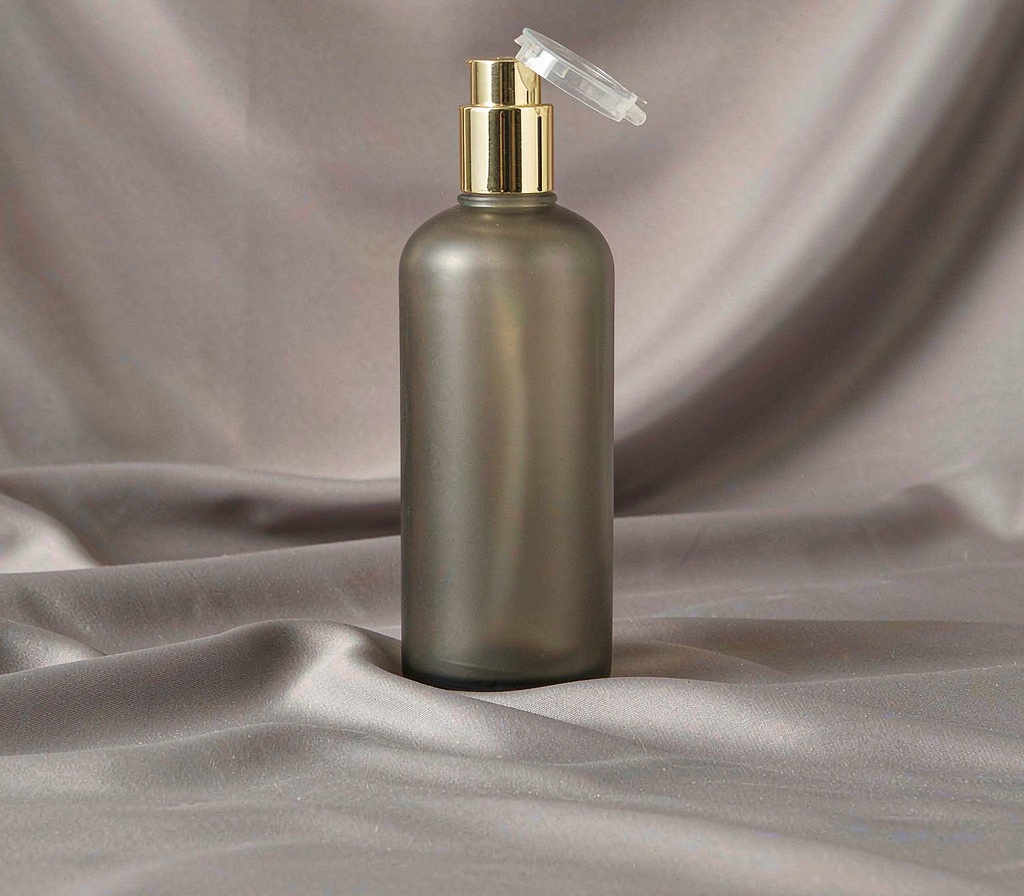
Where this formula can be adjusted
- Full trigger-exclusion list published
- Dermatologist-tested documentation
- Clinic professional sizing
- Fragrance-free standard
Sensitive scalp shampoo is the derma audience's base camp: fragrance-free, essential-oil-free, sulfate-light — a trigger-free build whose ingredient list is short enough to verify on the shelf. The buyer has been burned before, literally.
We exclude the full trigger list, follow dermatologist-review and patch-test protocols, document everything, and keep the formula boring on purpose — in this SKU, boring is the brand.
Pack formats, MOQ and lead time
Mixed-variant orders can split the stated MOQ across formats under one brand.
| Format / Specification | MOQ | Lead Time |
|---|---|---|
| Sensitive scalp shampoo 300 ml | 1,000 pcs | 10–15 days |
| Sensitive duo (shampoo + conditioner) | 1,000 sets | 10–15 days |
| Clinic 500 ml professional | 1,000 pcs | 10–15 days |
MOQ and lead time above are the standard liquid, cream and gel route. The real minimum is set by the manufacturing system rather than the category: surfactant systems (shampoo, body wash) start at 2,000 pcs, stick formats at 3,000, and powders and sheet masks at 5,000 — with longer production runs to match.
Questions buyers ask before a first run
What's excluded?
Fragrance, essential oils, sulfates, drying alcohols, menthol — the published exclusion list is the marketing; derma shoppers verify it.
Will it still clean well?
Yes — mild does not mean weak; the glucoside base handles daily wash duty with normal sebum loads.
Clinic channel?
The 500 ml professional size with documentation pack is built for dermatology and trichology clinics.
Build the rest of the range
Private Label pH Balanced Shampoo
The number on the bottle that dermatology taught customers to read.
Private Label Gentle Shampoo
One bottle for the whole shower — mild enough for kids, good enough for parents.
Private Label Scalp Serum
The skincare-ification of hair — leave-on scalp treatments with nozzle precision.
Buyer guides for this build
Before you brief a supplier on this category, these are the guides that answer the questions buyers ask next — timelines, order quantities, cost structure and compliance.
What is actually in the wash
INCI names and typical levels reflect publicly documented formulation practice. All values are adjustable in your build.
| Ingredient (INCI) | Typical Level | Function & Benefit |
|---|---|---|
| Coco-Glucoside | 8–12% | Trigger-free base |
| Glycerin | 2–4% | Comfort humectant |
| Panthenol | 0.5–1% | Scalp calming |
| Oat Extract | 0.5–1% | Avenanthamide comfort |
From brief to released wash, step by step
- 1
Balance preservation against the base
The preservation study runs against the finished matrix, because a surfactant-heavy base behaves differently from a simple aqueous one.
- 2
Assess the wet and dry feel
Lather, rinse and comb-out are assessed on the retained sample at release, since none of the three is captured by a number on the record.
- 3
Build the micelle structure
The order the surfactants are combined and the temperature they are held at both shape the finished micelle, so the sequence is written into the process file.
- 4
Check clarity at the cold end
The batch is cooled to the coldest shelf the product will see and checked for haze, which is where a marginally soluble component shows up first.
Conditioning agents and surfactants work against each other
Most conditioning agents carry a positive charge and most surfactants carry a negative one. Put them in the same bottle and they neutralise each other, which is why any two-in-one wash is a balance rather than a blend.
The craft sits in the ratio and the order of addition. Get it right and the wash can leave hair manageable; get it wrong and the formula loses the clean and the conditioning in the same batch.
Surfactant systems and what each one changes
There is no single best system — only the one that matches your claim, your cost target and the hair or skin your customer has.
| System | Lather character | Where it fits |
|---|---|---|
| Glucoside-led | Creamy, finer bubbles, slower to build | Strict sulfate-free and curl-method briefs |
| Betaine-led blends | Generous foam at a lower raw-material cost | Mass-market and value briefs |
| Sulfosuccinate blend | Low-irritation, modest foam | Baby, sensitive-scalp and daily-use lines |
| Sarcosinate blend | Fast-building with a clean rinse-off | Daily-wash lines where residual feel matters |
How a wash is released, batch by batch
Manufacturing runs in-house on GMPC and ISO 22716 certified lines under licence 粤妆20250206, and every batch carries traceability from raw material to carton.
Release is against the retained Golden Sample as well as the record: the surfactant ratio, the fill viscosity and the pH are read, and the batch is compared with the approved sample before it is signed off.
Where lather and mildness pull against each other
Mildness is a blend property
No single surfactant decides how a wash treats skin. Mildness comes from how the anionic fraction is cushioned by the amphoteric and non-ionic around it, which is why the same primary surfactant appears in both gentle and aggressive systems.
Colour protection is pH-dependent
Dyed hair releases colour fastest away from the pH the dye was set at. A colour-care wash is therefore specified around a pH window rather than around a surfactant claim on its own.
pH and comfort pull apart
Skin-friendly washes sit closer to skin pH than to the pH that produces the biggest foam. The two goals work against each other and the brief has to choose.
A bar is a different process problem
A syndet bar has to be extruded and held at a water content that keeps it firm in a humid bathroom. The same chemistry in a bottle becomes a viscosity problem instead.
Name the market and the price point
Those two answers narrow the surfactant system faster than anything else. Send them and we reply with the route and a full quotation.