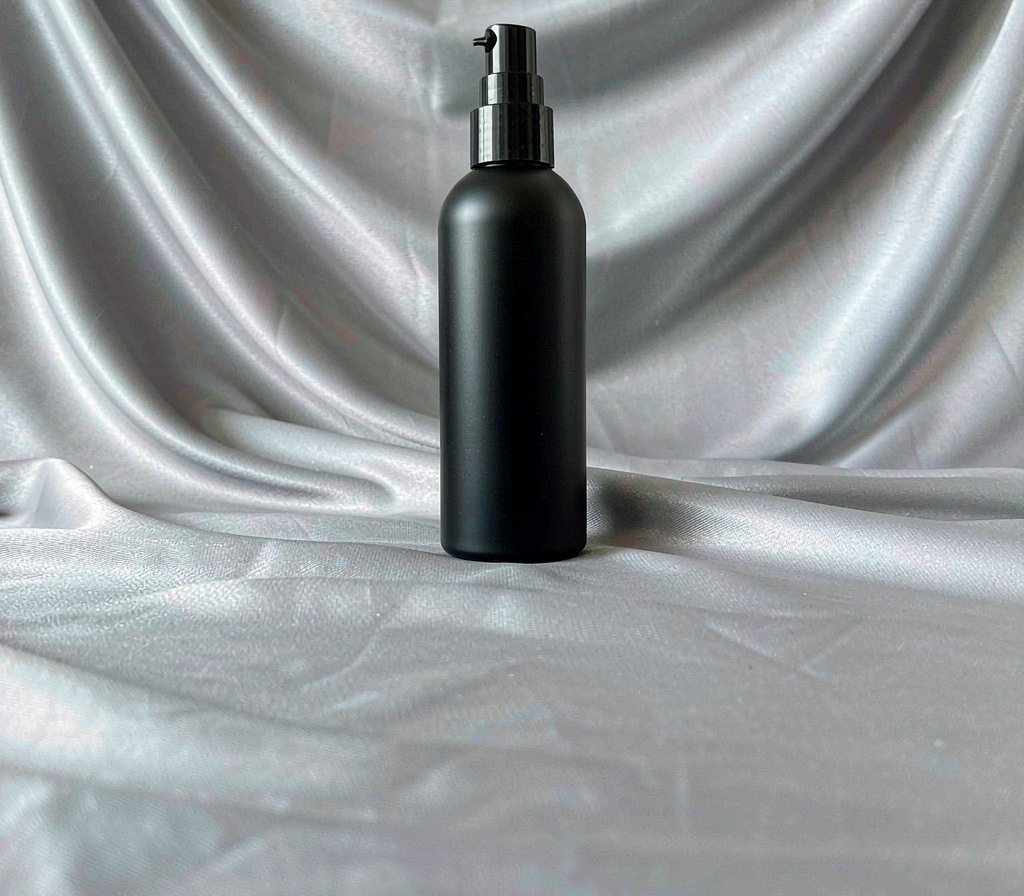
Private Label Satin Pillow Spray
Beauty sleep, formulated — the mist that pairs with satin pillowcases.
The active system and its working levels
INCI names and typical levels reflect publicly documented formulation practice. All values are adjustable in your build.
| Ingredient (INCI) | Typical Level | Function & Benefit |
|---|---|---|
| Behentrimonium Methosulfate | 0.5–1% | Detangling slip |
| Hydrolyzed Rice Protein | 0.5% | Light strengthening |
| Lavandula Angustifolia Oil | 0.2% | Ritual scent cue |
The satin pillowcase trend created a new product slot: the overnight mist that works with it. A light leave-in of conditioning agents and soft esters, applied before sleep, reducing the friction damage no pillowcase fully eliminates. It is the wellness-positioned cousin of the leave-in conditioner.
We formulate weightless overnight mists that do not transfer onto fabric, add a calm scent direction (the sleep-ritual cue), and pair naturally with heatless curl sets — the two SKUs share a customer and a shelf.
What brands ask us about this category
Will it stain pillowcases?
No — the system is weightless and residue-tuned to not transfer onto satin; we run fabric-transfer testing before release.
Is it a leave-in or a perfume?
Both, honestly — light conditioning plus a calm scent. That dual job is why it converts in the sleep-ritual aisle.
Bundle with heatless curling?
Yes — the two share the same night-routine customer and the kit pricing works at 1,000 sets.
What is adjustable on this fluid
- No-transfer weightless system
- Calm scent bench
- Satin accessory bundling
- Insert-card sleep routine
Complete the routine with
Private Label Heatless Curling Set
The overnight viral ritual — curls without a single degree of heat.
Private Label Leave-In Conditioner
Protection that stays on — sprays and creams for curly routines and heat-styled hair.
Private Label Hair Perfume Mist
Fragrance made for hair — scent mists that condition while they perfume.
Buyer guides for this build
Before you brief a supplier on this category, these are the guides that answer the questions buyers ask next — timelines, order quantities, cost structure and compliance.
The stages this fluid passes through
- 1
Choose the barrier pair
Oxygen and light barriers are selected together with the pack, since either one alone leaves an oxidation route open.
- 2
Build the protection
Chelation, oxygen barrier and light barrier are decided together, because any one alone leaves the product exposed.
- 3
Screen solubility at the cold end
The batch is cooled to the coldest shelf it will meet and checked for haze, which is where an overloaded solubiliser system shows itself.
- 4
Adjust and hold the pH
pH is set with the buffer system and then held, rather than corrected repeatedly at the end of the batch.
The paperwork that travels with a serum order
The lines are GMPC and ISO 22716 certified and operate in-house under licence 粤妆20250206, traceable from raw material through to carton.
Every production order ships with a certificate of analysis, a stability summary, a microbiology report and MoCRA / CPNP-ready documentation.
Because a fluid gives the actives nothing to hide behind, the retained Golden Sample is kept as the reference for colour and clarity, and the stability summary records how the system behaved across the destination market's temperature range.
Formats and order quantities
Mixed-variant orders can split the stated MOQ across formats under one brand.
| Format / Specification | MOQ | Lead Time |
|---|---|---|
| Pillow spray 100 ml | 1,000 pcs | 10–15 days |
| Calm-scent variant (lavender direction) | 1,000 pcs | 10–15 days |
| Sleep kit (mist + satin scrunchie) | 1,000 sets | 10–15 days |
MOQ and lead time above are the standard liquid, cream and gel route. The real minimum is set by the manufacturing system rather than the category: surfactant systems (shampoo, body wash) start at 2,000 pcs, stick formats at 3,000, and powders and sheet masks at 5,000 — with longer production runs to match.
What holds this fluid together over its shelf life
Solubiliser levels move the viscosity
The surfactant used to dissolve an oil-soluble active also changes the rheology of the base, sometimes markedly. The two are tuned together rather than one after the other.
Headspace oxygen
Air left in the bottle keeps reacting after fill. Low-oxygen filling removes most of the oxygen the product will ever encounter.
Both ends of the pack's life
An airless pack keeps the product away from air, but it also changes how the last few grams are dispensed. The end of the pack's life belongs in the design as much as the first.
The dropper or the pump
Dispensing decides dose consistency and how much air the product meets in use. It is a formulation-adjacent choice, not just a packaging one.
A fluid has nowhere to hide a mistake
In a cream a small inconsistency can read as texture. In a clear fluid every undissolved particle, every trace of haze and every shift in colour is on display, and the customer sees it before they use a single drop.
That is why filtration, water quality and raw-material checks carry more weight here than in any other format. Nothing in a transparent product stays invisible.
Fluid routes and what each one has to protect
In a fluid, protection and texture are set by different parts of the system — the route decides which one leads.
| Route | Barrier it needs | Where it fits |
|---|---|---|
| Concentrated serum gel | Airless pump to handle the viscosity | High-load actives sold on a small dose |
| Emulsion-fluid hybrid | A light oil phase suspended in water | Slip and comfort without the weight of a cream |
| Simple aqueous | Chelator plus an opaque or UV-filtered pack | Stable actives in high-volume lines |
| Micellar system | Surfactant-stabilised, clear pack | Cleansing waters and no-rinse formats |
Send the product you are matching
If there is a serum whose texture you want to reproduce, send it. Reverse development rebuilds a comparable base, and your approved sample becomes the production reference.