Private Label Root Lift Serum
Volume engineered at the follicle — weightless root polymers for hair that falls flat.
Where the compliance file comes from
The line is GMPC and ISO 22716 certified, and each batch carries raw-material-to-carton traceability under licence 粤妆20250206.
For a fluid the file is built on the preservation and stability studies run against the finished matrix, with the certificate of analysis, stability summary, microbiology report and MoCRA / CPNP-ready documentation attached to the order. Colour and clarity are read against the retained Golden Sample at release.
What is adjustable on this fluid
- Nozzle or spray formats
- Volume-routine set architecture
- Weightless-finish verification
- Fine-hair positioning inserts
What holds this fluid together over its shelf life
The pH window is narrower than solubility
The range where an active is stable is often tighter than the range where it dissolves. Both ends are verified at fill rather than assumed.
Light is a reagent
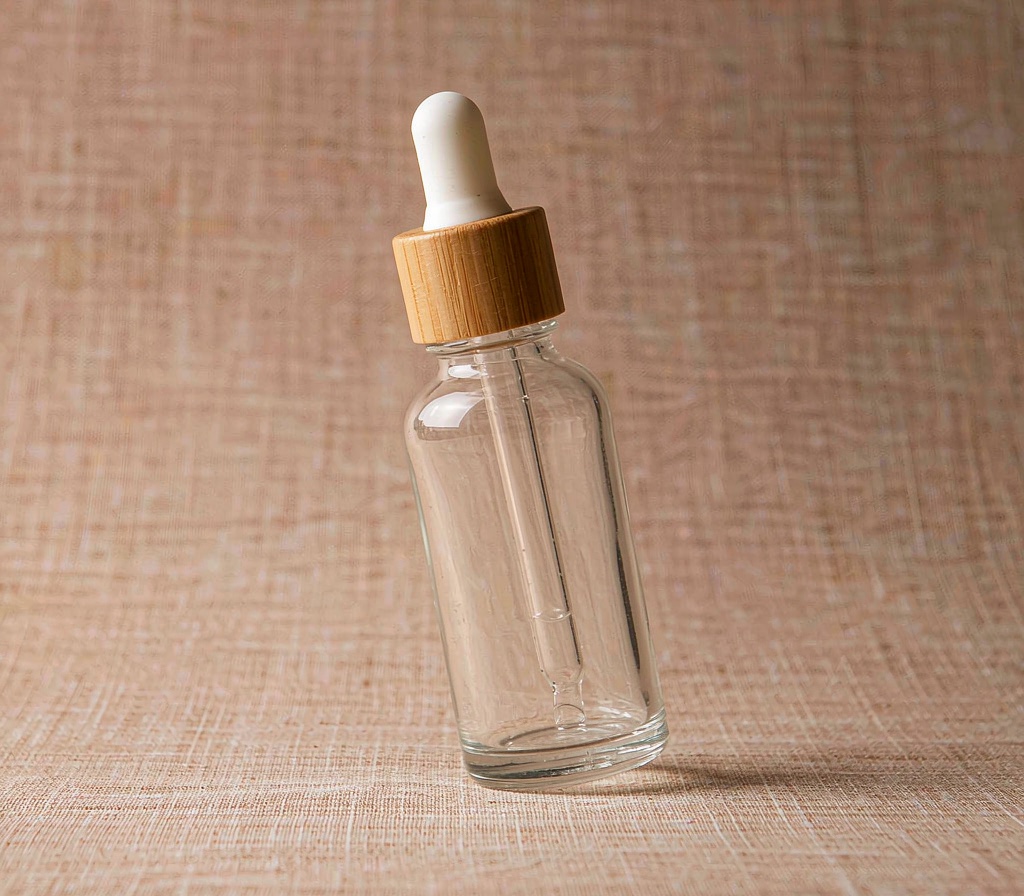
UV accelerates the same reactions that heat does. Clear glass looks premium on a shelf and is usually the worst choice for a sensitive active.
Viscosity keeps building after fill
Polymer-thickened fluids can continue to develop structure for days after filling. Specification limits are written for the settled product, not for the freshly made one.
The dropper or the pump
Dispensing decides dose consistency and how much air the product meets in use. It is a formulation-adjacent choice, not just a packaging one.
Root lift serum targets the exact spot volume dies: the first two centimeters of hair at the scalp. Weightless polymers add grip and separation at the root so hair stands off the scalp longer — a results claim customers verify within hours of first use.
Formats split into nozzles drops for precision and pump sprays for speed. The build must be genuinely weightless — any heavy conditioning agent defeats the purpose — which is why this SKU is polylmer-engineered rather than oil-based.
What sits behind this fluid's claim
INCI names and typical levels reflect publicly documented formulation practice. All values are adjustable in your build.
| Ingredient (INCI) | Typical Level | Function & Benefit |
|---|---|---|
| Polyquaternium-69 class | 1–2% | Grip and lift film |
| Hydrolyzed Rice Protein | 0.5–1% | Fiber-body support |
| Panthenol | 0.5% | Flexibility without weight |
The pH window decides what the product is allowed to claim
Many of the actives that justify a premium price only work inside a narrow pH range, and several become unstable outside it. The window is therefore fixed first, and everything else in the formula is built to respect it.
That also makes pH a specification rather than a target. It is measured at fill and again at the end of the stability window, because a system that drifts during storage is a system that will be complained about later.
Fluid bases and what each one can carry
Each route below carries a different balance of preservative load, barrier requirement and sensory weight.
| Route | Barrier it needs | Where it fits |
|---|---|---|
| Buffer-controlled fluid | Standard pack, tight pH control | Actives that only work in a narrow pH window |
| Alcohol-based tonic | Simple pack, evaporating base | Oil-control formats and fast-dry tonics |
| Simple aqueous | Chelator plus an opaque or UV-filtered pack | Stable actives in high-volume lines |
| Preservative-light fluid | Airless or single-dose pack | Markets where the preservative profile is restricted |
The stages this fluid passes through
- 1
Set the overage deliberately
The level is set so the product is still inside specification at the end of shelf life, rather than only at the moment it leaves the line.
- 2
Run preservation and stability together
Both studies run against the finished matrix, across the temperature range of the destination market.
- 3
Fix the active system
Routes and levels are set against the claim, then checked for compatibility with each other before the base is built.
- 4
Verify against the retained sample
Assay, pH and appearance are checked at release against the sample your buyer approved.
Formats, pack sizes and MOQ
Mixed-variant orders can split the stated MOQ across formats under one brand.
| Format / Specification | MOQ | Lead Time |
|---|---|---|
| Root-lift drops 50 ml nozzle | 1,000 pcs | 10–15 days |
| Lift + grip spray 100 ml | 1,000 pcs | 10–15 days |
| Volume set: shampoo + lift serum | 1,000 sets | 10–15 days |
MOQ and lead time above are the standard liquid, cream and gel route. The real minimum is set by the manufacturing system rather than the category: surfactant systems (shampoo, body wash) start at 2,000 pcs, stick formats at 3,000, and powders and sheet masks at 5,000 — with longer production runs to match.
What brands ask us about this category
Why not just use texturizing spray?
Texturizing powder and spray are styling camouflage; root serum conditions the lift at the follicle — different mechanics, complementary shelf.
Does it work on second-day hair?
Yes, on dry hair at the roots it re-activates lift — a usage occasion the insert card promotes.
Will it flake like dry shampoo?
No — the polymer films are transparent and rub out invisibly, unlike powder formats.
Other fluid systems we manufacture
Private Label Volumizing Shampoo
Lift at the root, weight everywhere else — fine-hair systems that keep the bounce.
Private Label Texturizing Powder
Volume from a puff of dust — instant root grip that defies gravity all day.
Private Label Scalp Serum
The skincare-ification of hair — leave-on scalp treatments with nozzle precision.
Buyer guides for this build
Before you brief a supplier on this category, these are the guides that answer the questions buyers ask next — timelines, order quantities, cost structure and compliance.
Send the pack you intend to use
Dropper, pump and airless formats protect a formula very differently. Tell us the pack and we quote the base that works inside it.