Private Label Hair Mask
The weekly intensive that photographs as luxury — rich treatments with measurable results.
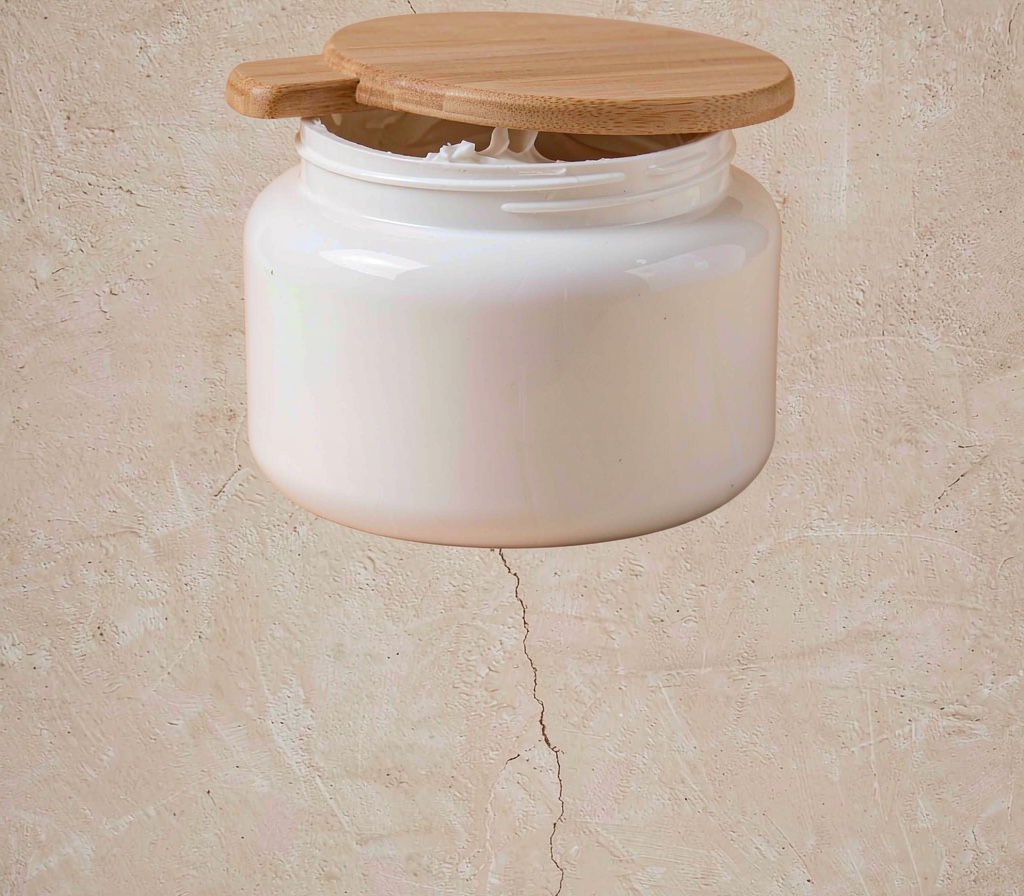
Where this formula can be adjusted
- Damage-type positioning routes
- Whipped or glossy texture profiles
- 200 ml jar + spatula stock packaging
- 5-minute vs 15-minute usage protocols
Questions we answer on every mask brief
Mask vs conditioner — what is the real difference?
Dose and dwell time: masks carry 2–3× the active load and sit for 5–15 minutes. The customer feels it as 'salon results at home'.
Which positioning converts best?
Bond-support for the bleached-hair audience — the strongest current trend — and butter-oil for the dryness mass market.
Is the jar hygienic enough?
Spatula lids solve it and add perceived value; tube formats serve customers who dislike jars.
Every format this base can be filled in
Mixed-variant orders can split the stated MOQ across formats under one brand.
| Format / Specification | MOQ | Lead Time |
|---|---|---|
| Keratin repair mask 200 ml jar | 1,000 pcs | 10–15 days |
| Butter-oil deep moisture mask 200 ml | 1,000 pcs | 10–15 days |
| Bond-support intensive mask 200 ml | 1,000 pcs | 10–15 days |
MOQ and lead time above are the standard liquid, cream and gel route. The real minimum is set by the manufacturing system rather than the category: surfactant systems (shampoo, body wash) start at 2,000 pcs, stick formats at 3,000, and powders and sheet masks at 5,000 — with longer production runs to match.
What gets decided before the dwell time
The ten-minute expectation
Customers time a mask against what the pack told them. A product that is still tacky at the stated dwell is read as a failure even if the actives performed.
Adhesion and fit
A sheet that lifts at the edges is judged a bad mask regardless of what is in it. Cut and material are part of the specification.
Preservative load in a wet sheet
A saturated substrate is a high-water environment with a large surface area. The preservation study is run on the finished unit, not the bulk alone.
Removal without damage
Peel-off and wash-off formats both have to come away without pulling at the skin, which is a film-former and plasticiser question.
Hair mask is the spa-night SKU: 5–15 minute intensive treatments that deliver what daily conditioner cannot. The formulation gap from conditioner is dose — higher lipid and protein loads, film-forming repair systems and richer emulsion structures that feel like an occasion.
Positioning routes split by damage source: heat and color damage lean protein-and-bond systems, dryness leans butter-and-oil systems. The 200 ml jar with spatula is the standard, and the texture is deliberately theatrical — whipped, glossy, spoonable.
How a mask goes from brief to released batch
- 1
Run the in-use preservation study
For a jar format the study replicates real opening and contamination, not just the sealed shelf life.
- 2
Seal each unit
Sealing is validated for the pack, because a failed seal becomes a dried-out product on the shelf.
- 3
Verify against the retained sample
Appearance, texture and behaviour at dwell are checked against the sample your buyer approved.
- 4
Choose the carrier
Clay, cream, gel or substrate, selected for the release behaviour the brief needs rather than for novelty.
A mask is judged in the first two minutes, then again at removal
Customers decide whether a mask works before the dwell is even over — from how it applies, whether it stays where it was put, and how it feels as it sets. All three are formulation outcomes rather than marketing ones.
Removal matters just as much. Anything that pulls at the skin or leaves residue turns the product into a one-time purchase, whatever it claimed on the front of the pack.
Mask formats and what each one delivers
A mask that dries too fast and one that never sets are the same failure told from opposite ends.
| Format | Release behaviour | Typical brief |
|---|---|---|
| Wash-off cream mask | Rinses clean and leaves no residue | Hydration in a short routine step |
| Sheet and patch | Occlusive, even delivery across the dwell | Single-use and travel-friendly formats |
| Hydrogel sheet | Cooling, slow release across the dwell | After-sun and travel formats |
| Clay and mud | Absorptive, drying, visibly tightening | Purifying and oil-control positioning |
Masks that pair with it
Private Label Deep Conditioner
The curly-routine staple — long-dwell moisture systems for texture methods.
Private Label Bond Repair Mask
Repair that goes inside the fiber — bond-support actives for the bleached generation.
Private Label Hair Oil
The gold-standard finishing oil — shine and softness without the grease halo.
Buyer guides for this build
Before you brief a supplier on this category, these are the guides that answer the questions buyers ask next — timelines, order quantities, cost structure and compliance.
The actives in this mask
INCI names and typical levels reflect publicly documented formulation practice. All values are adjustable in your build.
| Ingredient (INCI) | Typical Level | Function & Benefit |
|---|---|---|
| Hydrolyzed Keratin | 1–3% | Fiber-fill repair |
| Shea Butter + Argan Oil | 5–10% | Deep lipid replenishment |
| Bond-support actives (maleic-acid class) | 1–2% | Internal-fiber reinforcement |
Where the compliance file comes from
The line is GMPC and ISO 22716 certified, and each batch carries raw-material-to-carton traceability under licence 粤妆20250206.
For a mask the file is built on the in-use preservation study and the fill weight of the unit, with the certificate of analysis, stability summary, microbiology report and MoCRA / CPNP-ready documentation attached to the order. Each batch is released against the retained Golden Sample.
Tell us the dwell time
Ten minutes or overnight decides the whole build. Send the usage pattern and the format, and we quote within 24 hours.