Private Label Edge Control Gel
Laid edges, zero flakes — the hold that respects the style.
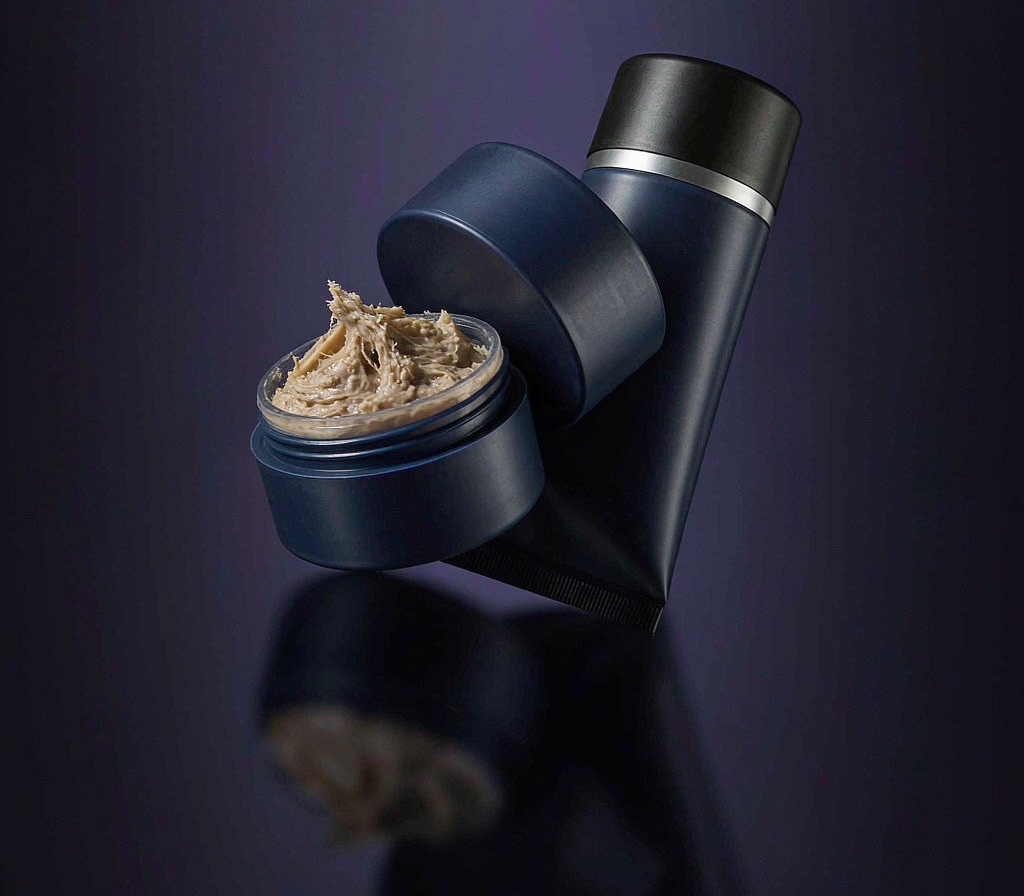
Edge control is a texture-community essential: a gel with enough hold to lay edges for a full day and enough flexibility to avoid the white-flake disaster that poor formulas are known for. It is one of the most review-driven categories in hair — flaking once and the jar never sells again.
We build flake-proof gel systems on flexible film formers, test hold duration and flake transfer as release criteria, and fill into jars sized for vanity tables — with a spatula-friendly texture that pros can layer.
Where a fluid build succeeds or fails
Filtration has a pore size
Filtration fine enough to guarantee clarity can also strip a high-molecular-weight active or shift the viscosity. The pore size is chosen against both requirements at once.
Both ends of the pack's life
An airless pack keeps the product away from air, but it also changes how the last few grams are dispensed. The end of the pack's life belongs in the design as much as the first.
Trace metals at parts per million
Iron and copper catalyse oxidation far below the level any incoming specification would flag. A chelator is part of the design, not an optional additive.
Compatibility between actives
Two actives that work alone can destabilise each other in the same bottle. Combinations are tested rather than assumed.
The paperwork that travels with a serum order
The lines are GMPC and ISO 22716 certified and operate in-house under licence 粤妆20250206, traceable from raw material through to carton.
Every production order ships with a certificate of analysis, a stability summary, a microbiology report and MoCRA / CPNP-ready documentation.
Because a fluid gives the actives nothing to hide behind, the retained Golden Sample is kept as the reference for colour and clarity, and the stability summary records how the system behaved across the destination market's temperature range.
Build the routine around it
Private Label Edge Control & Brush Set
The baby-hair ritual, boxed — edge gel and brush as one instant-gratification kit.
Private Label Curl Mousse
Definition without the crunch — foam that lets curls move.
Private Label Curl Cream
Definition by curl pattern — creams and gels tuned from loose waves to tight coils.
Buyer guides for this build
Before you brief a supplier on this category, these are the guides that answer the questions buyers ask next — timelines, order quantities, cost structure and compliance.
Stability and shelf-life questions
How do you guarantee no flaking?
Flake transfer is a release-test criterion: we dry the gel on the hair swatch, brush it, and check residue under magnification before approving a batch.
Does it hold in humidity?
Yes — the film former is humidity-resistant; 80% RH hold testing is part of our protocol.
Alcohol-free?
The base is low-alcohol/alcohol-free; edges are fragile hair, and dehydration is the other review killer we design out.
Every format this base can be filled in
Mixed-variant orders can split the stated MOQ across formats under one brand.
| Format / Specification | MOQ | Lead Time |
|---|---|---|
| Edge control jar 100 ml | 1,000 pcs | 10–15 days |
| Extreme-hold variant | 1,000 pcs | 10–15 days |
| Travel jar 30 ml | 1,000 pcs | 10–15 days |
MOQ and lead time above are the standard liquid, cream and gel route. The real minimum is set by the manufacturing system rather than the category: surfactant systems (shampoo, body wash) start at 2,000 pcs, stick formats at 3,000, and powders and sheet masks at 5,000 — with longer production runs to match.
How a fluid goes from brief to released batch
- 1
Clarify by filtration
Filtration is matched to the viscosity so the product stays clear without stripping out what gives it body.
- 2
Validate the assay in the matrix
The analytical method is proven on the finished product before it is used at release, because a method written for the raw material often does not carry over.
- 3
Dissolve in order of solubility
Ingredients go in by solubility rather than convenience, since the order affects both dissolution and how the system behaves afterwards.
- 4
Adjust and hold the pH
pH is set with the buffer system and then held, rather than corrected repeatedly at the end of the batch.
Co-solvents buy solubility and charge for it
Adding a glycol or an alcohol widens what a water-based system can dissolve, and it is often the only way to carry a difficult active. The trade is that it also moves preservation, viscosity and how the product feels on skin.
Those side effects are consequences rather than surprises, and they are designed for from the start. Discovering them at the preservation study is where a launch schedule is usually lost.
Fluid bases and what each one can carry
The more the active needs protecting, the more of the decision moves from the formula to the pack.
| Route | Barrier it needs | Where it fits |
|---|---|---|
| Low-water fluid | Airless or aluminium-barrier pack | Actives sensitive to oxygen and light |
| Two-chamber or mix-at-use | Separated phases until activation | Actives that cannot hold a shelf life in solution |
| Structured gel | Chelator with no oil phase to protect | Treatment and gel-adjacent formats |
| Simple aqueous | Chelator plus an opaque or UV-filtered pack | Stable actives in high-volume lines |
What you can change on this build
- Flake-proof system standard
- Hold grades (strong / extreme)
- Jar with spatula option
- Texture-line bundle pricing
The active system and its working levels
INCI names and typical levels reflect publicly documented formulation practice. All values are adjustable in your build.
| Ingredient (INCI) | Typical Level | Function & Benefit |
|---|---|---|
| VP/Acrylates Copolymer | 2–4% | Flexible hold film |
| Glycerin | 3–5% | Moisture balance |
| Panthenol | 0.5–1% | Edge-hair conditioning |
Name the active that has to survive
One ingredient usually decides the whole base. Tell us which one matters most and we build the protection and the pack around it.