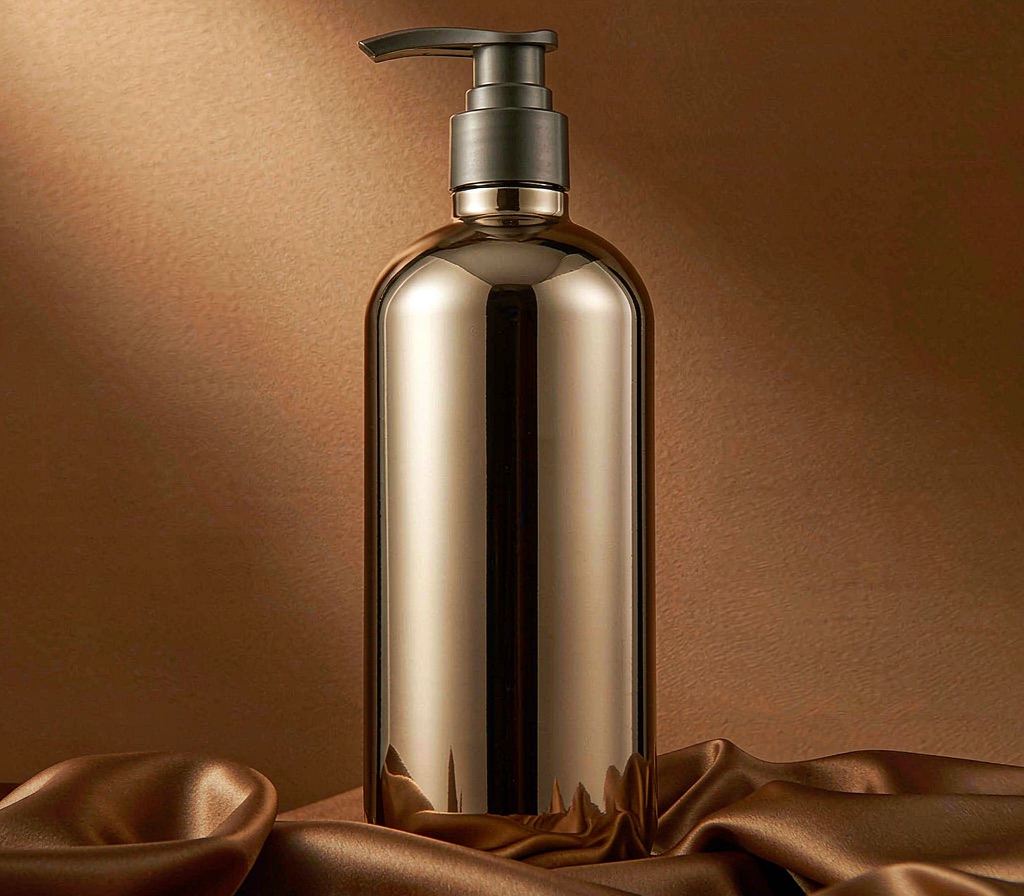
Private Label Color Protect Shampoo
Fade defense for the colored-hair economy — sulfate-free systems with UV-assist filters.
What brands ask us about this category
Why must it be sulfate-free?
Strong anionic detergents lift dye molecules every wash; mild glucoside systems are the category's baseline for any color claim.
How is fade measured?
Instrumented wash-cycle testing with colorimetric readings — the data salon buyers and serious DTC brands both ask to see.
What are deposit variants?
Trace pigments matched to hair color families (brunette, red, violet) that top up tone between salon visits — the logic of purple shampoo, extended.
Colored hair is the salon economy's annuity: every customer who pays for color needs a maintenance system, and shampoo is the daily touchpoint. Fade defense is chemical — mild sulfate-free surfactants, sealed cuticles and UV-assist filters that slow the two fade engines: washing and sunlight.
We build with color-deposit trace options (extending the purple-shampoo logic to reds and brunettes) and document wash-cycle fade testing with colorimeters — the quantified backing salon buyers ask for. The matching conditioner completes the maintenance system.
How we take a wash from brief to released batch
- 1
Adjust viscosity at fill temperature
Thickening is adjusted at the temperature the product will actually be filled at, not at the temperature it was made at.
- 2
Screen the mildness of the blend
The finished blend is put through a protein-denaturation or zein method, so a mildness claim rests on a measurement rather than on the raw material list.
- 3
Check clarity at the cold end
The batch is cooled to the coldest shelf the product will see and checked for haze, which is where a marginally soluble component shows up first.
- 4
Balance preservation against the base
The preservation study runs against the finished matrix, because a surfactant-heavy base behaves differently from a simple aqueous one.
Pack, level and scent options
- Wash-cycle fade documentation
- Deposit variants by color family
- Salon pro sizes
- Duo and trio maintenance sets
What a cleansing batch record carries
Production runs on GMPC and ISO 22716 certified lines in-house under licence 粤妆20250206, traceable from raw material to carton on every batch.
For a surfactant-led product the record pins the surfactant ratio, the viscosity reading and the pH at fill — the three numbers that decide whether the bottle behaves like the sample you approved. Everything is checked against the retained Golden Sample before release.
The cleansing system behind the claim
INCI names and typical levels reflect publicly documented formulation practice. All values are adjustable in your build.
| Ingredient (INCI) | Typical Level | Function & Benefit |
|---|---|---|
| Coco-Glucoside | 8–12% | Color-gentle cleansing |
| Benzophenone-4 (UV-assist) | 0.1–0.2% | UV-fade slowdown |
| Hydrolyzed Keratin | 0.5–1% | Colored-fiber support |
Formulas that sit beside this one
Private Label Color Protect Conditioner
Seal the color in — acid-pH emulsions that close the cuticle dye escapes through.
Private Label Purple Shampoo
Brass correction in a bottle — pigment-tuned violet systems for blonde and silver clients.
Private Label Silver Shampoo
Brightness for silver hair — blue-violet systems that keep grey luminous, not yellow.
Buyer guides for this build
Before you brief a supplier on this category, these are the guides that answer the questions buyers ask next — timelines, order quantities, cost structure and compliance.
Chemically treated hair is a different substrate
Bleached, coloured and relaxed hair has a lifted cuticle and a different surface charge from virgin hair. The same wash cleans it differently, releases colour at a different rate and leaves it feeling different afterwards.
That is why a colour-care system is not a standard base with a claim printed on the front. The surfactant blend and the pH are chosen for the substrate the customer actually has.
Which base suits which claim
Two systems can reach the same position from opposite directions: one by softening the primary surfactant, one by adding a co-surfactant to cushion it.
| System | Lather character | Where it fits |
|---|---|---|
| Isethionate blend | Dense and cushioned, close to conventional | Brands that cannot accept a lather downgrade |
| Non-ionic-led | Very low foam, high mildness | Cleansers for reactive or post-procedure skin |
| Amino-acid systems | Soft, low-residue lather | Premium sulfate-free tier with a mildness position |
| Glucoside-led | Creamy, finer bubbles, slower to build | Strict sulfate-free and curl-method briefs |
Where the decisions get made in a wash
Mildness is a blend property
No single surfactant decides how a wash treats skin. Mildness comes from how the anionic fraction is cushioned by the amphoteric and non-ionic around it, which is why the same primary surfactant appears in both gentle and aggressive systems.
Deposition is not the same as delivery
A rinse-off carries solids away as easily as it deposits them. Silicones and conditioning polymers are dosed for what survives the rinse rather than for the load in the bottle.
Sulfate-free without the downgrade
Removing sulfate is straightforward. Keeping the wash experience intact is the work, and it is solved in the blend rather than by adding a polymer at the end.
Order of addition changes the batch
Whether the fragrance premix, the polymer or the salt goes in first changes the finished viscosity and sometimes the clarity. The sequence is fixed in the process file rather than left to the operator.
Every format this base can be filled in
Mixed-variant orders can split the stated MOQ across formats under one brand.
| Format / Specification | MOQ | Lead Time |
|---|---|---|
| Color protect shampoo 300 ml | 1,000 pcs | 10–15 days |
| Color protect + conditioner duo | 1,000 sets | 10–15 days |
| Brunette-deposit maintenance shampoo 300 ml | 1,000 pcs | 10–15 days |
MOQ and lead time above are the standard liquid, cream and gel route. The real minimum is set by the manufacturing system rather than the category: surfactant systems (shampoo, body wash) start at 2,000 pcs, stick formats at 3,000, and powders and sheet masks at 5,000 — with longer production runs to match.
Send the water it will be used in
Hardness and temperature change how a wash performs. Tell us the market and we build the chelation and the foam target around it.