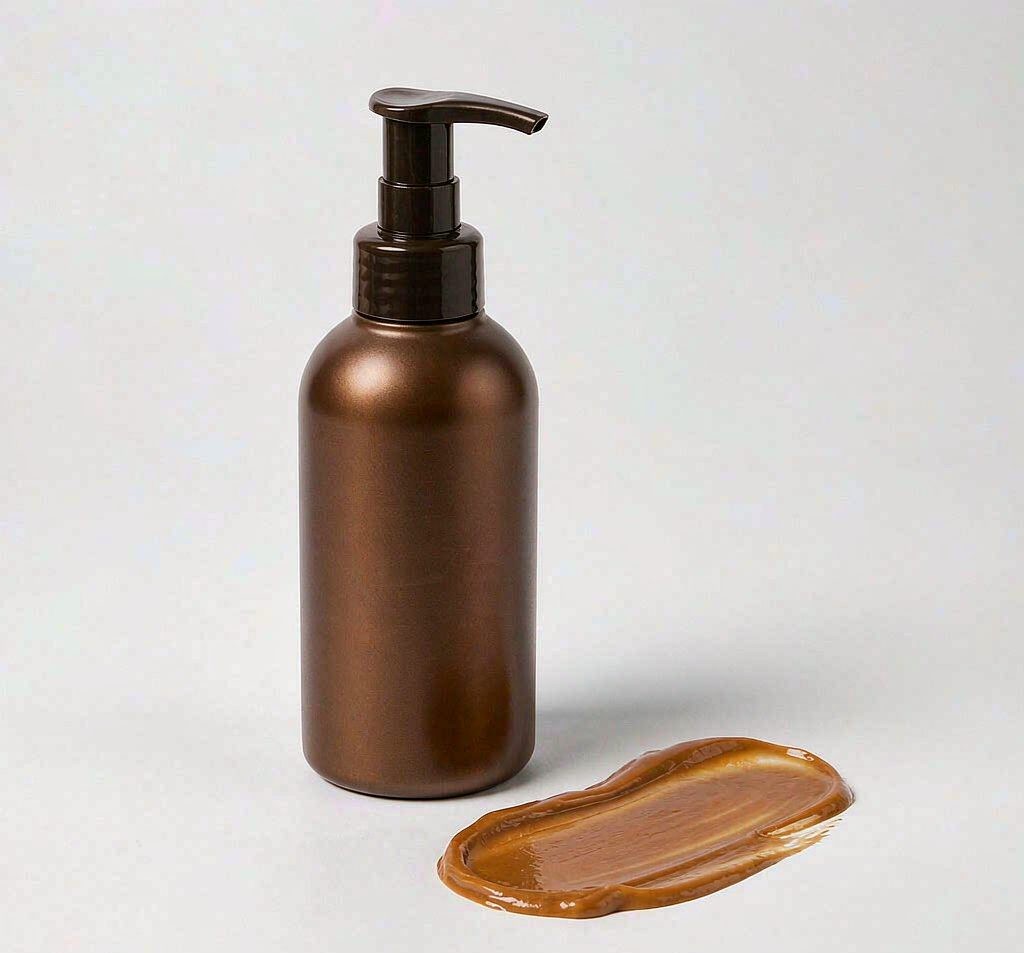
Private Label Gradual Tan Lotion
The glow that builds daily — forgiving, streak-free, habit-forming.
Complete the routine
Private Label Self-Tanning Mousse
The pro-level tan — instant bronze guide, developed color by morning.
Private Label Self-Tan Drops
Tanning that adapts to your customer's routine — drops, mixed in.
Private Label Brightening Body Lotion
Face-grade brightening, body-scale — niacinamide systems for even tone below the neck.
Buyer guides for this build
Before you brief a supplier on this category, these are the guides that answer the questions buyers ask next — timelines, order quantities, cost structure and compliance.
Where this formula can be adjusted
- Low-DHA buildable systems
- Color-guide application
- Tan-odor masking
- Full tan-line trio
Gradual tan lotion is the beginner's door into the self-tan category: low DHA levels that build over days, forgiving enough for streaks to never happen, and — critically — a daily moisturizer habit first. It converts the customer who fears the mousse.
We dose DHA in the 1–3% buildable range with the color-guide systems that make application visible, add the odor-masking that low-DHA formulas need, and verify streak performance on panel legs — the QC that separates repeat buyers from one-and-done.
An emulsifier has a temperature range, not just a number
Emulsifiers are selected on a scale that describes how they behave at one temperature. What decides stability in practice is how that behaviour moves as the batch is heated, cooled, and then stored through a summer — the same system can be flawless at the bench and unstable in a warehouse.
So the system is screened across the temperature range of the destination rather than at a single set point. A market that ships through a hot port and stores in an air-conditioned shop asks a different question from one that does neither.
The textures we fill this base in
Texture is the first thing a customer judges and the last thing a formula gives up cheaply — the route matters more than the wording.
| Route | Texture character | Typical brief |
|---|---|---|
| Polymeric-stabilised | Light body at a low emulsifier load | Sprays and fluid lotions |
| Anionic-emulsified | Classic body, broad compatibility | Mainstream creams where cost leads |
| Structured balm | High melt point, protective film | Barrier repair and winter edits |
| Rich cream | Occlusive and slower to absorb | Night regimes and dry-skin positioning |
The choices that fix texture and shelf life
Cooling rate sets the crystal
Fatty alcohols and butters crystallise as the batch cools. Ramp the temperature too quickly and the texture turns grainy in a way that only shows up weeks later.
Freeze-thaw is the harshest check
A shipment that freezes and thaws in transit can break an emulsion that passed every other test. The cycling study reproduces that route for the markets where it happens.
Heat and cold cycling
Transport reality belongs in the specification. The batch is cycled through the temperature range of the destination market before release.
Challenge the preservative in the matrix
A challenge test run in water says little about the same preservative inside a cream, because it partitions between the two phases. The study runs against the product as filled.
Order sizes for each pack format
Mixed-variant orders can split the stated MOQ across formats under one brand.
| Format / Specification | MOQ | Lead Time |
|---|---|---|
| Gradual tan lotion 250 ml | 1,000 pcs | 10–15 days |
| Face-safe light variant | 1,000 pcs | 10–15 days |
| Tan line trio (gradual + mousse + drops) | 1,000 sets | 10–15 days |
MOQ and lead time above are the standard liquid, cream and gel route. The real minimum is set by the manufacturing system rather than the category: surfactant systems (shampoo, body wash) start at 2,000 pcs, stick formats at 3,000, and powders and sheet masks at 5,000 — with longer production runs to match.
How an emulsion goes from brief to released batch
- 1
Screen the emulsifier across temperature
The system is tested at the low and high ends of the destination market's range, not only at the temperature it was made at.
- 2
Deaerate before fill
Entrained air is removed so fill weight and appearance in the pack both stay consistent from the first unit to the last.
- 3
Set the oil phase against the brief
Emollients, butters and oils are chosen for the after-feel the brief describes, then costed against the price tier.
- 4
Emulsify under controlled shear
Shear energy is specified rather than left to the operator, because it sets the droplet size and with it the texture the customer feels.
The questions that come up every time
Why start with gradual?
It is the fear-free entry — daily habit, no commitment, no streak disasters. It converts customers the mousse scares off, then upsells them.
DHA odor?
The developing-tan smell is the category's known flaw; we use masking systems because it is also the top negative review driver.
Streak protection?
Color-guide visibility plus low DHA — the two design choices that make streaks nearly impossible. Panel-tested on legs.
How a cream is released, batch by batch
Emulsification and filling run in-house on GMPC and ISO 22716 certified lines under licence 粤妆20250206, with each batch traceable from raw material to carton.
Release reads viscosity, pH and appearance at fill and compares the batch with the retained Golden Sample, because texture is the property a number describes least well.
What the oil phase is carrying
INCI names and typical levels reflect publicly documented formulation practice. All values are adjustable in your build.
| Ingredient (INCI) | Typical Level | Function & Benefit |
|---|---|---|
| Dihydroxyacetone (DHA) | 1–3% | Buildable color reaction |
| Erythrulose | 0.5–1% | Evening co-tan agent |
| Glycerin | 3–5% | Daily-lotion base comfort |
Tell us the texture you want in the hand
Describe the after-feel, the pack format and the climate it ships into. We match the emulsion route and quote within 24 hours.