Private Label Anti-Chafing Stick
The runner's secret, going mainstream — friction defense in a stick.
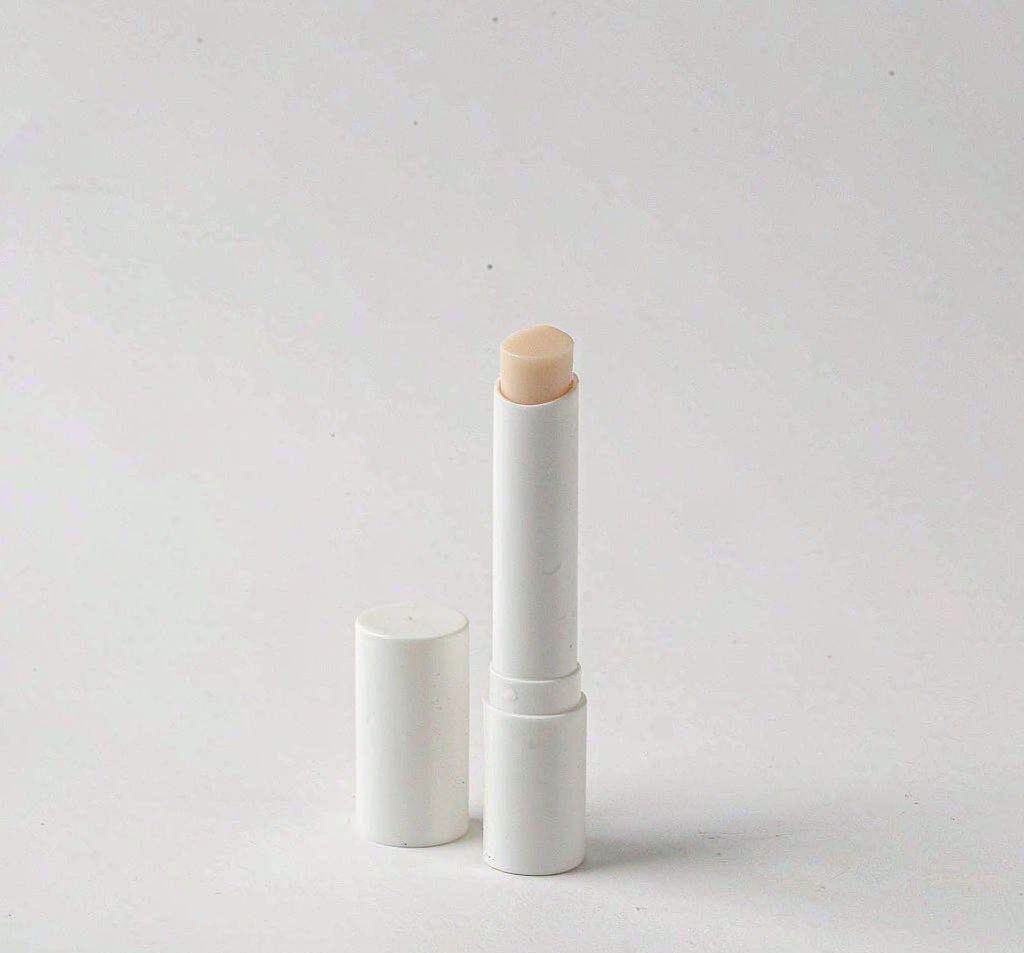
Anti-chafing stick migrated from marathon expos to everyday summer shelves: an invisible balm stick applied where skin meets skin or fabric, eliminating the friction that ruins commutes, hikes and long-haul flights. It is a problem-solving SKU with almost no brand loyalty yet — the lane is open.
We build silicone-and-ester glide systems that stay invisible on skin and clothes (transfer test is the release gate), fill into push-up sticks sized for gym bags and handbags, and support both sport and summer-lifestyle positioning.
How the melt and fill are fixed before scale-up
- 1
Filter for clarity
A warm filtration step removes particulates before the product sets and traps them in place.
- 2
Fix the melt point
Wax and butter ratios are tuned against the storage and shipping temperatures of the destination market.
- 3
Set the oil blend
Carrier oils are chosen for the after-feel the brief describes, then checked for how they behave in combination rather than alone.
- 4
Select the pack for the barrier
Glass, aluminium or treated plastic, chosen for the protection it gives the oil rather than for appearance alone.
Customisation on this build
- Invisible-finish QC (no white cast)
- Push-up stick tooling
- Sport twin-pack economics
- Travel-size programs
Build the range around it
Private Label Natural Deodorant Stick
Aluminum-free, baking-soda-free options — natural deodorant done without the rash.
Private Label Body Powder
Talc-free by design — the powder that made the category trustable again.
Private Label Cooling Body Gel
For tired legs and hot afternoons — the gel that works like a cold towel.
Buyer guides for this build
Before you brief a supplier on this category, these are the guides that answer the questions buyers ask next — timelines, order quantities, cost structure and compliance.
What decides how this feels and keeps
Antioxidants slow, they do not stop
Vitamin E is not a preservative. The dose is set against the shelf life you intend to claim rather than added as a standard line.
Bloom is a surface effect
Waxes and butters can re-crystallise at the surface and leave a whitish film. It is cosmetic rather than a defect, but buyers notice it, so the cooling profile is controlled.
Melt point and the shipping route
A balm that firms in a cold market and slumps in a hot one is a melt-point problem, solved through wax and butter ratios.
Order of addition matters more here
With no water to dissolve anything, ingredients go in by melting point and solubility. Adding in the wrong sequence can leave a component undispersed.
Where the compliance file comes from
The line is GMPC and ISO 22716 certified, and each batch carries raw-material-to-carton traceability under licence 粤妆20250206.
For an anhydrous build the file is built around oxidative stability through the shelf life and microbial ingress through the pack, with the certificate of analysis, stability summary, microbiology report and MoCRA / CPNP-ready documentation attached to the order. Odour, colour and texture are checked against the retained Golden Sample before release.
The questions that come up every time
Visible on skin?
No — the glide esters are refractive-matched to skin; the white-cast problem of wax-heavy sticks is our first designed-out failure.
Stains clothes?
The ester system washes out of fabrics; we run black-fabric transfer testing before release.
Deodorant-adjacent positioning?
It shares shelf logic and stick tooling — many lines cross-merchandise the two as the 'summer comfort duo'.
Formats and order quantities
Mixed-variant orders can split the stated MOQ across formats under one brand.
| Format / Specification | MOQ | Lead Time |
|---|---|---|
| Anti-chafing stick 45 g | 1,000 pcs | 10–15 days |
| Sport twin-pack | 1,000 sets | 10–15 days |
| Travel mini 15 g | 1,000 pcs | 10–15 days |
MOQ and lead time above are the standard liquid, cream and gel route. The real minimum is set by the manufacturing system rather than the category: surfactant systems (shampoo, body wash) start at 2,000 pcs, stick formats at 3,000, and powders and sheet masks at 5,000 — with longer production runs to match.
Which oils carry the performance here
INCI names and typical levels reflect publicly documented formulation practice. All values are adjustable in your build.
| Ingredient (INCI) | Typical Level | Function & Benefit |
|---|---|---|
| Dimethicone | 10–20% | Long-wear friction shield |
| C13-15 Alkane | 20–35% | Invisible glide |
| Cera Microcristallina (where compliant) | 10–20% | Stick structure |
No water means no preservative — and no hiding place
An anhydrous product removes the microbial risk that water brings and replaces it with an oxidative one. Without water there is no hydrolysis, but there is also nothing buffering the oils against the air.
The result is that rancidity rather than contamination becomes the failure mode, and it is controlled by three things in order: the oil blend, the antioxidant system and the pack.
Anhydrous routes and what each one is built for
Each route changes both the sensory result and the shipping requirement — they are not independent choices.
| Route | Feel and behaviour | Typical brief |
|---|---|---|
| Jojoba-ester base | Close to skin lipids, light on the skin | Sensitive-skin and facial oils |
| Structured balm | High melt point, protective film | Barrier and winter-positioned products |
| Light finishing oil | Fast absorb with low residue | Hair and body oils sold on dry-touch claims |
| Rich paste | High solids, low flow | Repair treatments applied by hand |
Tell us the format, not just the formula
A stick, a balm and a finishing oil are three different melt-point problems. Send the format and we quote the blend that holds it.