Private Label Massage Cream
The texture behind the ritual — long-slip creams built for gua sha, rollers and spa menus.
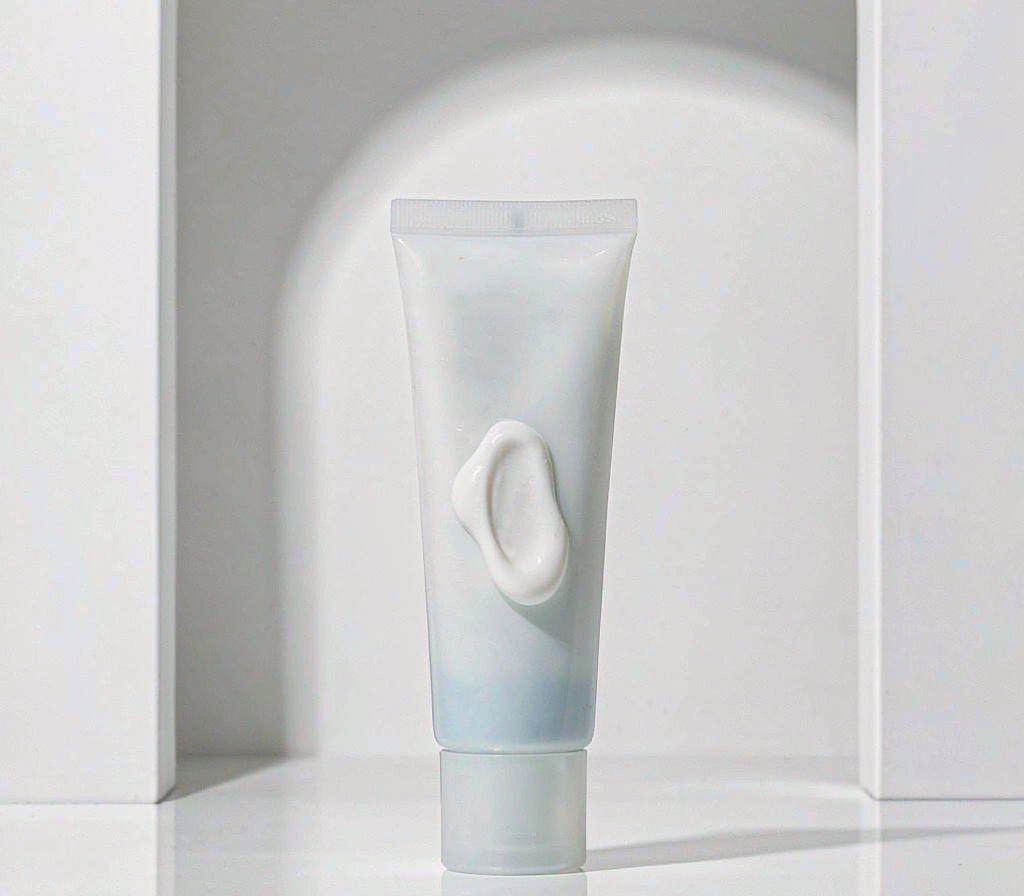
Massage cream is a texture product: it must glide under gua sha stones and rollers without dragging, yet rinse clean without film. The slip comes from balanced ester-to-butter ratios, and professional spa buyers judge it harder than retail customers — which is why we test both audiences.
Formats split into 200 ml professional tubs for salons and 80 ml retail jars riding the gua sha trend. Botanical oil blends (grapeseed, jojoba) and fragrance-free versions cover spa licensing and sensitive positioning.
Four points that fix the texture
Freeze-thaw is the harshest check
A shipment that freezes and thaws in transit can break an emulsion that passed every other test. The cycling study reproduces that route for the markets where it happens.
Cooling rate sets the crystal
Fatty alcohols and butters crystallise as the batch cools. Ramp the temperature too quickly and the texture turns grainy in a way that only shows up weeks later.
A gel-cream is not a thin cream
A gel-cream breaks on contact while a cream spreads and stays put. Customers read that difference immediately, so the two are treated as separate formats rather than one with less oil.
pH drift and the active inside
Emulsions buffer slowly. Where an active has a pH window, that window is verified at fill and again at the end of the stability study.
Pack formats, MOQ and lead time
Mixed-variant orders can split the stated MOQ across formats under one brand.
| Format / Specification | MOQ | Lead Time |
|---|---|---|
| Retail massage cream 80 ml jar | 1,000 pcs | 10–15 days |
| Professional spa tub 200 ml | 1,000 pcs | 10–15 days |
| Gua sha + cream gift set | 1,000 sets | 10–15 days |
MOQ and lead time above are the standard liquid, cream and gel route. The real minimum is set by the manufacturing system rather than the category: surfactant systems (shampoo, body wash) start at 2,000 pcs, stick formats at 3,000, and powders and sheet masks at 5,000 — with longer production runs to match.
How a cream is released, batch by batch
Emulsification and filling run in-house on GMPC and ISO 22716 certified lines under licence 粤妆20250206, with each batch traceable from raw material to carton.
Release reads viscosity, pH and appearance at fill and compares the batch with the retained Golden Sample, because texture is the property a number describes least well.
How an emulsion goes from brief to released batch
- 1
Cycle against the destination
Heat, cold and freeze-thaw cycling replicate the shipping route before the batch is released.
- 2
Hold for microbiological release
The batch is released on a microbiological result rather than on a production schedule.
- 3
Read pH at the end of the window
pH is measured at fill and again at the end of the stability study, so drift is caught while the batch is still a decision rather than a complaint.
- 4
Confirm the fill on the line
Fill weight and appearance are verified on the production line, because a base that behaves well on the bench can still trap air in a filler.
Texture, pack and shelf-life questions
What makes a good massage texture?
Slip duration and clean rinse-off — the cream must glide for the full routine then leave no film. We test both in the sensory protocol.
Is the gua sha trend still growing?
Search interest has settled into a stable ritual niche; the tool-plus-cream gift set is the strongest recurring execution.
Can spas white-label the professional tub?
Yes — 200 ml pro tubs with spa-brand labeling are a standard route at 5,000-pc MOQ.
Build the range around it
Private Label Cleansing Balm
The sorbet-texture cult product — melts on contact, rinses spotless, travels without leaks.
Private Label Face Scrub
Physical exfoliation rebuilt for the microplastic-free era — polish without planet guilt.
Private Label Body Oil
The post-shower glow ritual — botanical oils that turn hydration into an occasion.
Buyer guides for this build
Before you brief a supplier on this category, these are the guides that answer the questions buyers ask next — timelines, order quantities, cost structure and compliance.
An emulsifier has a temperature range, not just a number
Emulsifiers are selected on a scale that describes how they behave at one temperature. What decides stability in practice is how that behaviour moves as the batch is heated, cooled, and then stored through a summer — the same system can be flawless at the bench and unstable in a warehouse.
So the system is screened across the temperature range of the destination rather than at a single set point. A market that ships through a hot port and stores in an air-conditioned shop asks a different question from one that does neither.
The textures we fill this base in
Two routes can share a name on the pack and still be built from entirely different emulsifier families.
| Route | Texture character | Typical brief |
|---|---|---|
| Non-ionic-emulsified | Neutral, skin-compatible feel | Sensitive-skin and premium lines |
| Oil-rich paste | High oil phase, low water | Balm-adjacent textures delivered from a tube |
| Cold-process | Fresh, light texture | Actives that cannot take a heated oil phase |
| Concentrated base | Thick in the jar, spreads thin | Face creams sold on a little going a long way |
What the oil phase is carrying
INCI names and typical levels reflect publicly documented formulation practice. All values are adjustable in your build.
| Ingredient (INCI) | Typical Level | Function & Benefit |
|---|---|---|
| Caprylic/Capric Triglyceride | 20–40% | Long-slip ester base |
| Vitis Vinifera (Grapeseed) Oil | 5–15% | Light botanical carrier |
| Squalane | 2–5% | Clean absorption finish |
Where this formula can be adjusted
- Retail and professional size architecture
- Gua sha tool gift-set bundling
- Fragrance-free spa-license version
- Slip-duration sensory verification
Tell us where it will be stored
A hot, humid market and a temperate one need different melt points from the same brief. Send the destination and we quote against it.