Private Label Ferulic Acid Serum
The classic C-E-ferulic antioxidant architecture, rebuilt with documented pH discipline.
Co-solvents buy solubility and charge for it
Adding a glycol or an alcohol widens what a water-based system can dissolve, and it is often the only way to carry a difficult active. The trade is that it also moves preservation, viscosity and how the product feels on skin.
Those side effects are consequences rather than surprises, and they are designed for from the start. Discovering them at the preservation study is where a launch schedule is usually lost.
Fluid routes and what each one has to protect
The more the active needs protecting, the more of the decision moves from the formula to the pack.
| Route | Barrier it needs | Where it fits |
|---|---|---|
| Structured gel | Chelator with no oil phase to protect | Treatment and gel-adjacent formats |
| Concentrated serum gel | Airless pump to handle the viscosity | High-load actives sold on a small dose |
| Micellar system | Surfactant-stabilised, clear pack | Cleansing waters and no-rinse formats |
| Glycol-rich fluid | Modest barrier, higher water activity | Actives that need solubility more than protection |
Formulas that sit beside this one
Private Label Vitamin C Serum
Brightening serums built on stable vitamin C derivatives or pure L-AA — matched to your price tier and climate.
Private Label Resveratrol Serum
The polyphenol antioxidant from the wine story — a night-shelf differentiator with premium optics.
Private Label Astaxanthin Serum
The microalgae carotenoid with the coral glow — powerful at fractions of a percent.
Buyer guides for this build
Before you brief a supplier on this category, these are the guides that answer the questions buyers ask next — timelines, order quantities, cost structure and compliance.
How the system is locked before scale-up
- 1
Dose the chelator against the water
The chelation level follows the incoming water and raw materials rather than a fixed line, because trace metals vary from source to source.
- 2
Run preservation and stability together
Both studies run against the finished matrix, across the temperature range of the destination market.
- 3
Clarify by filtration
Filtration is matched to the viscosity so the product stays clear without stripping out what gives it body.
- 4
Flush the headspace
Where oxygen-sensitive actives are present, the headspace is displaced before the pack is sealed.
The CEF combination — 15% L-ascorbic acid, 1% vitamin E, 0.5% ferulic acid — is the most copied antioxidant system in beauty, and the most frequently botched: it only works in a narrow pH 2.5–3.0 window with disciplined oxygen control. We run the system with in-process pH verification and amber-glass, nitrogen-flushed filling.
For brands targeting sensitive audiences, we build derivative-based alternatives that keep the ferulic story at friendlier pH. Both routes ship with assay documentation, because antioxidant claims invite lab-literate customers.
What holds this fluid together over its shelf life
The pH window is narrower than solubility
The range where an active is stable is often tighter than the range where it dissolves. Both ends are verified at fill rather than assumed.
A buffer has a capacity
A buffer holds pH only across a limited range of incoming acid or base. Beyond that it gives way, so the capacity is checked against what the formula will actually meet rather than assumed.
Solubiliser levels move the viscosity
The surfactant used to dissolve an oil-soluble active also changes the rheology of the base, sometimes markedly. The two are tuned together rather than one after the other.
Opaque is not a downgrade
Where an active is light-sensitive, an opaque or UV-filtered pack is part of the protection. Choosing clear glass for the look usually costs shelf life.
What brands ask us about this category
Why is the pH window so critical?
Pure L-ascorbic acid only penetrates and stays stable below about pH 3.2; above that it degrades and under-delivers. We verify pH in-process on every batch.
How do you handle the oxidation risk?
Nitrogen-flushed filling, amber glass, minimal headspace and batch-level assay checks — the same discipline used by the reference brands.
Can we launch a sensitive-skin version?
Yes — derivative-based systems (THD ascorbate + ferulic) at skin-friendly pH keep the antioxidant story without the sting.
What is adjustable on this fluid
- Pure L-AA CEF or derivative route for sensitive positioning
- pH discipline documentation (2.5–3.0 window)
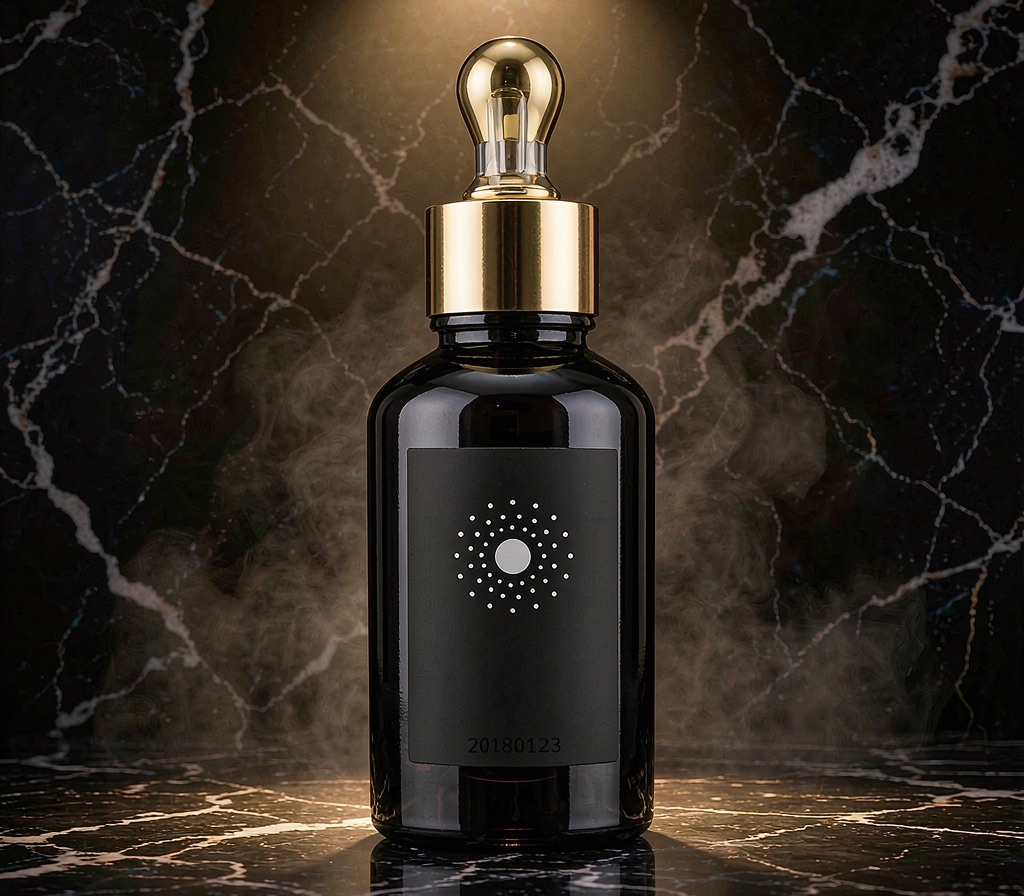
- Amber glass with dropper or airless
- Batch assay certificates for claim support
Traceability from raw material to carton
Each batch is traceable from the incoming raw material through to the sealed carton, on GMPC and ISO 22716 certified lines operating under licence 粤妆20250206.
For a fluid the traceability record is read with the retained Golden Sample and the stability data, because colour, clarity and assay each move on their own timeline.
Formats, pack sizes and MOQ
Mixed-variant orders can split the stated MOQ across formats under one brand.
| Format / Specification | MOQ | Lead Time |
|---|---|---|
| Classic CEF 15/1/0.5, 30 ml amber glass | 1,000 pcs | 10–15 days |
| CEF derivative (SAP/THD) build, 30 ml pump | 1,000 pcs | 10–15 days |
| Ferulic + resveratrol night serum, 30 ml | 1,000 pcs | 10–15 days |
MOQ and lead time above are the standard liquid, cream and gel route. The real minimum is set by the manufacturing system rather than the category: surfactant systems (shampoo, body wash) start at 2,000 pcs, stick formats at 3,000, and powders and sheet masks at 5,000 — with longer production runs to match.
What this fluid is built around
INCI names and typical levels reflect publicly documented formulation practice. All values are adjustable in your build.
| Ingredient (INCI) | Typical Level | Function & Benefit |
|---|---|---|
| L-Ascorbic Acid | 10–15% | Gold-standard topical vitamin C |
| Tocopherol (Vitamin E) | 1% | Lipid-phase antioxidant |
| Ferulic Acid | 0.5% | Stabilizes and boosts the pair |
Start with the pH window
If your active has a narrow one, say so first — it decides more of the formula than any other single input. We reply with the matching base within 24 hours.