Private Label Brightening Toner
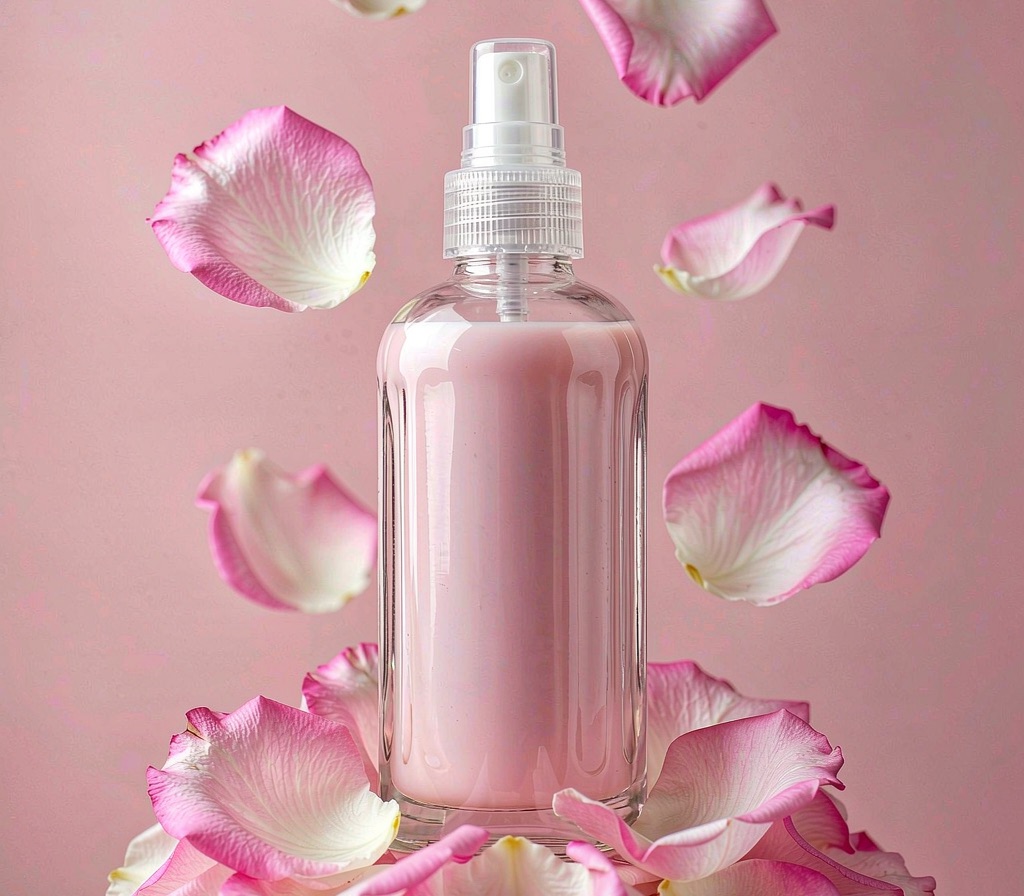
Glow, applied by the palmful — the brightening routine's first pour.
Pack formats, MOQ and lead time
Mixed-variant orders can split the stated MOQ across formats under one brand.
| Format / Specification | MOQ | Lead Time |
|---|---|---|
| Vitamin C brightening toner 200 ml | 1,000 pcs | 10–15 days |
| Niacinamide glow toner 200 ml | 1,000 pcs | 10–15 days |
| Glow ladder set (toner + serum) | 1,000 sets | 10–15 days |
MOQ and lead time above are the standard liquid, cream and gel route. The real minimum is set by the manufacturing system rather than the category: surfactant systems (shampoo, body wash) start at 2,000 pcs, stick formats at 3,000, and powders and sheet masks at 5,000 — with longer production runs to match.
Pair it with these builds
Private Label Vitamin C Serum
Brightening serums built on stable vitamin C derivatives or pure L-AA — matched to your price tier and climate.
Private Label Licorice Brightening Serum
The gentle brightener — root-derived glabridin for tone that evens quietly.
Private Label Rice Toner
The rice-wash water, perfected — milky heritage in a modern bottle.
Buyer guides for this build
Before you brief a supplier on this category, these are the guides that answer the questions buyers ask next — timelines, order quantities, cost structure and compliance.
Brightening toner seeds the glow story from step one: stable vitamin C derivatives and niacinamide in a watery base that customers apply daily by the handful — cumulative brightening with none of the serum's concentration drama.
We use oxidation-proof derivatives in chelated systems, keep pH brightening-friendly but skin-comfortable, and pair the SKU with our vitamin C serum as the routine's two-step glow ladder.
What is adjustable on this fluid
- Oxidation-proof derivative system
- Glow-routine ladder bundling
- Visible-brightness panel testing
- Amber glass oxidation protection
What a fluid batch record carries
Filling runs on GMPC and ISO 22716 certified lines in-house under licence 粤妆20250206, with traceability from raw material to carton on each batch.
For a fluid the record carries pH at fill, viscosity and the assay for the active system you selected, plus the colour or clarity check against your retained Golden Sample before release.
What gets decided before the preservative system
Opaque is not a downgrade
Where an active is light-sensitive, an opaque or UV-filtered pack is part of the protection. Choosing clear glass for the look usually costs shelf life.
Colour shift is the early warning
Long before an assay moves, a sensitive active usually shows a colour change. It is checked against the retained sample at release.
Headspace oxygen
Air left in the bottle keeps reacting after fill. Low-oxygen filling removes most of the oxygen the product will ever encounter.
Headspace grows as it is used
A fluid loses volume and gains headspace with every use. The pack and closure are selected with that change in mind.
Stability and shelf-life questions
Toner or serum for brightening?
Both — the toner seeds daily low-dose actives, the serum concentrates the story. The two-step ladder is our best-bundled pairing.
Will it oxidize like C serums do?
Derivatives plus chelation plus amber glass hold color through shelf life; our stability spec tracks color numerically.
Sensitive skin OK?
At these levels, generally yes — we keep alcohol out and offer a tranexamic-forward variant for reactive customers.
Preservation is a design decision, not an additive
A water-based product needs a preservation system chosen against its own pH, its own water activity and the way it will be used. Choosing one before the formula is fixed almost always means redoing the work later.
The study runs against the finished matrix, and for anything dispensed by hand it runs against the in-use pattern as well, because that is where contamination actually enters the product.
Where each route fits a brief
Two fluids can look identical in the bottle and behave completely differently by the end of the shelf life.
| Route | Barrier it needs | Where it fits |
|---|---|---|
| Emulsion-fluid hybrid | A light oil phase suspended in water | Slip and comfort without the weight of a cream |
| Low-water fluid | Airless or aluminium-barrier pack | Actives sensitive to oxygen and light |
| Alcohol-based tonic | Simple pack, evaporating base | Oil-control formats and fast-dry tonics |
| Two-chamber or mix-at-use | Separated phases until activation | Actives that cannot hold a shelf life in solution |
From brief to released fluid, step by step
- 1
Verify against the retained sample
Assay, pH and appearance are checked at release against the sample your buyer approved.
- 2
Verify the water first
Purified water is checked against its own specification before anything is added, because it is the majority of the formula.
- 3
Choose the barrier pair
Oxygen and light barriers are selected together with the pack, since either one alone leaves an oxidation route open.
- 4
Run preservation and stability together
Both studies run against the finished matrix, across the temperature range of the destination market.
The active system and its working levels
INCI names and typical levels reflect publicly documented formulation practice. All values are adjustable in your build.
| Ingredient (INCI) | Typical Level | Function & Benefit |
|---|---|---|
| Sodium Ascorbyl Phosphate | 1–2% | Stable C brightening |
| Niacinamide | 2–4% | Tone support |
| Tranexamic Acid | 1–2% | Discoloration-look support |
| Licorice Root Extract | 1–2% | Gentle brightening assist |
Tell us how long it has to last
Shelf life sets the overage, and the overage sets the cost. Send the target and we quote a base that reaches it.