Private Label Balancing Toner
Not too oily, not too dry — the equilibrium water for combination days.
Questions we answer on every serum brief
Why does pH matter in a toner?
Post-cleanse skin sits alkaline; a pH 5.5 water restores the acid mantle fast — the comfort and the balance claim both start there.
Will it dry my cheeks?
No — the humectant base hydrates while zinc only moderates where oil sits; zone panels confirm cheeks gain moisture.
Combination-skin routine fit?
It is the routine's spine — pair with our gel-cream and the line addresses the whole face honestly.
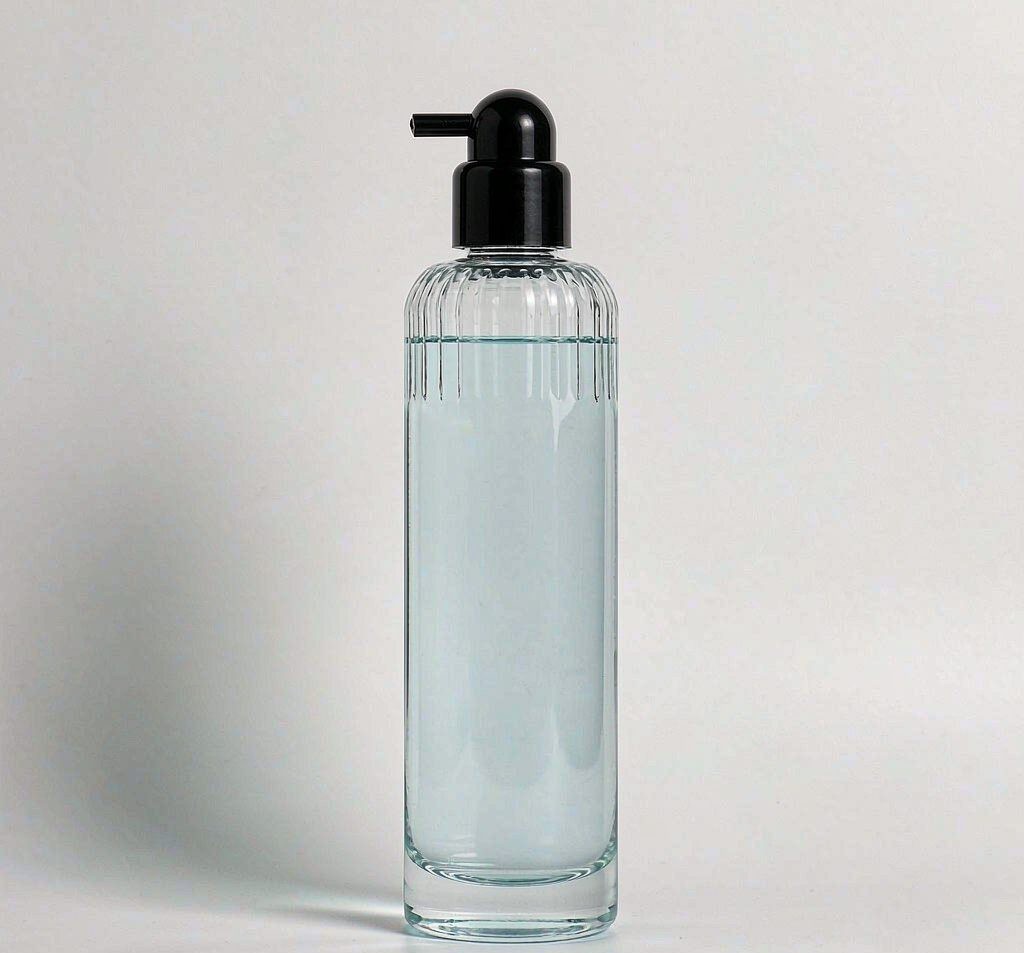
Balancing toner speaks to the customer whose T-zone and cheeks disagree: a pH-matched water with light oil modulators that hydrates dry zones without feeding shine. It is the diplomatic SKU of the toner shelf.
We hold pH at 5.2–5.6 through shelf life, use light zinc and niacinamide modulation rather than stripping astringents, and verify the oil-water balance claim with sebum-mapping panels across zones.
The active system and its working levels
INCI names and typical levels reflect publicly documented formulation practice. All values are adjustable in your build.
| Ingredient (INCI) | Typical Level | Function & Benefit |
|---|---|---|
| Niacinamide | 2–4% | Zone-adaptive balance |
| Zinc PCA | 0.3–0.5% | T-zone oil modulation |
| Glycerin + Betaine | 4–6% | Cheek-zone hydration |
| Centella Asiatica Extract | 1–2% | Calm support |
Order quantities by pack size
Mixed-variant orders can split the stated MOQ across formats under one brand.
| Format / Specification | MOQ | Lead Time |
|---|---|---|
| pH 5.5 balancing toner 200 ml | 1,000 pcs | 10–15 days |
| Balancing toner + gel cream duo | 1,000 sets | 10–15 days |
| Travel 50 ml format | 1,000 pcs | 10–15 days |
MOQ and lead time above are the standard liquid, cream and gel route. The real minimum is set by the manufacturing system rather than the category: surfactant systems (shampoo, body wash) start at 2,000 pcs, stick formats at 3,000, and powders and sheet masks at 5,000 — with longer production runs to match.
Where the compliance file comes from
The line is GMPC and ISO 22716 certified, and each batch carries raw-material-to-carton traceability under licence 粤妆20250206.
For a fluid the file is built on the preservation and stability studies run against the finished matrix, with the certificate of analysis, stability summary, microbiology report and MoCRA / CPNP-ready documentation attached to the order. Colour and clarity are read against the retained Golden Sample at release.
What gets decided before the preservative system
Trace metals at parts per million
Iron and copper catalyse oxidation far below the level any incoming specification would flag. A chelator is part of the design, not an optional additive.
Viscosity without heaviness
Fluids are thickened with polymers that leave no residue, because the texture is meant to disappear on application.
Buffers steady the pH window
A buffer slows drift but adds its own ionic load, which can shift viscosity and compatibility. It is chosen with the rest of the system rather than bolted on.
Opaque is not a downgrade
Where an active is light-sensitive, an opaque or UV-filtered pack is part of the protection. Choosing clear glass for the look usually costs shelf life.
Formulas that sit beside this one
Private Label Witch Hazel Toner
The grandfather astringent, reformulated without the burn.
Private Label Gel Lotion
Half gel, half lotion, all bounce — hydration for skins that hate cream.
Private Label Oil Control Moisturizer
Hydration that ends the shine cycle — matte comfort for oily skin.
Buyer guides for this build
Before you brief a supplier on this category, these are the guides that answer the questions buyers ask next — timelines, order quantities, cost structure and compliance.
Claim options and pack routes
- pH-hold shelf-life documentation
- Sebum-mapping zone panel data
- Combination-skin routine bundling
- Fragrance-light daily format
The stages this fluid passes through
- 1
Choose the barrier pair
Oxygen and light barriers are selected together with the pack, since either one alone leaves an oxidation route open.
- 2
Build the buffer for capacity
The buffer system is chosen for how much acid or base it can absorb, not only for the pH it sets, so the window holds through storage.
- 3
Adjust and hold the pH
pH is set with the buffer system and then held, rather than corrected repeatedly at the end of the batch.
- 4
Build the protection
Chelation, oxygen barrier and light barrier are decided together, because any one alone leaves the product exposed.
Co-solvents buy solubility and charge for it
Adding a glycol or an alcohol widens what a water-based system can dissolve, and it is often the only way to carry a difficult active. The trade is that it also moves preservation, viscosity and how the product feels on skin.
Those side effects are consequences rather than surprises, and they are designed for from the start. Discovering them at the preservation study is where a launch schedule is usually lost.
Which fluid route fits which active
Each route below carries a different balance of preservative load, barrier requirement and sensory weight.
| Route | Barrier it needs | Where it fits |
|---|---|---|
| Glycol-rich fluid | Modest barrier, higher water activity | Actives that need solubility more than protection |
| Concentrated serum gel | Airless pump to handle the viscosity | High-load actives sold on a small dose |
| Micellar system | Surfactant-stabilised, clear pack | Cleansing waters and no-rinse formats |
| Preservative-light fluid | Airless or single-dose pack | Markets where the preservative profile is restricted |
Send the shelf life you need, not just the percentage
Tell us the market, the price tier and how long the product has to stay stable. We reply with the route that fits within 24 hours.