Private Label Beard Oil
The beard's daily conditioner — jojoba, argan, and a scent worth wearing.
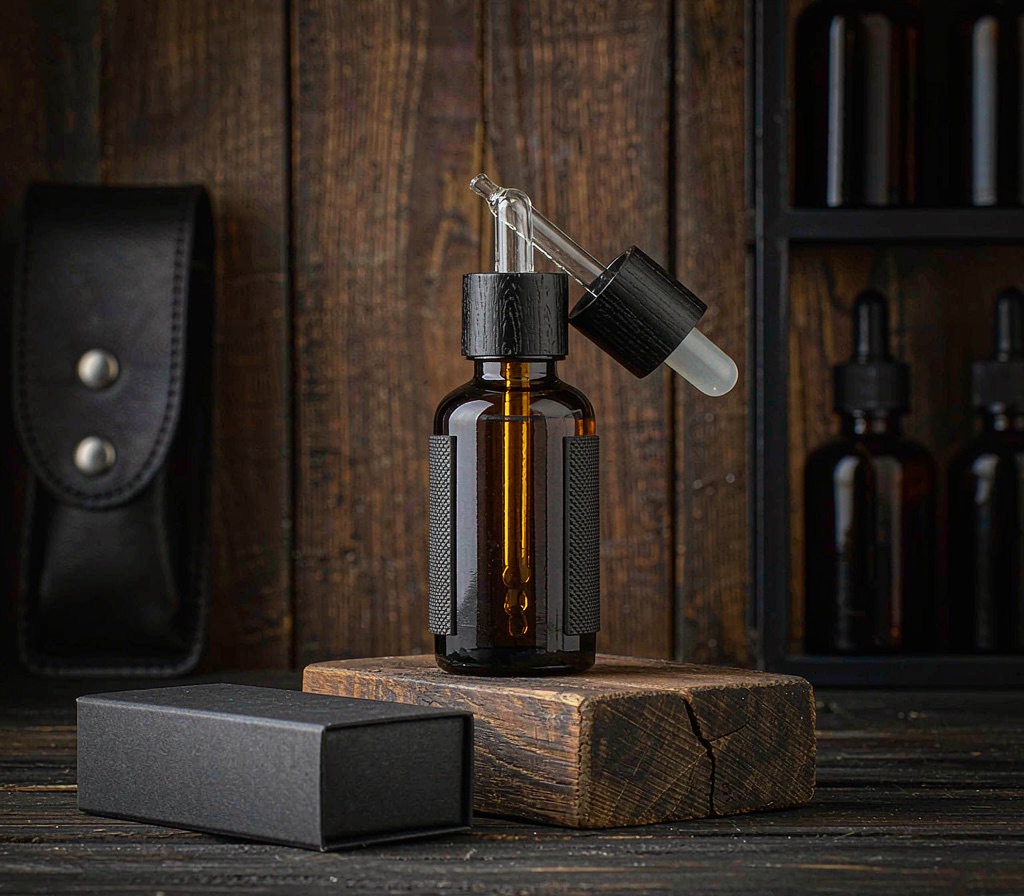
Questions we answer on every oil brief
Can you match a specific scent profile?
Yes — send the direction (woody, fresh, sweet) and we bench two to three iterations with your label. Scent is usually the first round of sampling.
Beard oil vs beard balm?
Oil conditions and adds shine; balm styles and tames flyaways. Most lines launch oil first and add balm as the second SKU.
Glass or PET bottles?
Both work. Amber glass reads premium and protects scent; PET suits shipping-heavy markets. We stock tooling for both.
Pack formats, MOQ and lead time
Mixed-variant orders can split the stated MOQ across formats under one brand.
| Format / Specification | MOQ | Lead Time |
|---|---|---|
| Classic beard oil 50 ml | 1,000 pcs | 10–15 days |
| Unscented sensitive-skin variant | 1,000 pcs | 10–15 days |
| Gift-set trio (3 × 30 ml) | 1,000 sets | 10–15 days |
MOQ and lead time above are the standard liquid, cream and gel route. The real minimum is set by the manufacturing system rather than the category: surfactant systems (shampoo, body wash) start at 2,000 pcs, stick formats at 3,000, and powders and sheet masks at 5,000 — with longer production runs to match.
Feel, pack and scent options
- Scent bench (cedar, sandal, citrus, unscented)
- Dropper or pump packaging
- Beard-wash bundle boxes
- Insert cards with grooming protocol
The paperwork that travels with an oil order
Production runs in-house on GMPC and ISO 22716 certified lines under manufacturing licence 粤妆20250206, traceable from raw material to carton on every batch.
Every production order ships with a certificate of analysis, a stability summary, a microbiology report and MoCRA / CPNP-ready documentation.
With no water in the system the reference point is the retained Golden Sample — colour, odour and texture are read against it at release rather than measured in isolation.
Beard oil is the anchor SKU of every men's grooming line: the first product a customer buys, the one he re-orders, the one his brand is judged by. The formula is honest — a light ester base, jojoba for skin-similarity, argan for shine — and the differentiation lives entirely in scent and packaging.
We build grooming oils in 30–50 ml dropper bottles, offer a bench of cedarwood, sandalwood, citrus and unscented profiles, and tune viscosity so the oil sinks into beard and skin without the greasy collar test failing.
How an anhydrous build goes from brief to release
- 1
Meter the antioxidant
The antioxidant system is weighed in rather than poured to a mark, because the dose is small and a shelf-life claim rests on it.
- 2
Hold for stability release
The batch is released against oxidative stability results rather than against a calendar date.
- 3
Verify against the retained sample
Colour, odour and texture are checked against the approved sample at release, not against a written tolerance alone.
- 4
Filter for clarity
A warm filtration step removes particulates before the product sets and traps them in place.
Build the range around it
Private Label Beard Wash
Shampoo's smarter cousin — facial-grade cleansing for hair that lives on the face.
Private Label Beard Balm
Where oil leaves off, balm takes over — hold, softness, and a tin that lives in the pocket.
Private Label Hair Oil
The gold-standard finishing oil — shine and softness without the grease halo.
Buyer guides for this build
Before you brief a supplier on this category, these are the guides that answer the questions buyers ask next — timelines, order quantities, cost structure and compliance.
Where an oil-phase build succeeds or fails
Fragrance behaves differently in oil
Scent develops more slowly and lasts longer in oil than in water, and the load is set for that behaviour rather than for a water-based reference.
Antioxidants slow, they do not stop
Vitamin E is not a preservative. The dose is set against the shelf life you intend to claim rather than added as a standard line.
The carrier sets the feel
Light esters, heavy butters and dry oils each produce a different after-feel. In an anhydrous base the blend is the product.
Melt point and the shipping route
A balm that firms in a cold market and slumps in a hot one is a melt-point problem, solved through wax and butter ratios.
What the blend is built from
INCI names and typical levels reflect publicly documented formulation practice. All values are adjustable in your build.
| Ingredient (INCI) | Typical Level | Function & Benefit |
|---|---|---|
| Simmondsia Chinensis (Jojoba) Seed Oil | 30–60% | Skin-similar ester base |
| Argania Spinosa Kernel Oil | 10–25% | Shine and softness |
| Tocopherol | 0.5% | Oil-system antioxidant |
Fill temperature fixes the surface
A balm or a stick is filled while it still flows and finishes setting in its own container. The way it cools inside the pack decides whether the surface ends up smooth, grainy or bloomed.
That is a process parameter rather than a raw-material one, so the cooling profile — not only the melt point — is specified and verified against the approved sample.
Which blend fits which format
Oxidative stability moves with the blend, so the route and the shelf life are decided together.
| Route | Feel and behaviour | Typical brief |
|---|---|---|
| Jojoba-ester base | Close to skin lipids, light on the skin | Sensitive-skin and facial oils |
| Triglyceride blend | Medium body, broad compatibility | Volume lines where cost leads |
| Wax-structured solid | Firm at room temperature | Sticks, pomades and format-led launches |
| Wax-paste hybrid | Holds shape, spreads thin | Brow and edge products in a stick |
Bring the fragrance direction
Scent behaves differently in oil, and it changes the load you need. Tell us the direction and we cost it into the quotation.