Private Label Shower Oil
The luxury shower upgrade — oil that milks on contact with water and leaves skin gliding.
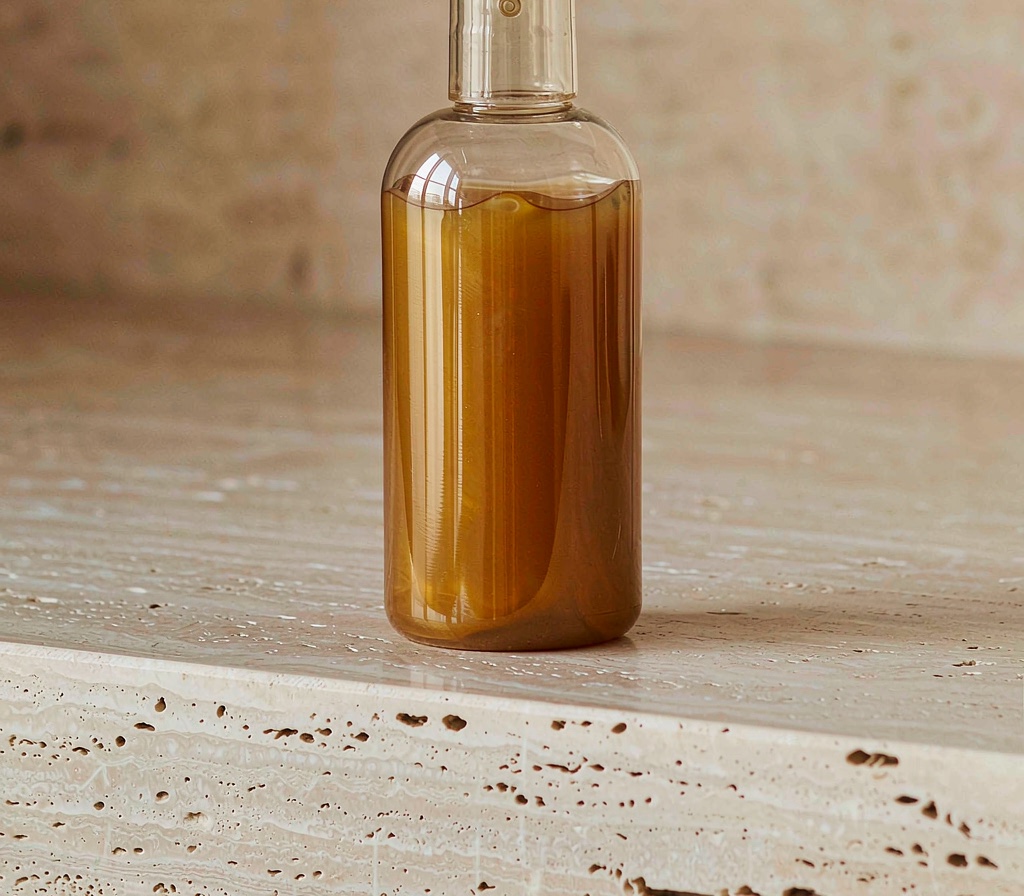
Build out the oil range
Private Label Body Wash
The daily ritual in the shower — fragrance-led body washes that fill the whole bathroom.
Private Label Body Oil
The post-shower glow ritual — botanical oils that turn hydration into an occasion.
Private Label Moisturizing Body Wash
The shower that doesn't dry you out — cream-gel systems with an oil-comfort phase.
Buyer guides for this build
Before you brief a supplier on this category, these are the guides that answer the questions buyers ask next — timelines, order quantities, cost structure and compliance.
Questions we answer on every oil brief
Does shower oil clean as well as gel?
Yes for daily body soil — the oil phase dissolves sebum and sunscreen while the emulsifier rinses it all away with the milky effect.
Is it slippery on the floor?
Properly emulsified systems rinse clean without residual film; floor-safety is part of our verification because it is the category's real-world risk.
When does it sell best?
Gifting seasons and winter — the luxurious feel and dry-skin performance make it the upgrade gift of the body category.
Shower oil is the sensory upgrade that converts body wash buyers into premium customers: an oil phase that emulsifies milky-white on contact with water, cleans gently and leaves a glide that lotion sometimes doesn't match. The milky transformation is its own demo — filmed constantly in the category's social presence.
Emulsification quality is everything: poor builds either rinse without cleaning or leave slip on the floor. Our systems are verified for milky dispersion and floor-safety, with botanical oil stories (almond, argan) for the gifting seasons where this SKU peaks.
The oil phase, and what each part does
INCI names and typical levels reflect publicly documented formulation practice. All values are adjustable in your build.
| Ingredient (INCI) | Typical Level | Function & Benefit |
|---|---|---|
| Caprylic/Capric Triglyceride | 40–60% | Rinsing oil phase |
| Polyglyceryl-4 Oleate | 3–5% | Water-activated milky emulsifier |
| Prunus Amygdalus Dulcis Oil | 5–15% | Almond botanical story |
Four levers on an anhydrous build
Oils migrate into packaging
Some oils soften or stain plastics and liners over time. The pack is screened against the finished blend rather than against the base alone.
Bloom is a surface effect
Waxes and butters can re-crystallise at the surface and leave a whitish film. It is cosmetic rather than a defect, but buyers notice it, so the cooling profile is controlled.
Silicone or silicone-free slip
Silicones give a predictable glass-like finish. A silicone-free route rebuilds it with esters, and the difference is visible in the hand.
Antioxidants slow, they do not stop
Vitamin E is not a preservative. The dose is set against the shelf life you intend to claim rather than added as a standard line.
Without water, the oil phase carries the whole performance
An anhydrous base has no water to dissolve anything, so every functional ingredient must be oil-soluble or dispersible. That single constraint reshapes the ingredient list from the very start of the brief.
It changes how the product behaves on skin as well. Oils stay on the surface longer than water-based systems, so the load of everything in the formula — fragrance included — reads stronger than it would in an emulsion.
Anhydrous routes and what each one is built for
Each route changes both the sensory result and the shipping requirement — they are not independent choices.
| Route | Feel and behaviour | Typical brief |
|---|---|---|
| Squalane-led oil | Light, non-greasy, absorbs steadily | Face and body oils for daily use |
| Structured balm | High melt point, protective film | Barrier and winter-positioned products |
| Light finishing oil | Fast absorb with low residue | Hair and body oils sold on dry-touch claims |
| Wax-structured solid | Firm at room temperature | Sticks, pomades and format-led launches |
Customisation on this build
- Botanical oil direction selection
- Milky-dispersion verification
- Gift-set architectures
- Pump dispensing with drip control
Why oxidative stability leads the file here
An anhydrous product does not fail by contamination; it fails by going rancid, and that process is slow enough to be missed by a bench check taken on the day of fill.
Production runs on GMPC and ISO 22716 certified lines under manufacturing licence 粤妆20250206, with traceability from raw material to carton on every batch and the retained Golden Sample held as the release reference.
How an anhydrous build goes from brief to release
- 1
Filter for clarity
A warm filtration step removes particulates before the product sets and traps them in place.
- 2
Select the pack for the barrier
Glass, aluminium or treated plastic, chosen for the protection it gives the oil rather than for appearance alone.
- 3
Meter the antioxidant
The antioxidant system is weighed in rather than poured to a mark, because the dose is small and a shelf-life claim rests on it.
- 4
Control the cooling curve
Crystallisation is managed in the process so the finished texture stays smooth instead of turning grainy.
Formats and order quantities
Mixed-variant orders can split the stated MOQ across formats under one brand.
| Format / Specification | MOQ | Lead Time |
|---|---|---|
| Almond shower oil 300 ml pump | 1,000 pcs | 10–15 days |
| Argan luxury shower oil 300 ml | 1,000 pcs | 10–15 days |
| Shower oil + body butter gift set | 1,000 sets | 10–15 days |
MOQ and lead time above are the standard liquid, cream and gel route. The real minimum is set by the manufacturing system rather than the category: surfactant systems (shampoo, body wash) start at 2,000 pcs, stick formats at 3,000, and powders and sheet masks at 5,000 — with longer production runs to match.
Tell us the format, not just the formula
A stick, a balm and a finishing oil are three different melt-point problems. Send the format and we quote the blend that holds it.